
Cook couple documented Mexico’s historic landmarks — Mexico News Daily
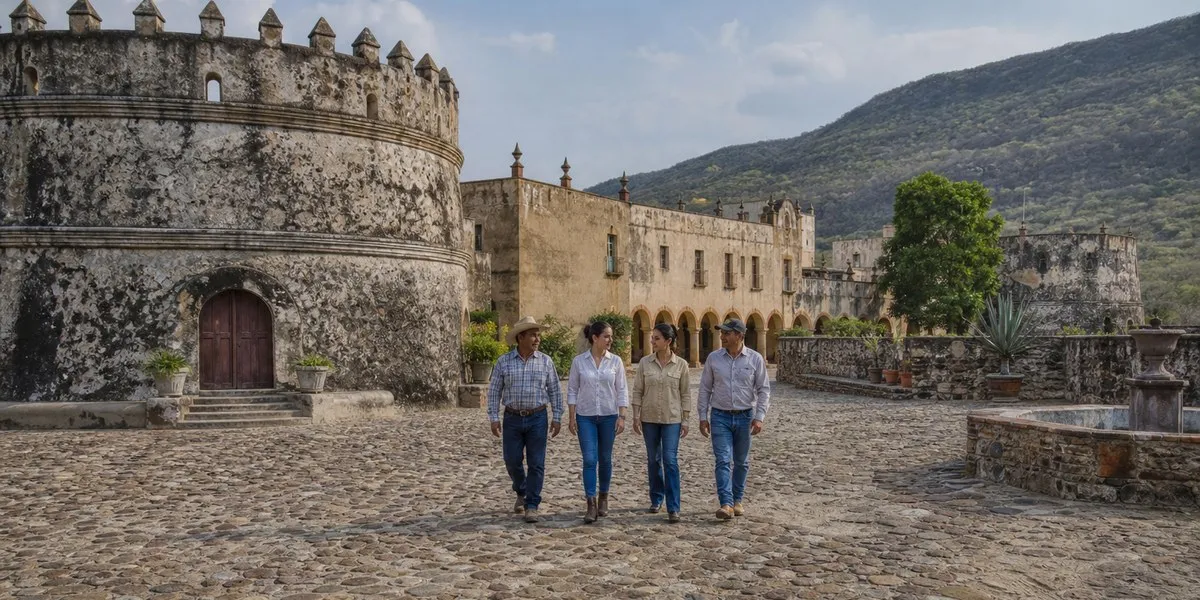
In Mexico, Jim and Carol Cook, who moved from the U.S. state of Oregon to the town of Ajijic on the shore of Lake Chapala in 2007, devoted nearly two decades to searching for and documenting colonial estates, archaeological sites and historic ruins. Mexico News Daily reports on their work.
Initially, the couple explored colonial ruins in the state of Jalisco, but later expanded their routes across the entire country. The Cooks found that many small settlements had previously been associated with haciendas. Some of these complexes were converted into municipal buildings, while former chapels in some cases became local churches.
Jim Cook published his research findings and photographs in the Jim and Carol’s Mexico Adventure photo blog. Over 19 years, the website published about 569 posts with a large number of images, while its visitor count reached 3,938,679.
Fortified hacienda in Jalisco
One of the most impressive sites for the Cooks was the former Santo Tomás hacienda near Hostotipaquillo in the mountainous part of the state of Jalisco. It was founded in 1668; throughout the 18th century, it was a major silver-processing center. The complex had high defensive walls and bastions with loopholes because it was part of the Hostotipaquillo mining district.
More current news is available on the UA.News Telegram channel Telegram.
In his blog, Cook described the courtyard, the manager’s house and an aqueduct whose water flowed to a large water wheel. According to his description, silver ore brought from the mines was crushed, spread over the courtyard paving and mixed with mercury, copper sulfate and a salt solution. Horses walked over the ore for weeks, and when there were not enough draft animals, people were sometimes enlisted for this purpose.
The Puuc Route and Loltún Cave
The couple also explored Maya sites on the Yucatán Peninsula, including the Puuc Route near Mérida. The final stop on this route is the Great Palace in Sayil, with an 85-meter-long facade built on a two-tier platform; it has 90 rooms.
The first stop on the route is Loltún Cave, which, according to Cook, was inhabited about 10,000 years ago. Its walls preserve 85 ancient handprints made using the negative-image technique: the artist placed a hand against the wall and sprayed pigment around it, probably through a hollow tube made of wood or bone. After 19 years of living in Ajijic, the Cooks returned to Oregon, but their blog remains available.




