
FIBA has lifted some of the sanctions against Russians and Belarusians
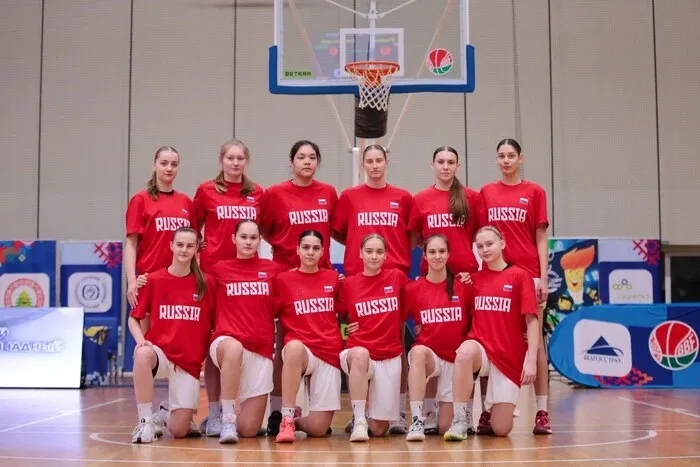
The International Basketball Federation (FIBA) has lifted individual restrictions on Russian and Belarusian participants. Players, coaches, referees, and other officials from these countries may now participate in FIBA competitions. At the same time, the federation has left the issue of the return of Russian and Belarusian national teams and clubs open for further consideration.
The International Basketball Federation has decided to ease sanctions against representatives of Russia and Belarus. The decision was made by the FIBA Executive Committee during a meeting on September 1. The federation announced the lifting of individual restrictions on representatives from both countries. This applies to players, coaches, referees, commissioners, and other officials in basketball and 3x3 basketball.
Russian and Belarusian players can now participate in all competitions organized under the auspices of FIBA. Officials may also be appointed to international tournaments. “Regarding the participation of individuals, FIBA is lifting restrictions on all players, coaches, referees, commissioners, and other officials in basketball and 3x3 basketball,” the federation said in a statement. FIBA noted that the changes take effect immediately.
This means that Russian and Belarusian athletes, who were previously unable to compete in FIBA tournaments due to individual sanctions, now have the opportunity to return to international competition. At the same time, this decision does not mean the automatic return of the Russian and Belarusian national teams to international basketball. FIBA stated that it will continue to work on this issue together with the International Olympic Committee and other sports organizations.
The federation wants to consider the possibility of the Russian and Belarusian national teams returning during the next Olympic cycle, which will conclude with the 2028 Games. “FIBA will work closely with the International Olympic Committee and other organizations regarding the reintegration of the Russian and Belarusian national teams,” the federation said. Separately, FIBA plans to develop options for the possible return of Russian and Belarusian clubs to international competition.
Thus, the federation has so far taken its first step specifically regarding individual athletes and other representatives of the sport of basketball. National teams and clubs remain a separate issue that has yet to be addressed. FIBA’s decision marks yet another instance of the gradual easing of restrictions on Russian participants in international sports. Following the start of Russia’s full-scale invasion of Ukraine, many international federations barred Russian and Belarusian teams and athletes from competitions.
Now, some sports organizations are beginning to reconsider these decisions. However, their approaches vary: some allow individual athletes to compete under certain conditions, while others keep sanctions against Russian teams in place. For example, the International Ice Hockey Federation previously considered easing restrictions on Russia but ultimately upheld the ban on Russian teams participating in the 2026–27 season. The federation is set to address the issue of the Russian women’s national team separately.
In the case of basketball, FIBA has gone further and has already lifted individual restrictions. Russian and Belarusian players and officials can now return to international competition under the federation’s auspices. The issue of the full return of national teams and clubs remains open. FIBA plans to address this separately as part of preparations for the 2028 Olympic cycle, according to the organization’s press service.
The National Olympic Committee of Ukraine is challenging the IOC’s decision regarding Russia’s participation in sports in court.
Previously, the IOC ignored statements by the head of the Russian Olympic Committee, Degtyarev, in support of the war.
Prior to this, Kyiv’s Dynamo appealed to the Union of European Football Associations (UEFA), calling on it to respond to the display of the Russian flag by fans of the Greek club PAOK during a Europa League qualifying match.


