
Singapore air quality deemed unhealthy ahead of Grand Prix — The Guardian
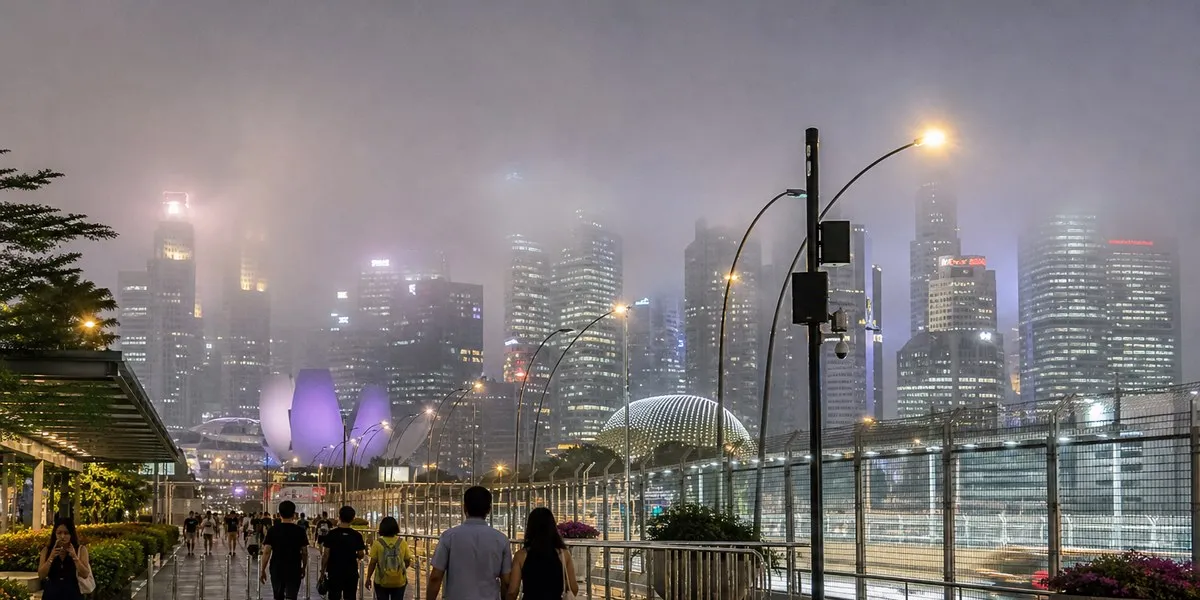
Singapore's National Environment Agency on Tuesday rated air quality as unhealthy ahead of the Formula 1 Grand Prix. Thick smoke from large-scale fires in neighboring Indonesia hangs over the city, The Guardian reports.
Smoke from fires in Indonesia
Haze is a regular problem for Singapore during the dry season in Indonesia, but this year the situation has been worsened by the “super” El Niño phenomenon. Wang Jingyu, an assistant professor at Singapore's National Institute of Education at Nanyang Technological University, said that since June, rainfall in the region had been about 80% below normal. According to him, this contributed to the most intense fire season in more than a decade in parts of Sumatra and Kalimantan.
Polluted air will be an additional challenge for drivers at the Marina Bay street circuit, considered one of the most difficult on the Formula 1 calendar due to high humidity and its narrow, winding layout. At the same time, the FIA said it does not expect disruptions to the race schedule and has no concerns about visibility on the track.
More current news is available on the UA.News Telegram channel Telegram.
Organizers' plans and risks for spectators
An FIA representative said that a contingency plan is in place in case the haze worsens. Restrictions on outdoor activities are possible, but they will likely concern entertainment events rather than paddock staff. The organizers of the night race said they would provide N95 masks at the venue if necessary and coordinate decisions with the relevant services if the haze causes problems for visibility, public health, or the staging of the event.
Chris Carlsten, a professor of medicine at the University of British Columbia, said that prolonged exposure to severe pollution can affect drivers' cognitive abilities. He referred to a study in which participants, after two hours in an environment with high pollution levels, took cognitive tests, including reaction-speed tests. According to Carlsten, the observed impact of pollution was similar to the effect of an alcoholic drink. He advised drivers to use masks if air quality does not improve.
For spectators, the risks may be higher because of prolonged time outdoors during the race, concerts, and other events. Wang Jingyu explained that short-term exposure to haze in healthy people usually causes dryness or soreness of the throat, coughing, or sneezing. Elderly people, pregnant women, and children are more vulnerable, while the smoke can exacerbate asthma or trigger acute bronchitis. Thunderstorms were forecast in Singapore for Friday and Saturday, which could reduce the haze.




