
Hawk moths independently evolved the ability to generate ultrasound up to seven times — ScienceAlert
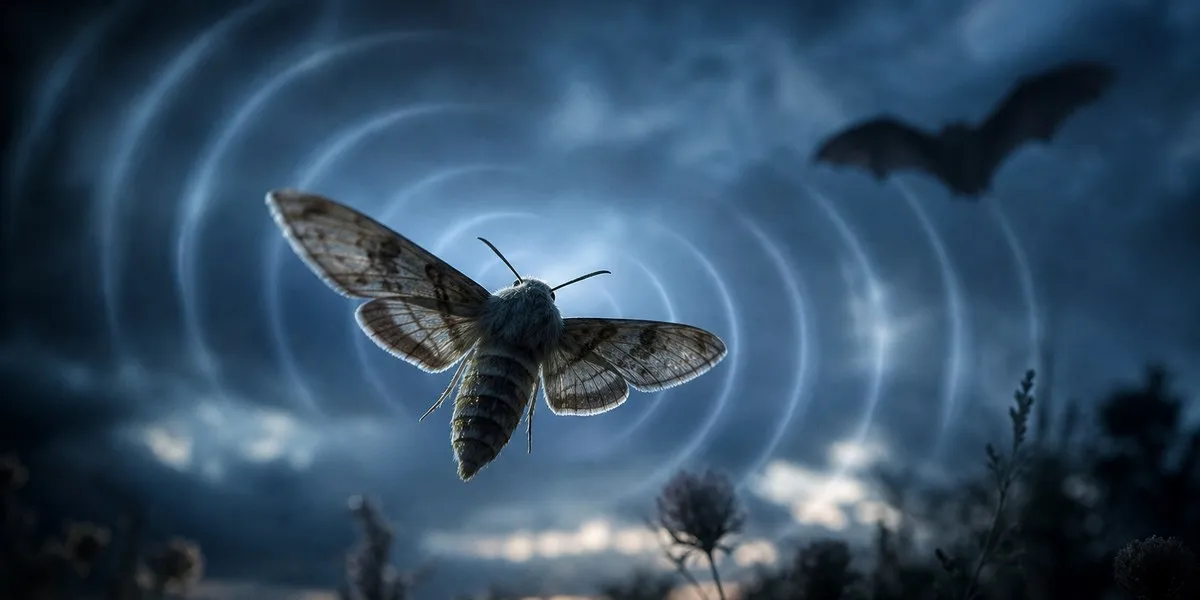
Male hawk moths independently evolved the ability to produce ultrasonic signals using genital structures up to seven times over the past 30 million years. Such sounds may interfere with the echolocation of bats that hunt insects in the dark, ScienceAlert reports, citing a study in Proceedings of the Royal Society B: Biological Sciences.
Three ways to produce ultrasound
A team led by entomologist Paul Masonick of the Florida Museum of Natural History examined the genital structures of male hawk moths from different groups within the family. The insects use stridulation — producing sound by rubbing body parts together. In this case, specialized scales on a pair of genital appendages, the valvae, move across modified areas of the abdomen.
The scientists identified at least three anatomical mechanisms. In some species, scales on the genital appendages rub against scales on the abdomen; in others, they rub against small spines; and in a third group, against small bumps, or nodules. These signals are inaudible to humans, but when slowed down, they resemble rapid clicks, buzzing, or trills.
More current news is available on the UA.News Telegram channel Telegram.
Defense against bats and possible other functions
The mechanism in which scales rub against scales usually produces shorter, intermittent pulses. Hawk moths whose scales interact with spines produce longer and more sustained signals. The most diverse range of sounds was recorded in species with the nodule-rubbing mechanism, with differences found even between closely related species.
A comparison of recordings with data from previous experiments showed that longer signals more often have characteristics associated with the potential disruption of bat echolocation. Short pulses may also be useful: hawk moths unable to hear bats' ultrasonic signals may produce sound after being touched, possibly startling a predator at the moment of attack.
The researchers are also considering the possibility of acoustic mimicry: some moths use ultrasound to warn bats that they are inedible. The assumption that the diverse signals of some hawk moths may help individuals recognize members of their own species during courtship also requires separate verification.




