
DNA analysis links Grus primigenia specimens to the common crane — ScienceAlert
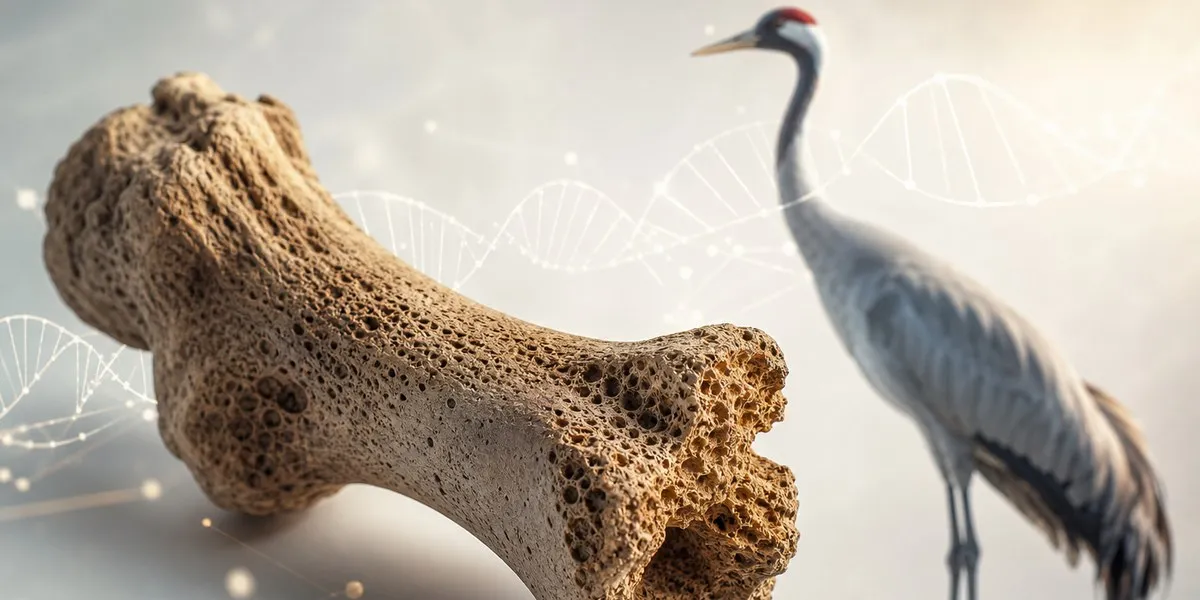
Analysis of ancient DNA from crane bones has shown that specimens previously attributed to the supposedly extinct giant species Grus primigenia genetically belong to the common crane, Grus grus. ScienceAlert reports on the results of the study, published in the journal Royal Society Open Science.
The species was described in the 19th century
In 1870, French biologist Alphonse Milne-Edwards examined a large ancient crane leg bone found in a cave in southern France. It was significantly wider than the corresponding bones of the modern sarus crane and common crane. On this basis, the scientist concluded that the Late Pleistocene remains belonged to an extinct giant species, which he named Grus primigenia.
A team led by paleoecologist John Stewart of Bournemouth University analyzed 18 ancient crane bones found in England, Wales, France, Germany and the Balearic Islands. The sample included G. grus bones of varying sizes and several specimens previously classified as G. primigenia.
More current news is available on the UA.News Telegram channel Telegram.
The type specimen was not examined
To obtain ancient DNA, the scientists took a small amount of clean powder from inside the bone, then extracted and amplified the genetic material. However, they could not examine Milne-Edwards' type specimen, kept at the National Museum of Natural History in Paris, because it is too valuable to drill into.
No clear differences were found in the DNA of all analyzed specimens: despite differences in bone size, they belonged to G. grus. The researchers suggest that earlier ideas about two species may have partly arisen due to sexual dimorphism, as male cranes are larger than females.
The scientists also noted that common cranes gradually became smaller after the 11th century CE. The authors described a possible link between this change and climate or the drainage of wetlands due to human activity as a hypothesis requiring further confirmation.




