
Google launches satellite with four AI chips into orbit — The National
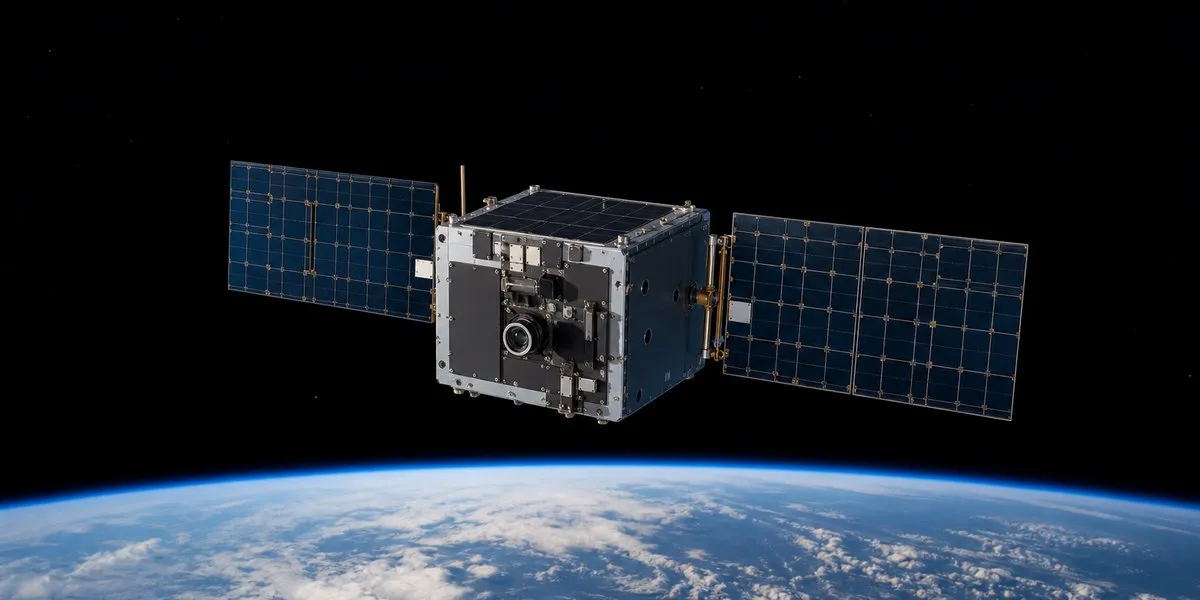
In the UAE, Google launched a prototype satellite with four TPU tensor processors into orbit as part of the Suncatcher research project. The spacecraft was sent into space in partnership with Planet during the SpaceX Transporter-18 mission, The National reports.
Testing computing in orbit
The Suncatcher project is intended to determine whether space could become a location for scalable machine-learning infrastructure in the future. Google will test how its equipment and processors perform in the space environment.
One task of the experiment will be to determine whether the system can provide sufficient computing power to process basic artificial intelligence queries. The company said that satellites in low Earth orbit can receive sunlight almost continuously and generate up to eight times more solar energy than on Earth.
Google is also considering combining several satellite constellations so that they can process larger AI workloads in orbit.
More current news is available on the UA.News Telegram channel Telegram.
Obstacles to orbital data centers
Orbital data centers remain a distant prospect for now. Ariel Ekblaw, founder and executive director of the nonprofit space architecture laboratory Aurelia Institute, noted that low temperatures in space, radiation, and the difficulty of upgrading equipment are serious obstacles.
According to her, ground-based data centers often require upgrades to central, graphics, and other processors, while replacing chips in orbit would require delivering equipment into space. Ekblaw also pointed to potential regulatory difficulties. At the same time, she suggested that, after these obstacles are overcome, orbital data centers could help reduce AI's carbon footprint.
SpaceX CEO Elon Musk previously said that computing could be scaled in space and predicted that a functional space data center could appear as early as 2027. In March, Nvidia unveiled the Space-1 Vera Rubin module, which the company called a step toward moving AI computing to orbital data centers.




