
Inertia has reduced the time required to produce fuel for nuclear fusion to just a few hours
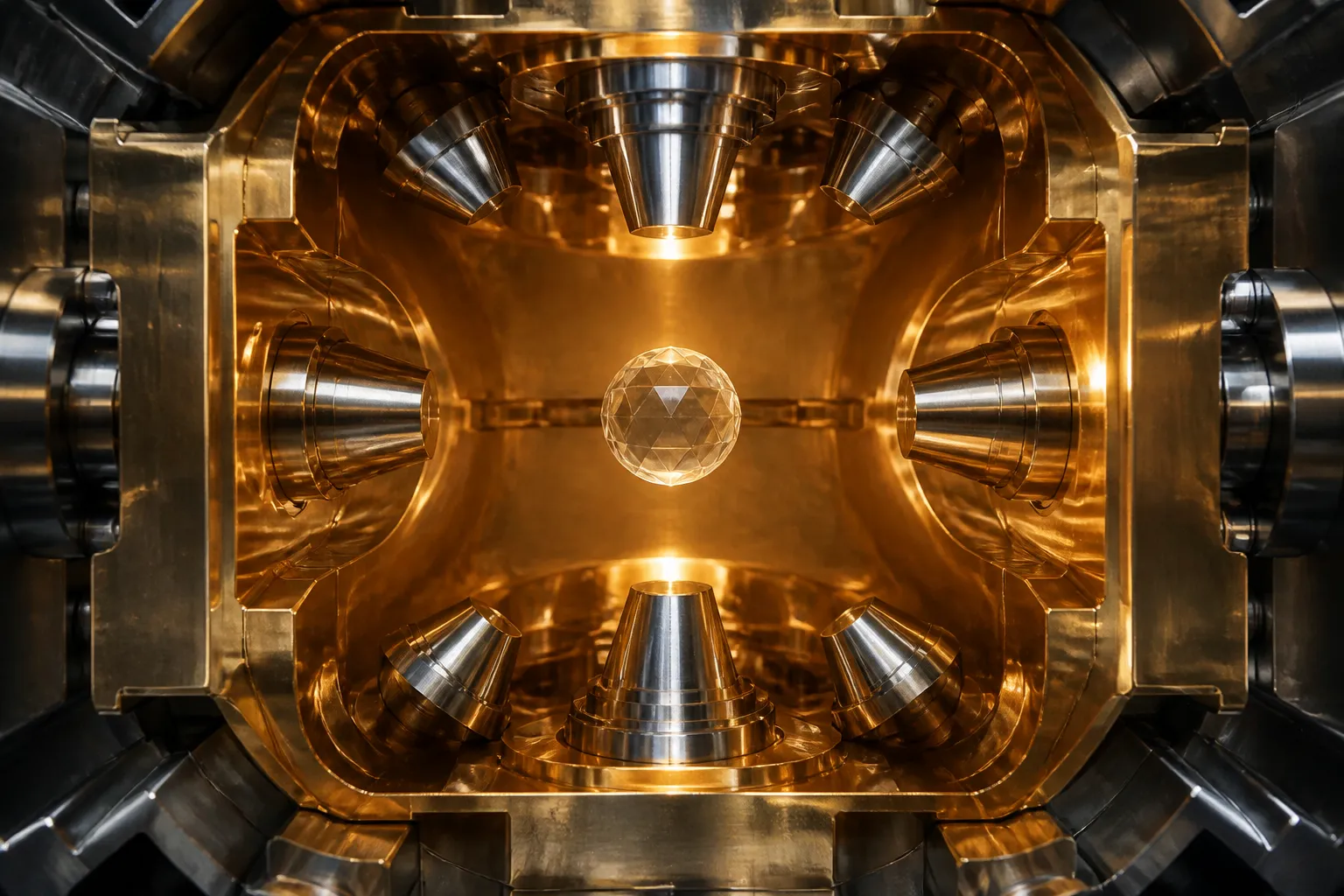
Inertia Enterprises, a startup in the field of fusion energy, announced that it has reduced the time required to fill fuel targets from several days to minutes. At the same time, the full manufacturing cycle for a single target now takes approximately two to three hours, according to TechCrunch.
The company is developing technology for a commercial power plant, building on the work of the National Ignition Facility (NIF) at Lawrence Livermore National Laboratory. At the NIF, the production of fuel targets can take a week or more. According to TechCrunch, Inertia has raised $450 million in investment to commercialize this technology.
The fuel target has a spherical diamond shell. Beneath it lies a thin frozen layer of deuterium and tritium—isotopes of hydrogen that can serve as fuel for a fusion reactor. Inside this layer is a gaseous mixture of deuterium and tritium. Each solid layer must be as close to a perfect sphere as possible, since even small defects can interfere with the ignition process.
For more breaking news, follow the UA.News Telegram channel.
The target is then placed inside a gold chamber known as a holraum. It converts the laser’s energy into X-rays, which compress the fuel inside. Inertia co-founder and CEO Jeff Lovson said the company was able to grow crystals in about 30 minutes, whereas at NIF this stage can take up to a week.
Inertia developed the process with support from the NIF as part of a public-private partnership. The startup also plans to use a laser that, according to its plans, will be four times more powerful than the current NIF laser. According to Lovson, this will allow for more imperfections in the fuel targets and speed up their production.
Shortening the manufacturing cycle should reduce the amount of tritium the company needs to store at any given time. Tritium is radioactive and expensive: its cost is estimated at approximately $30,000 per gram, and global reserves total about 25 kg, according to Science magazine. Inertia expects its full-scale commercial power plant to use ten fuel targets per second.




