
Cambridge scientists create $10 optical spectrometer — ScienceDaily
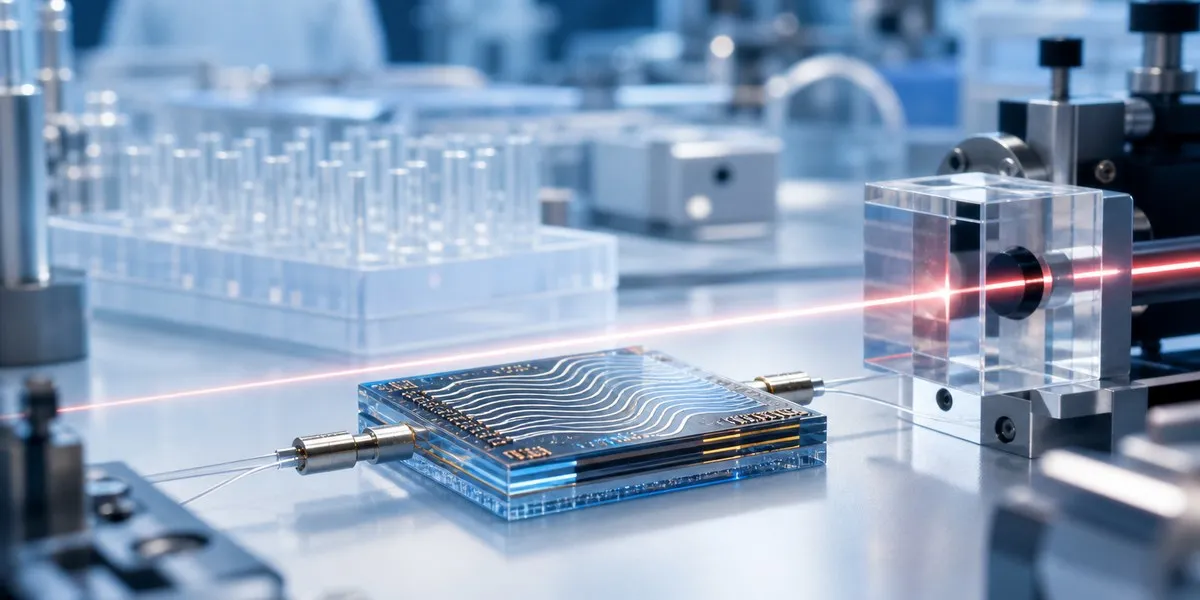
Researchers at the University of Cambridge and the startup GlitterinTech have developed a compact optical spectrometer with an estimated cost of $10. The device, measuring a few centimetres in size, can be integrated into portable electronics and wearable health-monitoring devices, ScienceDaily reports.
Spectrometers analyse light to obtain information about the substances it interacts with. They are used in medicine, manufacturing, chemical analysis and environmental research. Usually, reducing the size of such instruments is accompanied by a loss of accuracy, resolution or measurement range.
A different principle of light analysis
The new device belongs to the so-called convolutional spectrometers. Its operation is based on the convolution theorem: optical components with repeating spectral characteristics are arranged sequentially, while the resulting data are processed using a fast Fourier transform. According to the developers, this makes it possible to reduce the amount of computation, increase resistance to noise and rapidly reconstruct the light spectrum.
The device was made on a silicon nitride photonic platform and combined with integrated electronics. It operates in the near-infrared range from 1200 to 1700 nanometres and can collect and process measurements in less than a second. During testing, the spectrometer also operated stably at temperatures from −20°C to 80°C.
More current news is available on the UA.News Telegram channel Telegram.
Tests on food and biomarkers
In tests classifying plastics, pharmaceutical products, coffee, flour and tea, the device showed a 100% result. It also measured concentrations in aqueous and organic solutions with accuracy of about 0.01%, which exceeded the performance of commercial benchtop spectrometers in the described experiments.
Under conditions intended to reproduce a physiological environment, the sensor measured skin moisture, blood alcohol, lactate and glucose levels. The researchers also demonstrated non-invasive tracking of glucose levels over an extended period in one participant. At the same time, further testing is needed to turn the technology into a medical product.
The developers are considering using the sensor to monitor material composition in industry, check food freshness, identify substances and monitor the environment.




