
A Chinese Spy, Jensen Huang, and Falling Stock Prices: What's Going On with NVIDIA
09 November 2026 14:14NVIDIA CEO Jensen Huang found himself at the center of an international scandal following reports of his relationship with a Chinese businesswoman whom U.S. intelligence agencies suspect of working for Beijing’s intelligence services. On November 8, the company announced an independent investigation, and Huang himself admitted to marital infidelity and publicly apologized. The very next day, NVIDIA’s stock began to lose value, and the story evolved from a personal scandal into a matter of U.S. national security.
The reason for this attention lies in NVIDIA’s unique position in the global technology market. Its processors are used to train advanced artificial intelligence models, power supercomputers, conduct scientific research, and develop autonomous systems. The U.S. is trying to restrict China’s access to the most powerful chips, while Beijing is developing its own production capabilities and seeking alternative ways to obtain American technology.
UA.News reports on what is known about a possible espionage operation targeting Jensen Huang, the methods China is using to obtain Western technology, why NVIDIA processors have become a strategic resource, and how such scandals affect the global stock market.
What Is Known About the Espionage Scandal Surrounding Jensen Huang

In late October 2026, U.S. media reported that U.S. intelligence agencies were investigating the ties between NVIDIA CEO Jensen Huang and Chinese businesswoman Alice Huang. She previously held an executive position at the Singapore-based company Megaspeed, which purchases high-performance NVIDIA processors for data centers.
According to Reuters, U.S. authorities were investigating Alice Huang’s possible ties to Chinese intelligence. U.S. media reports suggested that she may have passed information to Beijing and attempted to gain access to details about NVIDIA’s technology.
Megaspeed drew particular attention. U.S. authorities investigated the company on suspicion that it may have facilitated the shipment of advanced processors to China in circumvention of export restrictions. Over the course of two years, Megaspeed purchased more than $4.8 billion worth of NVIDIA equipment. This made it one of the American manufacturer’s largest customers in Southeast Asia.
The scale of such purchases is significant because major customers regularly interact with manufacturers’ executives to discuss future equipment needs, delivery schedules, and the development of computing infrastructure. Such negotiations do not necessarily involve access to trade secrets, but they can provide insight into a company’s business plans.
In October, NVIDIA explained that Jensen Huang communicates with thousands of representatives from client companies every year. The company emphasized that Asian cloud providers receive standard commercial information, not confidential developments or materials related to U.S. national security.
However, following new reports, the situation has gone beyond the scope of routine corporate contacts. On November 4, the chairs of three U.S. House of Representatives committees sent a letter to Huang demanding a closed-door briefing. The letter was signed by Brian Mast, chairman of the Foreign Affairs Committee; John Mulenar, chairman of the Special Committee on China; and Rick Crawford, chairman of the Intelligence Committee.
The lawmakers proposed holding the meeting on November 18. They want to determine the nature of the NVIDIA CEO’s contacts with Alice Huang and assess how effectively the company protects confidential information from foreign intelligence operations.
On November 8, NVIDIA’s board of directors announced an independent investigation. It will be conducted by independent directors with the assistance of external legal counsel. The company stated that it currently has no reason to believe that U.S. state secrets or NVIDIA’s trade secrets have been compromised. At the same time, the review will cover all available information regarding a possible foreign intelligence operation.
That same day, Jensen Huang addressed the company’s employees and admitted to marital infidelity.
“I was unfaithful to my wife. My actions have caused pain to her and our children. There is no excuse for this. I am deeply sorry,” he said.
Huang also promised to cooperate with the independent investigation and to continue leading NVIDIA.
On November 9, China officially rejected the allegations. Beijing called the reports of a possible espionage operation baseless and an attempt to discredit the country.
Why NVIDIA Processors Have Become a Strategic Technology for the U.S. and China
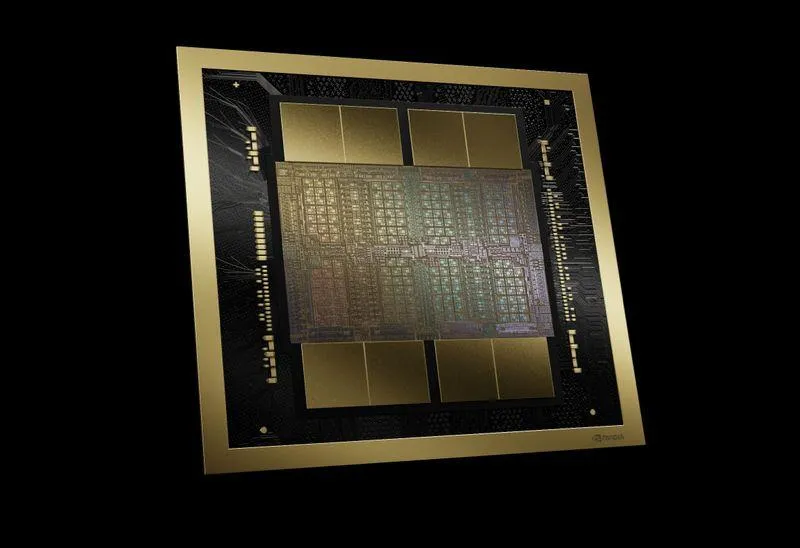
NVIDIA has long since ceased to be merely a manufacturer of graphics cards for computer games. Today, its core business involves supplying computing systems for artificial intelligence, supercomputers, and large data centers.
The company’s graphics processors are capable of performing a huge number of mathematical operations simultaneously. This makes them particularly effective for training neural networks, processing large amounts of data, and powering generative artificial intelligence.
For example, computing clusters—which can consist of thousands or tens of thousands of accelerators—are used to create large language models. Their performance determines the speed of training, the cost of computations, and the ability to build more complex systems.
However, NVIDIA’s advantage lies not only in the processors themselves. The company supplies networking equipment, software tools, systems for scaling accelerators, and solutions for managing computing infrastructure.
Of particular importance is the CUDA software platform, around which a large ecosystem of developers has formed. Many high-performance computing applications are optimized specifically for NVIDIA hardware. As a result, even developing a processor with comparable technical specifications does not guarantee a quick replacement for American solutions. Competitors would need to recreate an entire ecosystem of software and hardware.
The scale of demand for such technologies is reflected in the company’s financial results.
According to NVIDIA’s official financial report, revenue reached $96.2 billion in the second quarter of the fiscal year ending July 26, 2026. This is 106% more than in the same period of the previous year. The data center segment accounted for the largest share of revenue—$89 billion, which is 117% higher than the previous year’s figure.
This growth demonstrates just how heavily the global artificial intelligence industry relies on the supply of high-performance computing equipment.
For the U.S., NVIDIA’s technological leadership means more than just an economic advantage. Such systems can be used in defense research, satellite image analysis, the development of autonomous technology, cybersecurity, and complex scientific modeling.
In other words, the same technology can have both civilian and military applications.
This is precisely how Washington justifies the need to control exports of the most powerful processors to China. U.S. authorities fear that access to such computing resources could accelerate the development of military technologies by a potential strategic rival.
For Beijing, the situation looks different. China seeks to develop its own artificial intelligence models, industrial automation, and supercomputers, but restrictions on access to American equipment make it difficult to achieve these goals.
As a result, NVIDIA processors have become one of the key focal points of the technological standoff between the two countries.
How China Is Trying to Obtain U.S. Technology While Circumventing Restrictions
The United States began significantly restricting the export of advanced processors to China in 2022. Since then, the rules have been revised multiple times, covering new generations of accelerators, manufacturing equipment, and specific categories of Chinese companies.
The restrictions specifically affected the NVIDIA A100 and H100 processors. In response, the manufacturer began developing special versions of the equipment for the Chinese market, with specifications that complied with U.S. export requirements.
One such product was the H20. However, in April 2025, U.S. authorities imposed additional licensing requirements for its shipment as well. In January 2026, the U.S. Department of Commerce partially revised the rules.
According to an official announcement from the Bureau of Industry and Security, applications for the export of the NVIDIA H200, AMD MI325X, and certain similar processors to China were permitted to be reviewed on a case-by-case basis. However, to obtain a license, manufacturers and customers must meet a series of requirements related to security, buyer verification, and independent testing of the equipment.
Even so, an American export license does not guarantee sales. In its quarterly report filed with the U.S. Securities and Exchange Commission, NVIDIA stated that restrictions imposed by Chinese authorities are also hindering shipments of the H20 and H200.
The company noted that, due to the current regulations of both countries, it has effectively lost the ability to compete fully in the Chinese market for data center computing systems.
At the same time, demand for high-performance processors has not disappeared. U.S. law enforcement agencies regularly report attempts to illegally ship equipment to China through intermediaries and third countries.
One of the largest such cases came to light in December 2025. At that time, the U.S. Department of Justice announced the results of Operation Gatekeeper, which targeted a network involved in the illegal export of processors for artificial intelligence.

According to the case file, businessman Alan Hao Xu and his company, Hao Global, pleaded guilty to illegal export activities. The investigation established that from October 2024 to May 2025, the participants in the scheme illegally exported or attempted to export NVIDIA H100 and H200 processors with a total value of at least $160 million.
To conceal the equipment’s true purpose, they used false shipping documents and recipient information. U.S. law enforcement seized NVIDIA technology and more than $50 million in funds.
The U.S. Department of Justice announced another case on March 25, 2026. Three individuals were charged with conspiracy to illegally supply computing technology to China via Thailand.
According to investigators, the suspects used Thai companies as nominal buyers of server equipment, even though China was the actual final destination.
Law enforcement officials also uncovered correspondence in which the participants discussed ways to conceal the Chinese destination of the shipments from U.S. regulatory authorities. These are charges, not a final determination of guilt by a court.
Such cases demonstrate that export restrictions do not always prevent the movement of high-tech equipment. Instead, they can encourage the emergence of complex schemes involving foreign intermediaries, front buyers, and opaque supply chains.
A separate issue is the acquisition of technical information. Even after purchasing a ready-made NVIDIA processor, a Chinese company does not automatically gain access to blueprints, software source code, or the technologies used in its production.
Developing a modern accelerator requires appropriate manufacturing capacity, specialized equipment, memory technologies, and highly skilled engineers. Therefore, trade secrets, plans for new developments, and information about future products may be of significant interest to foreign intelligence services.
In this context, a potential intelligence operation targeting an NVIDIA executive could be significant not only for obtaining technical information. It could also be aimed at assessing or attempting to influence the company’s position on export controls.
Can China Replace NVIDIA with Its Own Processors?
Alongside its efforts to acquire foreign equipment, China is investing significant resources in developing its own semiconductor industry. Among the companies developing accelerators for artificial intelligence are Huawei and Cambricon. Chinese manufacturers are also developing software tools designed to reduce dependence on the CUDA platform.
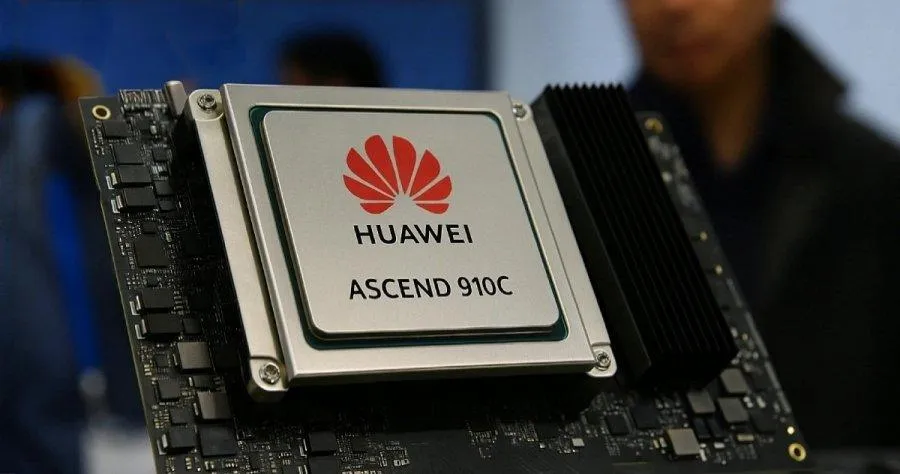
However, simply releasing a single competitive processor is not enough to truly replace NVIDIA. Modern data centers consist of a large number of interconnected accelerators that must exchange information efficiently. This requires appropriate network infrastructure, high-speed memory, control systems, and software.
The American company has spent many years building this ecosystem, so replacing it may require significant additional investment from Chinese developers.
In addition, China remains dependent on foreign technology in certain segments of semiconductor manufacturing. This is particularly true for the equipment and manufacturing processes required to produce state-of-the-art microchips.
At the same time, Beijing is not interested in an unlimited increase in its dependence on American suppliers.
In early November, approximately 600,000 NVIDIA H200 processors were in Hong Kong, awaiting the opportunity for further shipments to mainland China.
How the Scandal Affected NVIDIA’s Stock
Reports of an independent investigation emerged during a challenging period for the tech sector. Investors were already reassessing the prospects of companies involved in artificial intelligence due to the enormous costs of data centers and questions about the speed of return on these investments.
Against this backdrop, news of a possible foreign intelligence operation targeting Jensen Huang created additional uncertainty. On November 9, NVIDIA’s stock began to decline on over-the-counter markets.
According to Reuters, the company’s stock price fell by more than 6% in Frankfurt. This drop corresponded to a reduction in its market capitalization of approximately $270 billion.

The decline reflected investors’ reaction to news of the investigation and potential risks to NVIDIA’s leadership.
Jensen Huang has led the company since its founding in 1993. He played a central role in NVIDIA’s transition from manufacturing gaming graphics cards to building computing infrastructure for artificial intelligence.
Because of this, the question of his future in the role may be particularly sensitive for investors. At the same time, the mere fact that an investigation has begun does not mean the CEO will resign. NVIDIA’s board of directors has expressed its support for Huang, and the company has stated that he will continue to perform his duties.
The situation is further complicated by the potential implications for NVIDIA’s relationship with U.S. authorities. If an independent review reveals violations of internal information security procedures, Congress or regulators may increase their scrutiny of the company’s operations, its international clients, and its control mechanisms.
This could potentially affect the outlook for hardware sales in certain markets. However, for now, such consequences remain possible scenarios rather than finalized decisions.
How the NVIDIA story might play out for the U.S. and China

The scandal surrounding Jensen Huang has shown just how important the security of private technology companies has become for public policy. Unlike government agencies, large corporations constantly interact with international partners, investors, customers, and intermediaries.
This is essential for the development of global business, but at the same time creates additional opportunities for foreign intelligence agencies to gather information.
In the case of NVIDIA, what is particularly significant is that the company effectively provides the computing infrastructure for a significant portion of today’s artificial intelligence industry. Therefore, information about its future products, production plans, international contracts, and stance on export controls may be of interest not only to competitors but also to government agencies.
The next important step will be a closed-door briefing by Jensen Huang for U.S. congressional representatives, scheduled for November 18. Lawmakers will seek to determine whether information security procedures were violated and whether there was a real threat to national security.
At the same time, NVIDIA will conduct its own independent investigation. It will be crucial for the company not only to establish the circumstances surrounding its CEO’s personal contacts but also to determine whether unauthorized individuals gained access to confidential information.
For the U.S., the case could serve as an additional argument in favor of tightening control over international technology supply chains.




