
NASA seeks companies to raise Hubble telescope’s orbit — Ars Technica
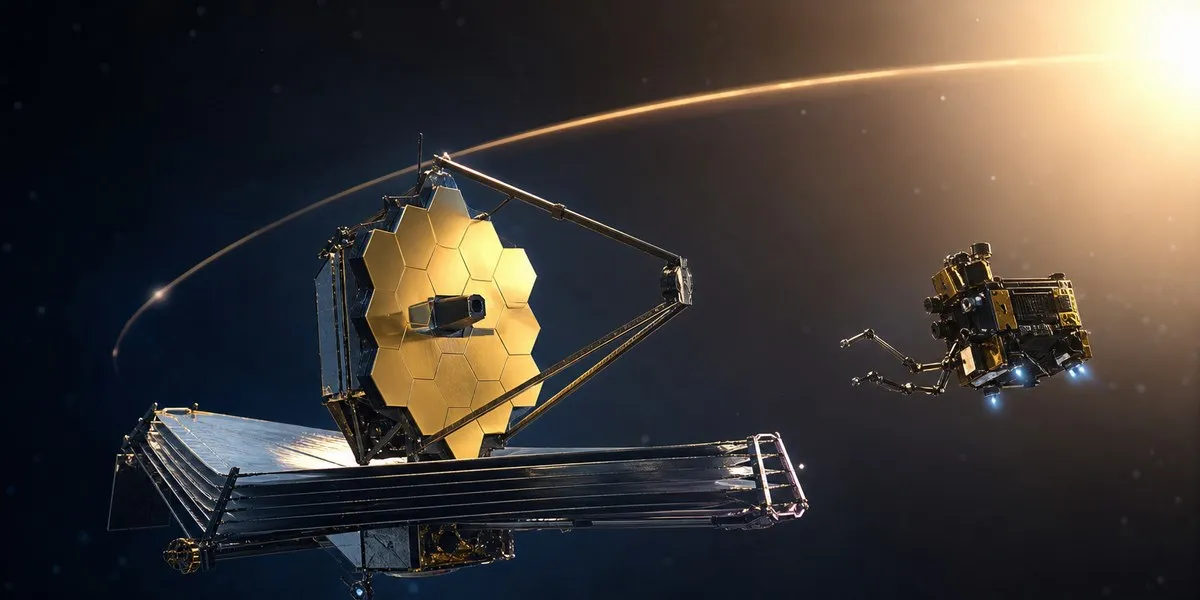
NASA has invited commercial companies to submit proposals for raising the orbit of the Hubble Space Telescope, servicing it, or conducting a controlled deorbit. The agency wants to assess current and near-term technical capabilities for capturing the telescope, bringing it to an altitude of at least 600 km, or improving its operation. Responses to the request will be accepted until November 30, Ars Technica reports.
The mission is planned to be carried out by 2032
NASA stressed that an orbit-raising and/or servicing mission must not damage Hubble and is expected to take place by 2032. The contractor will have to provide a launch vehicle, a servicing spacecraft, flight operations and, if necessary, a crew.
The agency has not yet committed to procuring such a mission. It is collecting information on potential contractors, the cost of the work, and the feasibility of completing the task before the telescope enters the atmosphere. According to current calculations by orbital dynamics specialists, this could happen in 2033 or 2034 without intervention, although the forecast depends on solar activity.
More current news is available on the UA.News Telegram channel Telegram.
Time reserve for the telescope
Hubble does not have its own propulsion system. Its orbit was last raised in 2002 during the Columbia shuttle mission. Since then, the telescope’s flight altitude has decreased from 583 km to about 470 km. Raising it to 600 km could, according to the publication’s estimate, extend Hubble’s time in orbit by at least 25 years.
NASA previously approached the industry with a similar request in 2022 and received eight responses, including a joint robotic proposal from Astroscale and Momentus. That same year, commercial astronaut Jared Isaacman proposed a mission using a SpaceX Dragon spacecraft. In 2024, agency representatives described those plans as conceptual.
NASA currently has no allocated funding to procure a mission to raise Hubble’s orbit or service it. NASA Administrator Jared Isaacman said the agency should consider innovative and economically justified ways to extend the telescope’s operation.




