
Warming may have halted a new glaciation in Canada — ScienceAlert
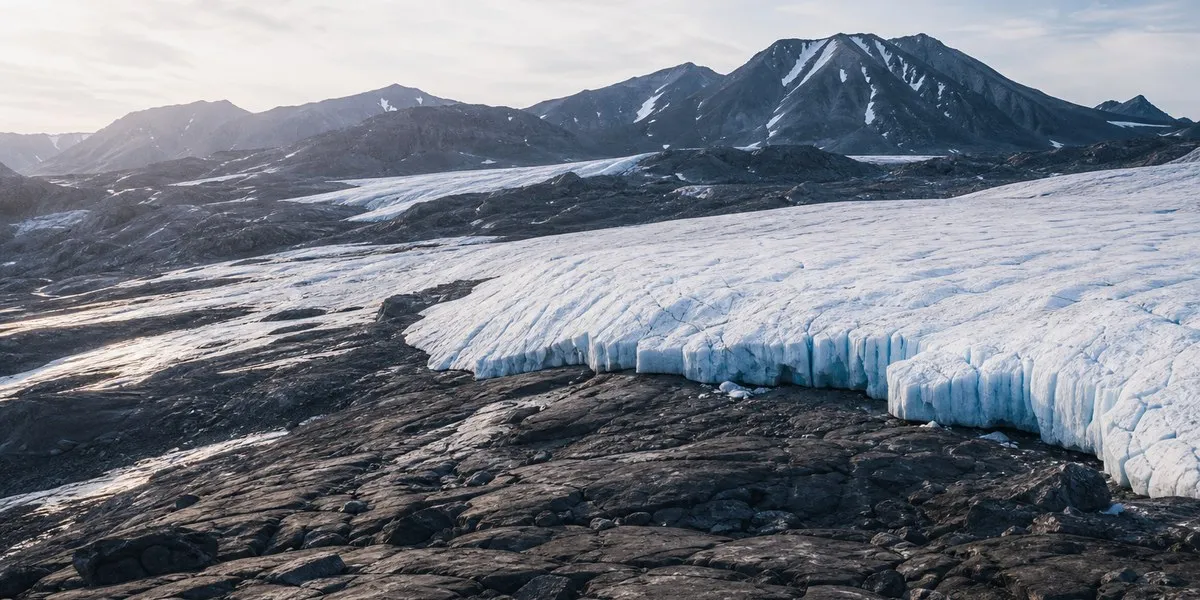
A study of the Barnes Ice Cap in Canada suggests that human-caused warming may have halted the early phase of a new glaciation. As ScienceAlert reports, the work was published in the journal Science.
Evidence from beneath the ice
The Barnes Ice Cap is a remnant of the Laurentide Ice Sheet, which covered much of the northern United States and Canada during the Pleistocene, approximately from 95,000 to 20,000 years ago. At its greatest extent, the sheet stretched from the Arctic Circle to Illinois, while ice thickness reached three kilometers in some places.
To reconstruct the history of the Barnes Ice Cap, scientists determined the ratio of the cosmogenic isotope beryllium-10 in rocks. Its accumulation stops when rocks are covered by a glacier and resumes after the ice retreats. The authors also analyzed ancient vegetation exposed by the retreat of the ice cap using radiocarbon dating.
More current news is available on the UA.News Telegram channel Telegram.
Reversal after the 1960s
According to the authors' estimate, the highest temperatures of the current interglacial period, the Holocene, in northern latitudes occurred approximately 11,000–10,000 years ago. Cooling began afterward, but the Laurentide Ice Sheet continued to shrink because its surface had subsided too low for further growth.
About 3,600 years ago, the ice cover of which the Barnes Ice Cap is a remnant was smaller than its current size and remained at that minimum until approximately 2,000 years ago. After that, it began to grow; researchers consider this a possible beginning of the next glaciation.
The Barnes Ice Cap reached its historical maximum around 1960, after which its growth was replaced by a negative mass balance: during warm months, it melted faster than it was replenished in winter. The authors primarily link the ice loss to rising summer temperatures. Under current climate scenarios, the last remnants of the Laurentide Ice Sheet may disappear forever.




