
Northrop plans to attach a propulsion module to the Optus satellite in 2027
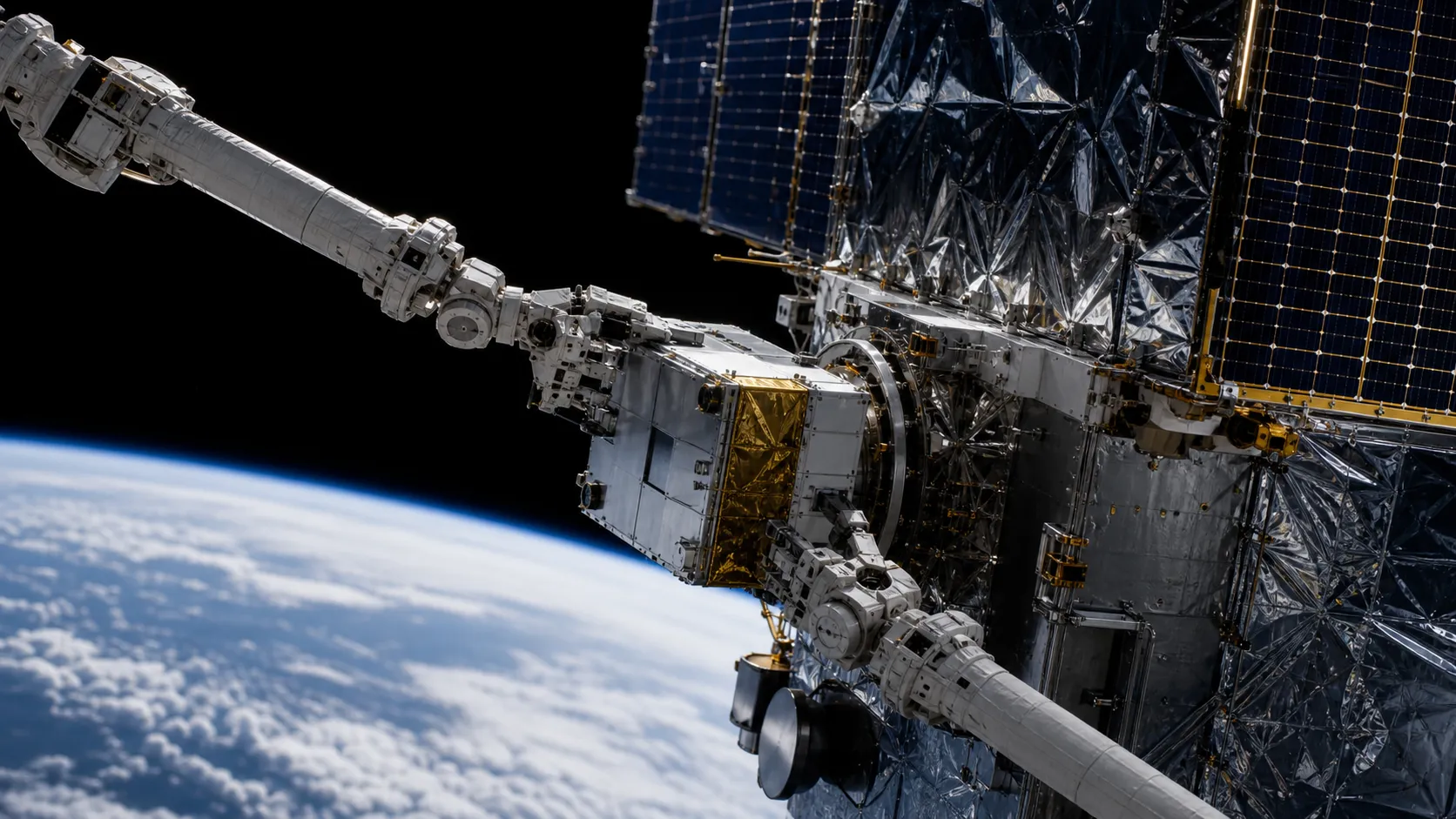
Northrop Grumman’s Mission Extension Vehicle (MEV) undocked this week from a telecommunications satellite operated by the Australian company Optus. For over a year, it was attached to the rear of the satellite and helped keep it in the correct position in space, allowing the satellite to continue its mission. In 2027, Northrop plans to install a thruster module on the satellite using the Mission Robotic Vehicle (MRV), according to TechCrunch.
In July, Northrop launched four spacecraft aboard a SpaceX Falcon 9 rocket: the MRV and three smaller Mission Extension Pods (MEPs). The MRV is equipped with two robotic manipulators developed by the U.S. Defense Advanced Research Projects Agency (DARPA). The MEPs are smaller modular propulsion systems that, once attached, are designed to remain on the satellites permanently.
The four spacecraft are heading to their target orbits approximately 27,000 miles above Earth. In 2027, the MRV is set to use its manipulators to attach one of the MEP modules to the Optus satellite. According to TechCrunch, this will be the first attempt to attach a new propulsion system to an aging satellite. The Optus satellite was launched in 2009, and its design life was 15 years. If the operation is successful, the satellite will be able to continue operating and generating revenue for another six years or so.
For more breaking news, follow the UA.News Telegram channel.
Communications satellites and spacecraft equipped with various sensors often cease operations because they run out of fuel needed to maintain their desired position, rather than due to malfunctions in their computers or transmitters. Two MEVs, launched in 2019 and 2020, have collectively extended the operational life of two Intelsat satellites and one Optus satellite by a total of 10 years. MEV-1 will await a new customer in parking orbit, while MEV-2 will remain attached to the Intelsat satellite until 2030.
The new model calls for operators to purchase and own MEP modules, and once installed, the MRV will be able to service other spacecraft. For such operations, spacecraft must autonomously approach and safely dock with each other while traveling at speeds of thousands of miles per hour. Unlike most satellites, the MRV is also designed for in-orbit refueling.




