
Thinned Australian forests stored no less carbon in wood — ScienceDaily
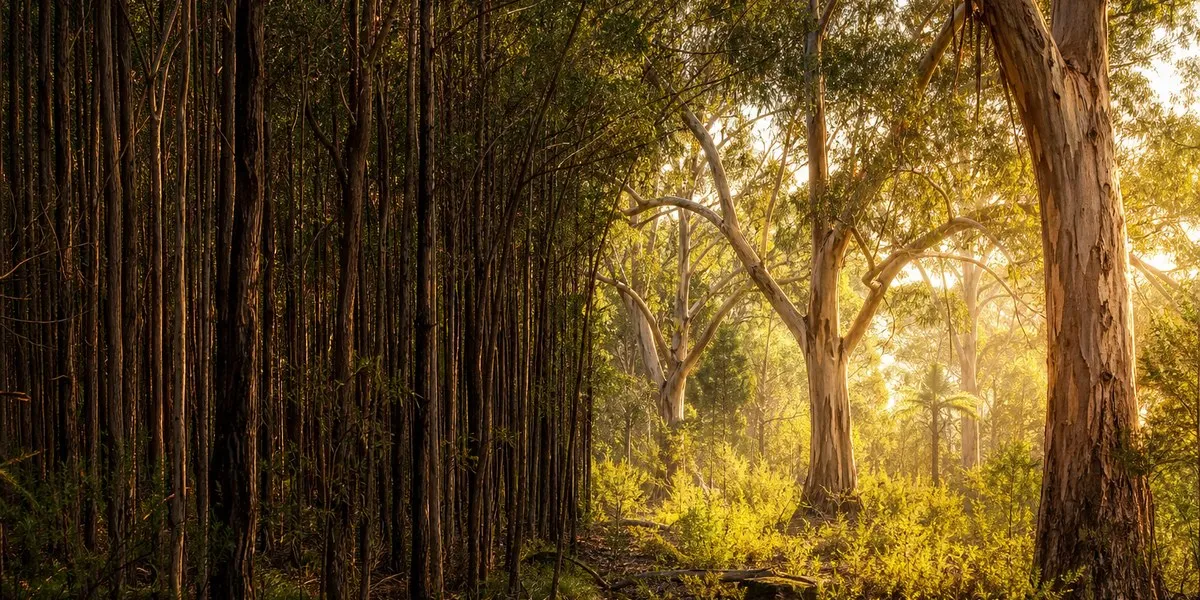
A 30-year observation of a forest experiment in Tanjil Bren, Victoria, Australia, showed that heavily thinned areas of mountain ash forest stored as much or more carbon in wood than areas without timber harvesting. ScienceDaily reports on the study's findings.
The Silvicultural Systems Project experiment was launched in 1987–1989 at two sites: Tanjil Bren in Victoria's Central Highlands and Cabbage Tree Creek in East Gippsland. Researchers compared forest regeneration after large clear-cuts 250–350 metres wide, smaller clear-cuts 50–140 metres wide, and intensive thinning, during which 50–70% of trees were cut down. Large forest areas were left without harvesting as control sites.
Trees in thinned areas
Early results at Tanjil Bren showed that mountain ash regenerated best in large clear-cut areas. Where tall upper-canopy trees were retained or small clear-cuts were carried out, common understory species, including acacias, predominated.
More current news is available on the UA.News Telegram channel Telegram.
When scientists revisited the site in 2014, the trees left after thinning proved to be significantly larger. At about 80 years of age, the largest of them had an average diameter at breast height of more than one metre, while individual trees exceeded 1.5 metres. The largest trees in thinned areas were 20% larger in diameter than trees in control areas without harvesting.
Carbon and habitat
Over 30 years, the intensively thinned forest not only restored the carbon stock removed during timber harvesting but also accumulated an additional amount equal to the increase in stocks at the control sites. The authors note that larger trees may be more resistant to fires and more often form hollows that are important for rare species, including the greater glider and Leadbeater's possum.
Acacias that grew in most areas with forestry intervention are also important for Leadbeater's possum as places for feeding and movement. Camera traps recorded these animals at every surveyed site with different forestry intervention methods, but not at control sites without harvesting. The researchers stress that thinning is not a universal solution and should not be used everywhere, but it may help create a forest with greater diversity in tree ages and sizes.




