
Upper Colorado Basin lost nearly twice as much groundwater — Live Science
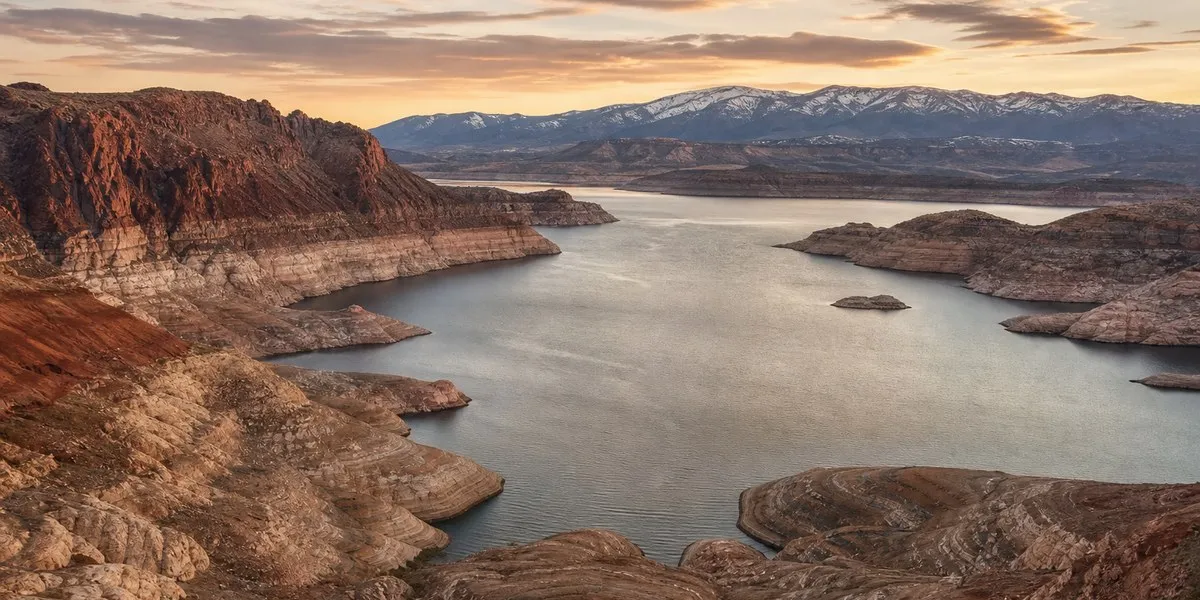
During the 2020–2022 drought in the United States, the Upper Colorado River Basin lost about 17.5 cubic kilometers of groundwater, while losses in the Lower Basin amounted to approximately 9.4 cubic kilometers. This result was unexpected, as the Upper Basin has traditionally been considered more resilient to prolonged dry periods due to greater rainfall and snowfall in the Rocky Mountains, Live Science reports.
Satellite and hydrological observation data
The authors of the study, published on October 13 in the journal Water Resources Research, assessed groundwater depletion in the Colorado Basin from 2004 to 2023. They used satellite and hydrological data on surface water, soil moisture, water stored in snow, as well as observations from the Gravity Recovery and Climate Experiment and GRACE Follow-On missions.
Over the entire study period, the Colorado River Basin lost 58.3 cubic kilometers of groundwater. Scientists found that depletion continued for two decades but accelerated in 2019. According to the study's first author, Virginia Tech geosciences doctoral student Esther Oyedele, the main reason for the acceleration was the three-year drought that began in 2020: it reduced snow cover in the Rocky Mountains, intensified evaporation, and increased water demand.
More current news is available on the UA.News Telegram channel Telegram.
Different dependence on surface water
The Upper Basin includes parts of Colorado, New Mexico, Utah, and Wyoming; the Lower Basin includes parts of Nevada, California, and Arizona. In the Lower Basin, natural replenishment of groundwater reserves is lower because of lower levels of rainfall and snowfall. At the same time, evaporation rates are higher there and water demand is substantial: the Lower Basin is home to about 30 million of the 40 million people who depend on the Colorado River.
Researchers also analyzed the relationship between surface water and groundwater. In the Upper Basin, groundwater levels changed in the same direction as surface water, but with a slight lag. This may indicate reduced aquifer recharge and increased water pumping during drought. In the Lower Basin, this relationship proved weaker and more complex: in some cases, groundwater losses preceded declines in surface water. According to Oyedele, this may indicate that depletion is linked not only to surface water shortages but also to persistent overuse of groundwater.




