
Ukraine's Airspace: Is "Ukraerorukh" Bringing Us Closer to the Possible Resumption of Flights? — A Forecast by Mykhaylo Kurachenko
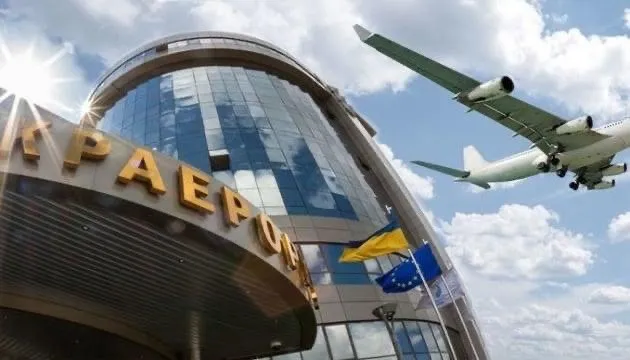
The issue of resuming civilian air traffic over Ukraine remains one of the key challenges for the country’s transportation infrastructure and economy. Despite the closure of its airspace, the Ukrainian aviation system is not “on hold”; on the contrary, it is actively integrating into European technological processes. What is Ukraerorukh preparing for, and is there a real prospect of opening Ukraine’s skies? Find out in this article.
Recently, Ukraerorukh publicly announced its participation in the European innovative project Flight Centric ATC, which was implemented under the SESAR program (HORIZON-SESAR-2022-DES-IR-01) and is part of the “Single European Sky” concept.
What does this mean
The traditional air traffic control system is based on a rigid sectorization of airspace, where controllers are responsible for fixed sections of the sky, explains civil aviation expert and Ukrainian-American entrepreneur Mykhaylo Kurachenko. At the same time, the Flight Centric ATC concept radically changes this approach.
“The idea is that the air traffic control workload should now be distributed not by sector, but exclusively based on the aircraft’s route. In other words, the geographical principle disappears, and a single controller will be able to guide an aircraft throughout its entire flight, no matter which countries (or sectors) the aircraft crosses. Whereas previously, a controller from Ukraine, for example, would guide the aircraft to the border of their sector and then hand over control to the next controller—who might be in Bulgaria, for instance—and that controller would then hand it over to the next one. And so on until the final destination,” the expert explained.
The innovation and practicality of this approach are obvious, says Mykhaylo Kurachenko. With this model, flight paths can be significantly optimized and fuel consumption reduced.
Ukrainian air traffic controllers
Ukraerorukh air traffic controllers were directly involved in the Flight Centric ATC project (which launched in 2023). And on March 30, 2026, Flight Centric ATC reached Technology Readiness Level 6 (TRL 6).
“In simple terms, this means that the system has been tested under conditions as close as possible to real-world operation. It has been recognized as functional—and as a system that not only increases the flexibility of air traffic control but also maintains high safety standards. Which, in fact, is the most important thing,” adds Mykhaylo Kurchenko.
Does this bring the “opening of the skies” over Ukraine any closer?
The resumption of flights in Ukraine depends on many factors. Martial law and security guarantees remain the primary considerations in this context, regardless of any technological solutions or innovative approaches.
“Feel free to add to this the issue of flight insurance and other international regulatory decisions. So, it’s not that simple. And even if we imagine that a Ukrainian air traffic controller is managing the flight from Poland, for a certain period of time, that aircraft is still in Ukrainian airspace. Therefore, I would say that projects like Flight Centric ATC are actually preparing Ukraine for the fastest possible integration into the European aviation system immediately after the opening of the skies,” noted Mykhaylo Kucherenko.
In general, all experts are currently very cautious in assessing the prospects for the resumption of air traffic in Ukraine, primarily allowing for the possibility of opening individual routes from airports near the country’s western borders.
In particular, according to former Ukrainian Minister of Transport Vasyl Shevchenko, there are two airports in Ukraine that are maintained at a sufficient level of readiness and, in the event of an “aviation truce,” will be able to quickly resume operations. These are Boryspil International Airport and Lviv International Airport named after Danylo Halytskyi.
At the same time, given the impossibility of trusting the Russians—even under conditions where the airspace is divided into a “war zone” and a “peace zone”—the risks of accidental or even deliberate downing of civilian aircraft by the enemy will remain high until the war in Ukraine is completely over.




