

In late May, President Zelenskyy convened a closed-door meeting with representatives of parliamentary factions. Among other things, the head of state stated at the time that there was every chance of bringing the active phase of the war to an end by November.
Within days, these words were picked up by the media and advisers to the Office of the President, and later, the head of the Office of the President, Kirill Budanov, stated that such a scenario was indeed possible. For a society exhausted by four and a half years of full-scale war, including mobilization and new large-scale attacks by Russia, these words sounded like yet another long-awaited glimmer of hope.
But could November 2026 truly be the month when long-awaited peace comes to Ukraine? Or is this perhaps yet another attempt to give the country hope tied to a new calendar date, without any substantive substance? UA.News political analyst Mykyta Trachuk, together with experts, examined the issue.
Why November: The Political Triangle and Security Guarantees
To understand the nature of this forecast, it is worth looking at the arguments underlying it. The first and most obvious is the U.S. midterm congressional elections, which will take place in November 2026. For Donald Trump’s administration, this will serve as a kind of referendum on confidence in his policies, particularly his foreign policy (Americans have plenty of questions about it).
In Kyiv, it appears they are operating on the logic that Trump needs a high-profile foreign policy success, and peace in Ukraine is precisely the asset he can present to voters. As if to say: Look, I stopped a war that my predecessors couldn’t stop, even though it took me “a little” longer than the “24 hours” promised during the campaign.
Against this backdrop, one might indeed expect an intensification of U.S. efforts, but the experience of the past year and a half of Trump’s presidency calls for caution. During this time, none of the rounds of negotiations, none of the initiatives—whether in Riyadh, Istanbul, Geneva, or anywhere else—have yielded tangible progress. Trump, preoccupied with domestic strife, trade wars, and his own agenda—such as a war in Iran—has shown no willingness to pressure Moscow and Kyiv as much as would be required to genuinely compel the parties to make peace. He readily accepts the laurels of a potential peacemaker but avoids the role of a tough cop. Whether this strategy will change before the election remains an open question.
The second argument is military. In Kyiv, they are convinced that the latest Russian offensive, currently underway, will run out of steam without achieving its strategic objectives. Indeed: the front line remains largely static, and the price the Russian army is paying for small tactical advances remains disproportionately high.
However, there is a vast gulf between the failure of the enemy’s offensive and the end of the war’s active phase. First, the Kremlin shows no willingness to stop. Second, the very concept of the “hot phase” remains vague: does it refer to a ceasefire, a freeze along the line of contact, or a full-fledged peace treaty? Each of these scenarios requires a different level of agreement.
And this is where the third component comes into play—security guarantees for Ukraine. Kyiv has repeatedly emphasized that any ceasefire without reliable, legally binding guarantees would be nothing more than a pause before a new war, and therefore Ukraine will not agree to it. Is Washington or anyone else prepared to provide such guarantees? Will Moscow agree to this? These are all, once again, questions that currently have no answers—and without them, any date for the end of the war remains merely an abstraction.
The History of Autumn Promises
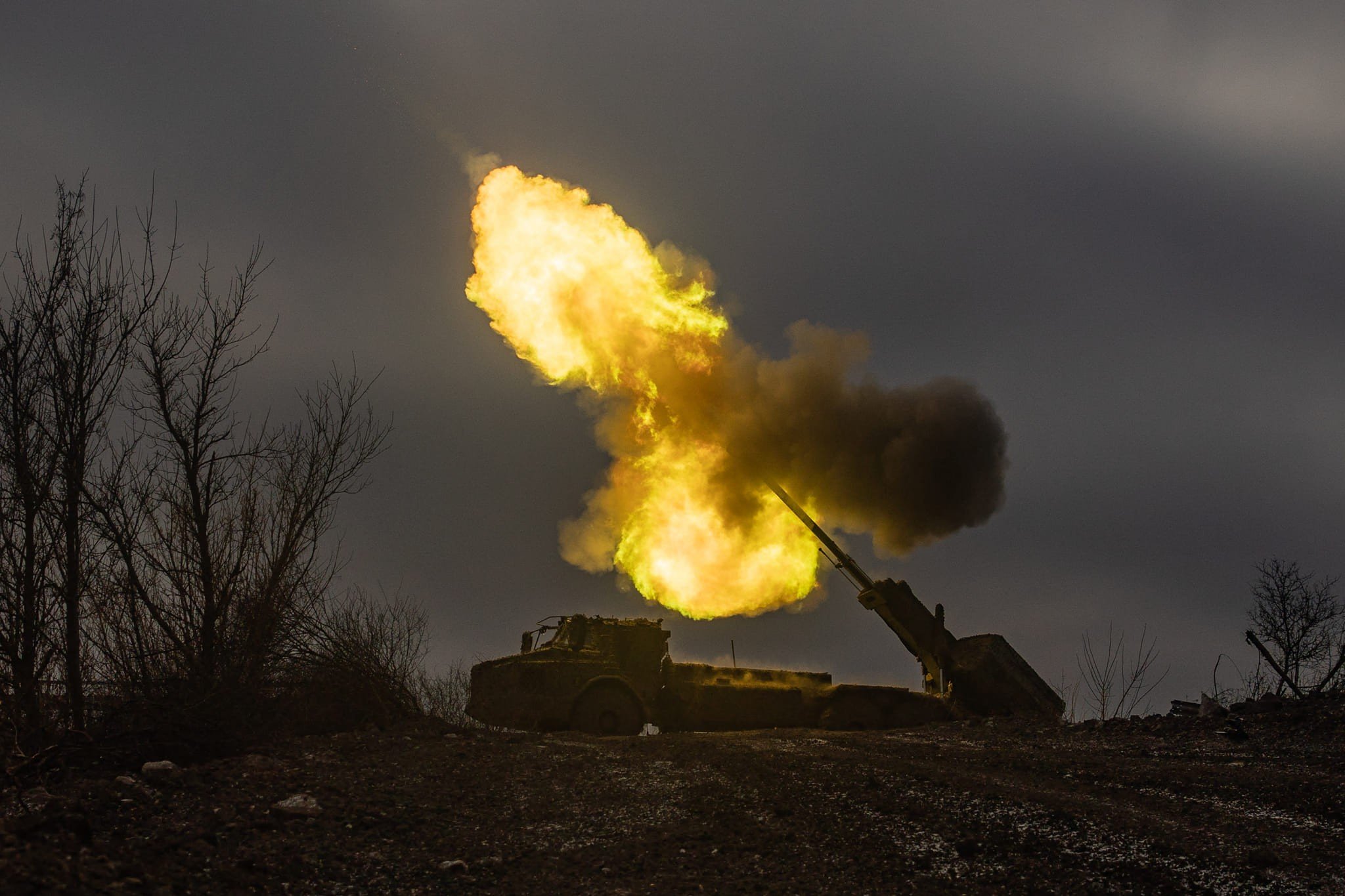
If we rewind the tape, we can see a sad pattern: this is not the first time autumn has become a season of high expectations. In 2022, the public hoped that, against the backdrop of the Ukrainian Armed Forces’ major successes, the war would end before winter. In the fall of 2023, Ukrainians lived in hope of a breakthrough following the summer counteroffensive: at the time, October and November were cited as possible moments when the Russian army on the front lines would crumble. In 2024, people expected the U.S. elections to be a catalyst for peace: the idea was that the new administration would quickly resolve everything. In 2025, there was renewed talk of an autumn “window of opportunity” amid the depletion of Russian reserves. And now it’s 2026 on the calendar…
In total, over four and a half years of full-scale war, we’ve heard literally hundreds of dates, milestones, and deadlines: by the end of the year, by spring, by the start of the new political season, by the elections here and there, and so on. None of these dates came to pass. War is, in general, a process that lends itself extremely poorly to calendar planning.
Why, then, is a specific month being mentioned again? The answer, obviously, lies not only and not so much in the realm of military-political analysis, but also in the realm of social psychology.
Anti-crisis measures amid aerial terror and the “specter of a future Christmas”
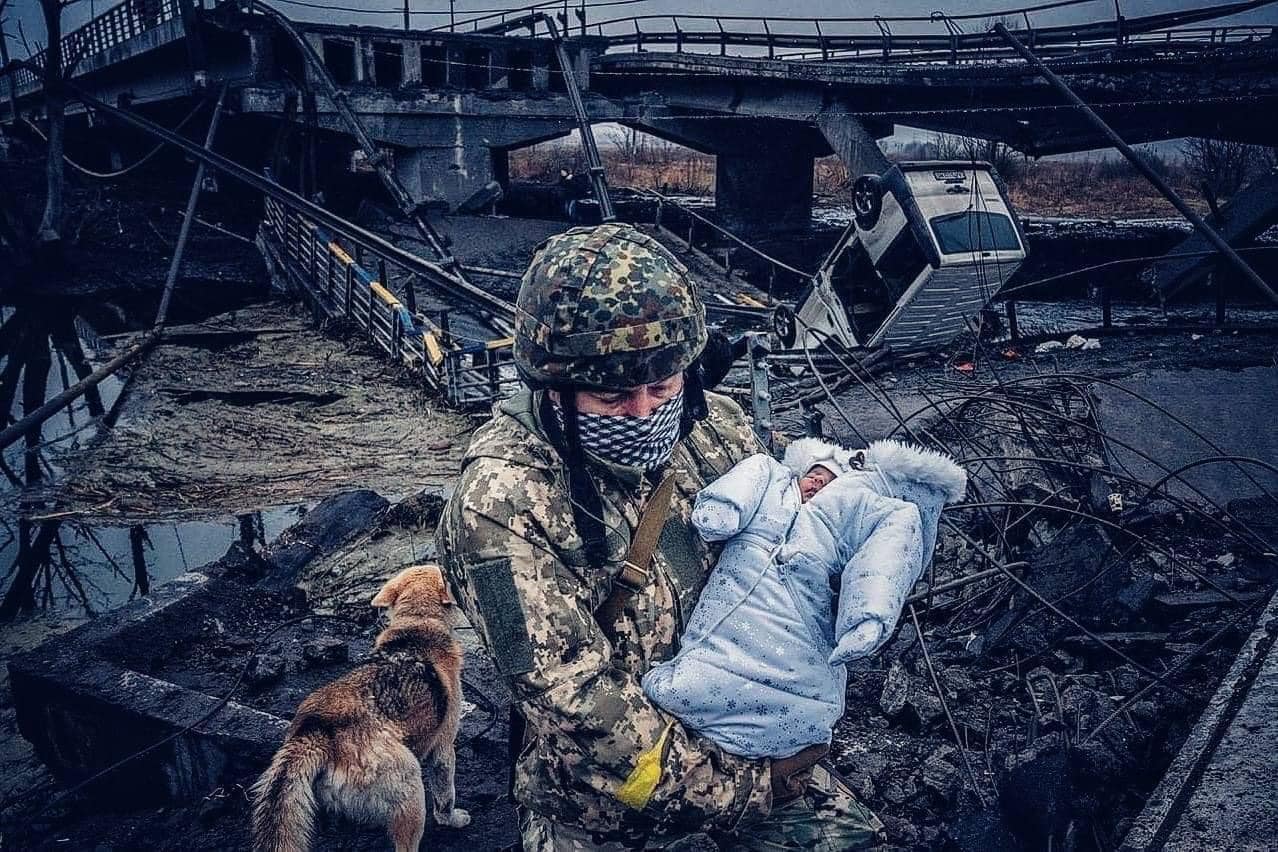
The past few months have seen an unprecedented escalation of aerial terror against Ukrainian cities. Russia is methodically attacking the rear and escalating the scale of its strikes. Last winter was already the hardest in the history of independent Ukraine, when it was only by a miracle that a complete collapse of the infrastructure was avoided. And now, with early summer just outside the window, the thought of the coming winter evokes not just anxiety, but genuine fear. Will the country survive a second winter like that? Will the power grid hold up if the cold is just as severe and the strikes even more intense? Hardly anyone wants to test that out.
In this context, statements about the end of the hot phase by November serve a very specific domestic political function. They give society what it needs most after years of exhaustion—some hope for calm, beyond which lies relief and at least a relatively peaceful life. This is a classic crisis-management tactic: when reality becomes particularly bleak, a date always appears that one simply needs to survive until—and then everything will get better. When that date passes, just like all the others, another one will appear. And so on, ad infinitum.
It is no coincidence that this time the deadline is tied specifically to November—the last month before winter, followed by December with its frosts and darkness. Psychologically, this creates a chain of thought: “just a little more patience—and it will all be over before the cold sets in.” This doesn’t necessarily mean the government is deliberately manipulating people: rather, it’s using the same psychological defense mechanism that kicks in for society as a whole—the belief that suffering has an end. Although, again, this is by no means guaranteed.

Expert Opinions
Military expert and retired U.S. Navy Commander Harry Tabach believes the odds of the war ending by November 2026 are roughly “50-50.”
“The war may end, or it may not. We must understand that Trump is not God. Therefore, everything here depends on many factors and variables, including Ukraine itself. Once again, the media is pushing the narrative that Trump supposedly ‘promised’ something—even though he never said anything of the sort and didn’t set any deadlines. And linking the end of your war to the congressional elections is completely nonsensical. Ukraine doesn’t have much influence on the elections. Iran does, but Ukraine… I don’t think so. None of this really matters to the average American. Ukraine doesn’t affect their lives. I think all of this is more personal for Trump. He doesn’t like it when people are killed… Of course, you can expect some diplomatic action from the U.S. But then you shouldn’t blame others for not meeting your expectations, as long as your actions are based solely on your own imagined expectations. You have to achieve results yourself, rather than expecting others to do it for you while you criticize and scold them. The exception here is Ukrainian soldiers,” Harry Tabakh is convinced.
MP Yaroslav Zheleznyak commented on the president’s words as follows:
“At a meeting with lawmakers, the president once again announced another date for the theoretical end of the war. I thought about writing it down. But considering that this has been mentioned at every meeting and has never matched reality, there’s no point.”
However, Ukrainian Armed Forces soldier and reconnaissance company commander Denys Yaroslavskyi notes that the war could indeed end by November. But a great deal here depends specifically on the position of the U.S. and Donald Trump personally.
“I would like to see more than just political slogans when it comes to ending the war. There is a consensus in society that the majority wants the war to end. That’s normal and understandable. The main thing is that such statements by the authorities aren’t just a means of offering some hope, and that’s it. As for the context of the U.S. elections, midterm congressional elections always take place in the fall, and historically, the incumbent administration usually loses them. But Trump is a man who is set on constant victories. I think that ending both the war with Iran and the war in Ukraine before the election will be a priority for him. If both of these cases are successful, he will be able to demonstrate significant results in the election.
I recently spoke with representatives of the Trump administration, and they said something very interesting: as of today, the Republican wing is ready to designate Russia as a state sponsor of terrorism. Let me repeat: not the Democrats, but the Republicans. If Trump takes such an ultimatum against Putin—essentially saying, “Stop the fighting, freeze the conflict, or we’ll designate you a state sponsor of terrorism”—I think that would be a compelling argument and it could work. The U.S. can end this war if it wants to; it has all the resources and means to do so, no matter what anyone says. The only question is whether they will use them,” said Denis Yaroslavsky.
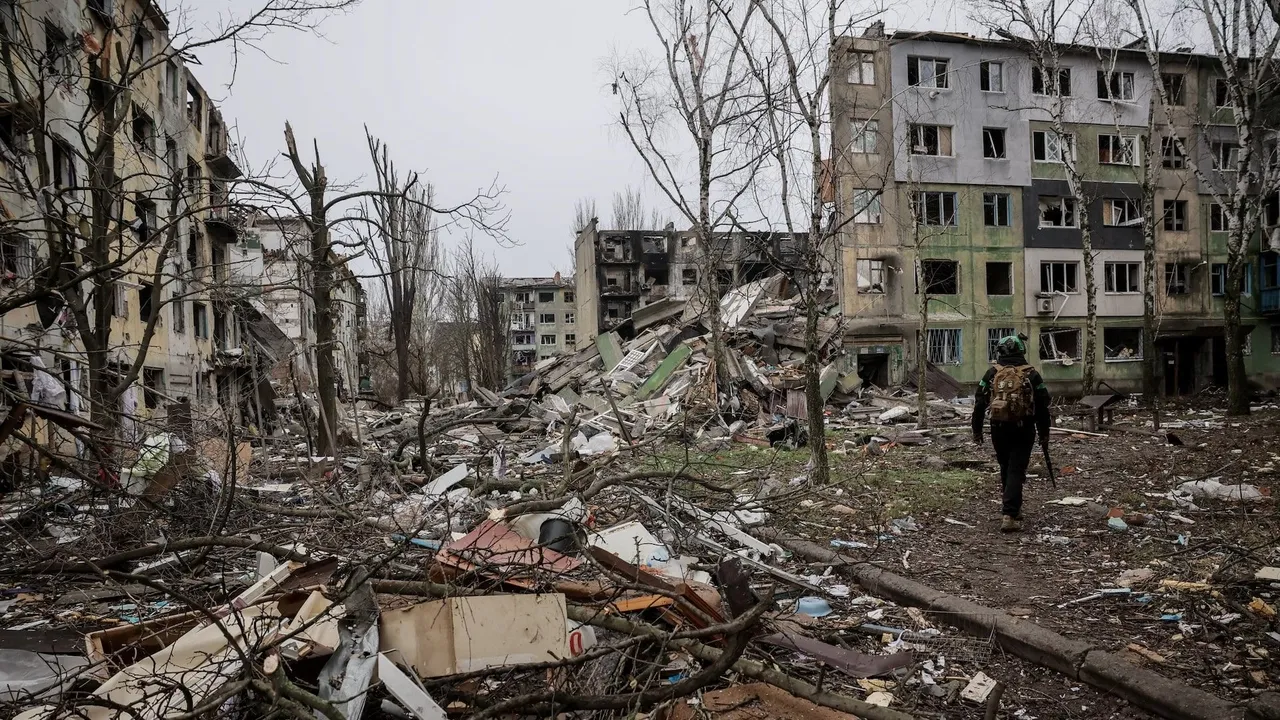
In summary, the question arises: could the war end by November 2026? Absolutely, it could. In principle, it could end any day—if only there were the will to do so. And just as easily, it might not end even in the next 10 years. There is a chance for the first, the second, and the third scenario. However, there is a huge gap between the existence of these chances and their realization.
Reality, however, looks more prosaic. Trump is unlikely to end the war before his election. In fact, he cannot and does not have to do so: the war in Ukraine is Ukraine’s problem, not the U.S. president’s. Likewise, Putin clearly has no intention of halting hostilities. And the security guarantees demanded by Kyiv remain the subject of extremely complex and agonizingly slow negotiations, in which a breakthrough is unlikely.
Therefore, statements about November should be treated as experienced psychologists advise: always hope for the best, but prepare for the worst. Most likely, the active phase of the war will not end by this fall or the next, unfortunately. And this is not pessimism for the sake of pessimism, but a sober assessment of the trajectory this conflict is taking.
We have heard similar promises far too many times over these four and a half years, and all too often they were followed by painful disappointment. The “anti-crisis” strategy of setting a new date works to some extent; it gives some people hope and the strength to carry on, but it is still not worth placing too much hope in it.


