
The EIB Will Finance Five New Kitchen Factories in Ukraine
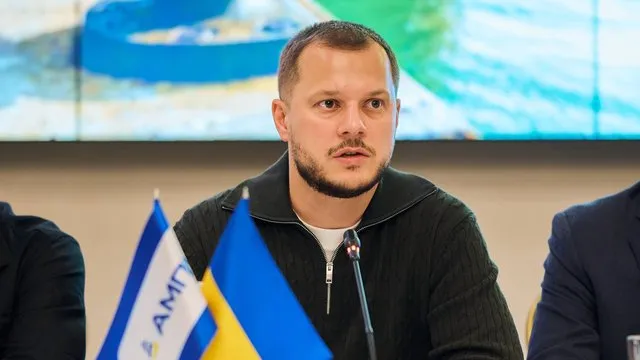
The European Investment Bank will finance the construction of five new central kitchens in Ukraine. Together, they will be able to prepare up to 65,000 meals per day for schoolchildren. The new facilities are planned to be built in Vyshneve, Lebedyn, Vinnytsia, Zaporizhzhia, and Sheptytskyi.
The European Investment Bank (EIB) will help Ukraine build five new central kitchens for school meals. The bank will finance the projects, from the construction of the facilities to the purchase and installation of the necessary equipment. The new central kitchens are planned for Vyshneve in the Kyiv region, Lebedyn in the Sumy region, Vinnytsia, Zaporizhzhia, and Sheptytskyi in the Lviv region. Their total projected capacity will be approximately 65,000 meals per day. Ready-to-eat meals will be prepared at the facilities and then delivered to schools.
“We plan to build new central kitchens in Vyshneve in the Kyiv region, Lebedyn in the Sumy region, Vinnytsia, Zaporizhzhia, and Sheptytskyi in the Lviv region. They will prepare food for a network of schools and deliver it to the schools,” Kalashnyk wrote on Telegram. But for such a system to work, it’s not enough to simply build the factories. At the same time, local communities will have to renovate school cafeterias and provide them with special vehicles for delivering prepared meals.
In Sheptytsky, they will feed about 10,000 children
Separately, Kalashnik spoke about a project in the town of Sheptytsky in the Lviv region. There, plans are in place to build a central kitchen capable of providing meals for about 10,000 children.
The project also includes the renovation of 40 school cafeterias. In addition, a system for delivering prepared meals to schools will be organized. This means schools will not have to prepare all meals on-site themselves. Most of the work will take place at the central kitchen, after which the food will be delivered to the schools.
Central kitchens are already operating in Ukraine
A similar model is already in use in Ukraine. According to Kalashnyk, central kitchens in Bucha and Lozova together provide meals for about 20,000 children. Now the government wants to expand this model to other communities. The idea is to prepare large quantities of food centrally and then deliver them to several schools. “We already have experience with this: the central kitchens in Bucha and Lozova together serve about 20,000 children. The next step is to expand this model to other communities,” the minister noted.
According to him, Ukraine has set a goal of establishing 17 central kitchens by 2029. “Our target is to establish 17 central kitchens by 2029. We are currently looking for partners to help communities with the renovation and modernization of cafeterias, as well as with equipment and logistics,” Kalashnik said.
This is part of the school meal reform
The development of infrastructure for healthy nutrition for children was discussed during a workshop held as part of the Carpathian Summit. Kalashnyk described the development of central kitchens as part of the school meal reform initiated by Ukraine’s First Lady Olena Zelenska.
The system involves more than just building new kitchens. It is also important to renovate cafeterias, improve menus, create proper conditions for food preparation, and organize safe food delivery.
Free Meals for Schoolchildren
At the same time, the government is expanding the program for free school meals. Starting September 1, students in grades 1–11 will receive free meals. The government funds this program and sets the basic requirements for organizing meals. However, local communities are directly responsible for implementing these measures on the ground.
It is the communities that handle procurement, select suppliers, and ensure that children receive high-quality and safe meals. New central kitchens are set to become part of this system. The plan is to use them to provide meals to several schools at once, which will allow for the centralized preparation of large quantities of food and its delivery to educational institutions. This was announced by Mykola Kalashnyk, Ukraine’s Minister of Recovery, Infrastructure, and Transport.


