
Photo: Lake Synevyr Has Dried Up Significantly Due to a Lack of Rainfall
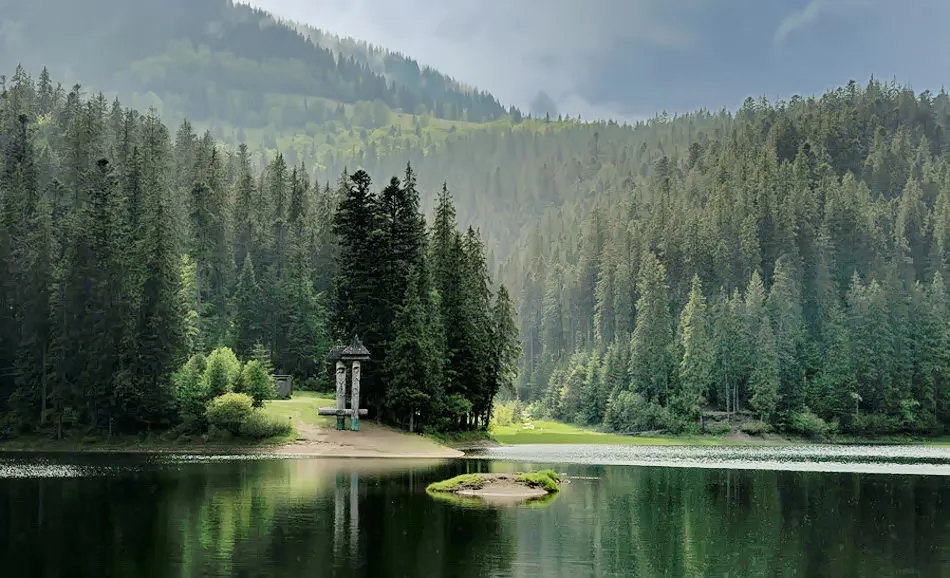
Lake Synevyr in Transcarpathia has seen a noticeable drop in water level this summer. Officials at the Synevyr National Nature Park explained that the shallowing is due to a natural hydrological process and does not indicate that the lake is disappearing.
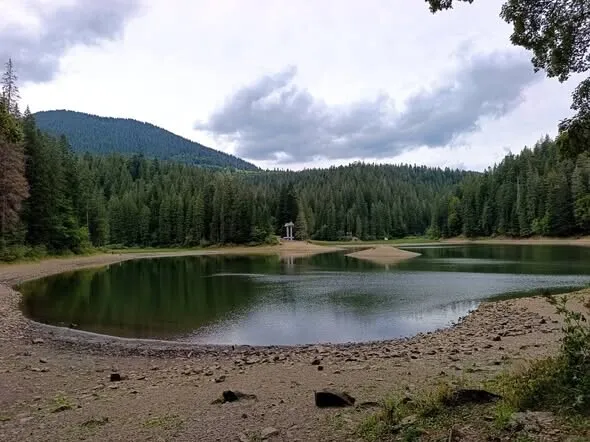
The published photos show that the water has receded from parts of the shore, exposing shallow areas. As a result, Synevyr now looks significantly different than it does during periods of high water levels.
Park officials explain that Synevyr is a through-flow lake. Its water balance depends on atmospheric precipitation and inflow from mountain streams. During dry periods, the amount of water flowing into the lake decreases, while natural outflow continues.
Experts at the “Synevyr” National Nature Park note that the natural range of water level fluctuations in the lake can reach 4–7 meters. The surface area of the lake varies accordingly—from approximately 4.45 to 7.58 hectares.
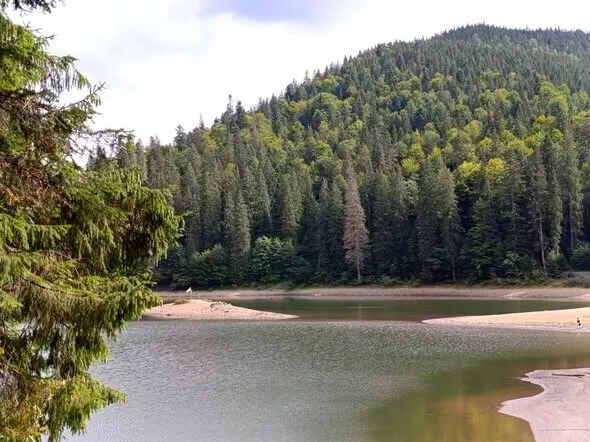
The volume of water in the lake is also not constant and can fluctuate between approximately 350,000 and 460,000 cubic meters. Therefore, the appearance of Synevyr can change noticeably throughout the year.
This year’s situation is primarily due to a prolonged heat wave and a lack of precipitation. As a result, the inflow of water from the mountain slopes has decreased, and some of the streams that feed the lake have nearly dried up.
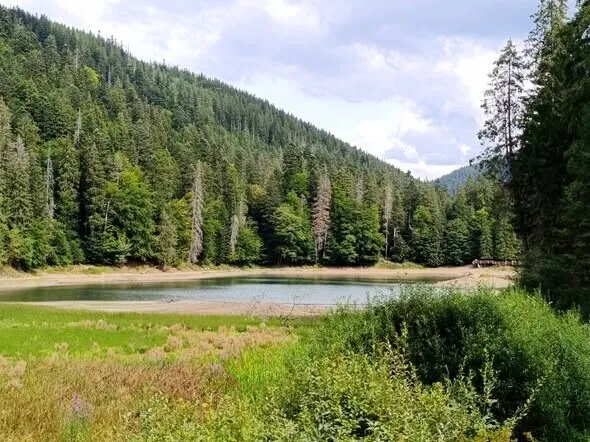
Officials at the Synevyr National Nature Park emphasize that the current drop in water levels has a natural hydrological explanation and is not related to water diversion or human intervention. Experts also note that significant drops in water levels have been observed in the past. According to local residents’ recollections, approximately 80 years ago, the water level in Synevyr also dropped significantly—so much so that the central islet could be reached by land via a sandbar.
Therefore, the current shallowing does not in itself mean that Lake Synevyr will disappear. According to forecasts by park experts, the water level should rise once regular rainfall resumes. For now, the lake remains in place, but its unusual appearance against the backdrop of a prolonged drought has attracted considerable attention.
In the Poltava region, the storks Lel and Kvitka lost their nest due to the return of its former owners.
In addition, storks—among Ukraine’s most revered birds—are beginning to return to the Chernobyl zone, heralding the arrival of spring.




