
Which products might disappear from Ukrainian stores due to Russian attacks?
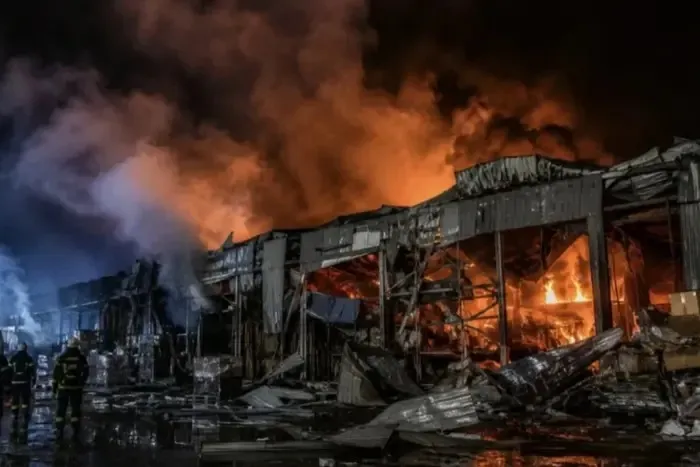
Russian strikes on warehouses and logistics centers are already forcing Ukrainian retail chains to reorganize their operations. The greatest risk right now concerns perishable goods and large household appliances. At the same time, the market does not expect a general shortage, but shoppers may see a smaller selection of goods and higher prices due to more expensive delivery.
Damage to and destruction of distribution centers are forcing retail chains to find new warehouses, change their usual routes, and redistribute inventory differently. According to market participants’ estimates, logistics costs have already increased by approximately 1.5–2 times. For stores, this means additional expenses for transportation, storage, and organizing new routes.
Retailers are trying to prevent empty shelves. Companies are looking for alternative warehouses, negotiating with other suppliers, and distributing goods among several locations instead of a single large center. However, it is not always possible to fully offset the effects of the attacks. This is particularly difficult when it comes to products that require special storage conditions.
Which products might disappear from the shelves
The most vulnerable items are meat, fish, and seafood, dairy products, and fresh fruits and vegetables. These products require rapid delivery and a stable temperature environment. If a cold storage facility is damaged or destroyed, companies cannot simply transport the products to just any available location.
A facility with appropriate refrigeration equipment is needed, and there aren’t many such warehouses on the market. Because of this, certain products may temporarily disappear from some stores or be sold in a more limited selection. In other words, the problem may not manifest as a complete shortage of products nationwide. Rather, a shopper might go to a store and not find the exact brand or specific product they usually buy.
The situation with refrigerated warehouses in the Kyiv region is particularly challenging. Due to their scarcity, prices for certain products that require refrigeration may rise by approximately 5–7%.
It’s not just food that’s affected
Logistical problems also affect non-food items. Among the categories that may become more expensive due to delivery disruptions are refrigerators, washing machines, televisions, vacuum cleaners, multi-function ovens, and other household appliances. According to estimates by the Foxtrot retail chain, purchase prices for large appliances may rise by approximately 7–11%.
For medium-sized appliances, the potential price increase is estimated at 4–7%, and for small electronics and small household appliances—approximately 2–3%. The reason is not limited to damaged warehouses. Large items are more difficult and expensive to transport, especially if routes need to be rerouted or additional storage facilities used. As a result, some models may become less available. Stores will have to wait longer for a new shipment or replace it with a different model.
Stores are trying not to raise prices sharply
Despite rising costs, retail chains do not want to pass on the entire additional cost to customers. Therefore, they are trying to save money at other stages and restructure their logistics. For example, companies are changing delivery routes and distributing remaining inventory among several warehouses. Some products may be redirected to stores where demand is higher.
“Epicenter,” in particular, is already restructuring its logistics processes and redirecting remaining inventory. For shoppers, this may mean that their usual products will remain available, but they’ll have to look for them at a different store or in a different neighborhood. Retail chains may also be more actively substituting one product for another. If a particular brand is temporarily unavailable, a similar product from another manufacturer will appear on the shelf.
Could There Be a Shortage?
Experts do not yet foresee a large-scale shortage of goods in Ukraine. The main scenario involves localized and temporary disruptions. In other words, a particular product may disappear from one store for a few days or weeks, while remaining available in other retail chains.
The situation will depend on how often warehouses and logistics infrastructure are damaged. If companies are able to relocate their inventory and establish alternative routes in a timely manner, they will be able to minimize disruptions. Another issue is product assortment. Even if there are enough goods overall, a store may reduce the number of items to simplify logistics. As a result, a shopper might see not ten varieties of a certain product on the shelf, but, for example, just the four most popular ones.
“Biosfera” Is Already Reducing Part of Its Product Range
After the destruction of Biosphere’s warehouse, the company decided to discontinue some of the slower-selling items. The company intends to focus primarily on high-demand products. This allows it to direct limited warehouse and logistics resources toward the products that customers buy up the fastest.
For consumers, this means a possible reduction in choice. Products won’t necessarily become unavailable forever, but there may be fewer familiar brands or specific models on the shelves. This approach may become more common among other companies as well if attacks on logistics facilities continue.
What This Means for Shoppers
In the near term, Ukrainians should prepare not for empty stores, but rather for a smaller selection and possible price increases in certain product categories. The most vulnerable items remain perishable goods or those requiring refrigerated storage. There is a separate risk for large appliances, as their delivery is more difficult to organize following damage to large warehouses.
That said, not all products will disappear from the shelves at once. Retailers are already restructuring their logistics, seeking alternative warehouses, and working to quickly replace lost supply chains. The main consequence of the Russian attacks for shoppers right now may be straightforward: it will take longer to find familiar products, the selection will be smaller, and certain items may cost more.
For now, the market does not anticipate a widespread shortage. However, the more strikes there are on warehouses and logistics centers, the greater the impact will be on product availability and the cost of delivering goods across Ukraine. This is according to the Ukrainian Retailers Association.
As a reminder, on August 23, Russian forces launched a drone attack on a railway station in the Kharkiv region while a passenger train evacuating people was stopped there. Two women were killed in the strike, and five others were injured.
On August 23, Russian terrorist forces attacked Ukraine’s railway infrastructure five times. One person was killed and four others were injured as a result of the strikes.
On August 23, Russian forces attacked the locomotive of passenger train No. 147, traveling from Zhytomyr to Odesa, with a jet-powered drone. The train was stopped and passengers evacuated before the strike, so neither passengers nor railroad workers were harmed.




