
The Right to Legal Representation. The Borzikh v. ZN Case
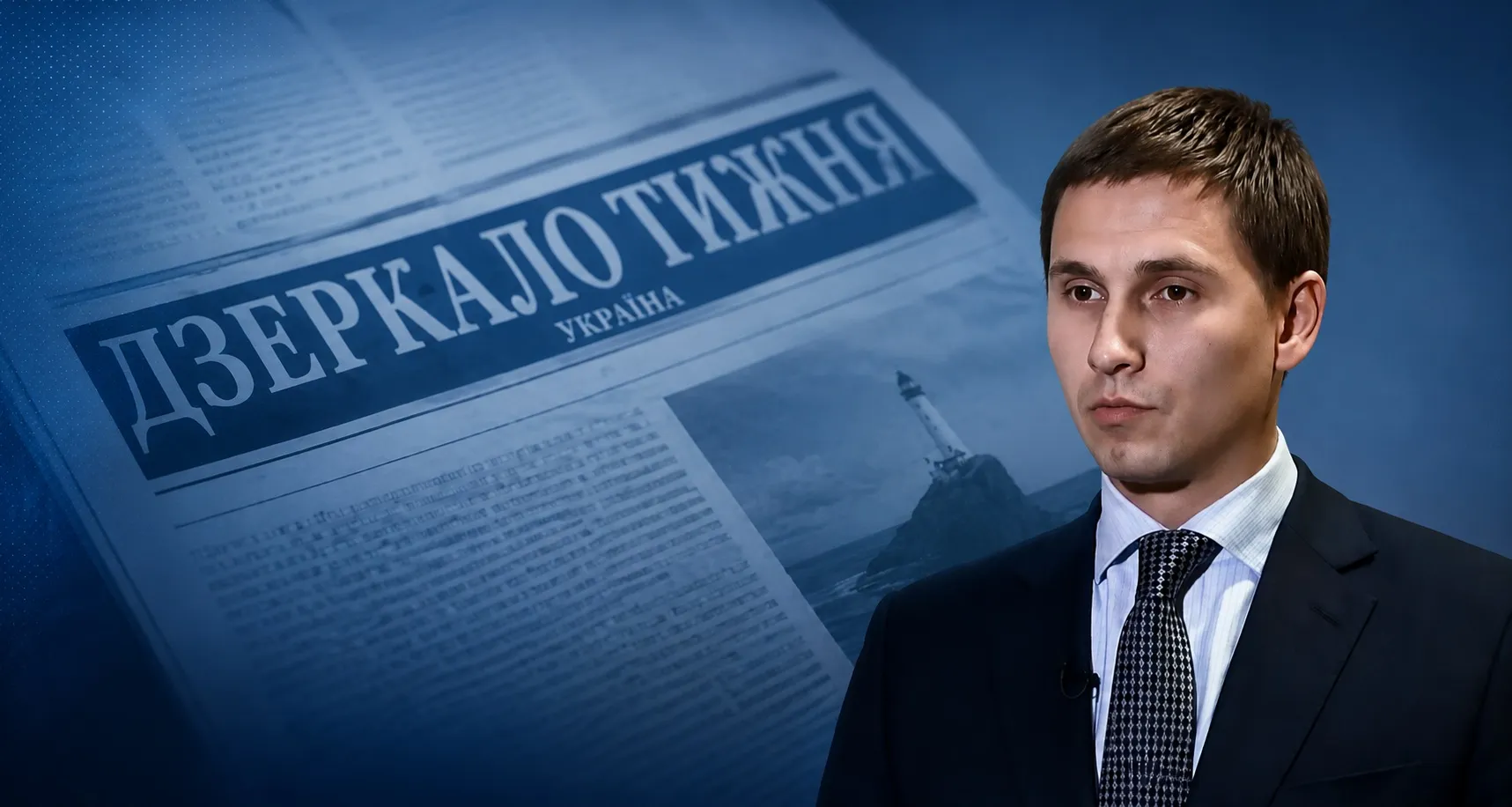
The lawsuit filed by attorney Dmytro Borzykh against the publication ZN.UA and journalist Inna Vedernikova has caused a significant stir in the media community. The Institute of Mass Information stated that it sees signs of a SLAPP—a strategic lawsuit that can be used to pressure journalists and restrict public discourse—in this case.
However, there is a fundamental difference between the concepts of a “lawsuit against a journalist” and a “SLAPP.” The mere fact that a person goes to court over information they consider inaccurate or defamatory—or that violates their honor, dignity, professional reputation, or right to a name—does not in itself make the lawsuit a form of pressure on the media.
In a democratic state, freedom of speech is a fundamental right, but an individual’s right to seek judicial protection remains just as fundamental if they are convinced that the limits of this freedom have been violated.
That is precisely why, in the case of Borzykh v. ZN.UA, it is important to move beyond sensational labels and ask the key question: Were the journalists’ specific statements lawful, sufficiently substantiated, and did they violate the plaintiff’s personal non-property rights?
What Exactly Is Dmytro Borzykh Challenging?
The lawsuit concerns, in particular, the ZN.UA article “The Case of the Hacker Lawyers: How NABU Uncovered the Parasites,” published in April 2025, and a series of subsequent publications.
Among the plaintiff’s claims are the dissemination of information he considers inaccurate, as well as the use of his name as a suspect before a conviction became final.
This aspect is particularly important, as Ukrainian law establishes specific rules regarding the disclosure of the name of a person who has the status of a suspect or defendant.
At the same time, in the public description of Borzykh’s claims, a significant portion of the amount sought relates to court costs and legal fees. This is also relevant to the discussion regarding SLAPP lawsuits, as one of the typical indicators of such lawsuits is deliberately excessive or disproportionate financial demands intended to exhaust the defendant.
Therefore, automatically labeling any case against an editorial office as a SLAPP suit simply because the defendant is a media outlet would be an overly broad interpretation of the concept.
What a SLAPP Really Is
A SLAPP is not just any lawsuit against a journalist.
The Council of Europe defines such cases as legal proceedings used primarily as a tool to intimidate, persecute, or wear down individuals participating in public discourse. Possible indicators include clearly baseless claims, disproportionate demands, a significant imbalance of resources between the parties, multiple lawsuits, delaying tactics, or other procedural abuses.
A similar approach is enshrined in European legislation: the purpose of anti-SLAPP mechanisms is to protect journalists and civil society activists from abusive litigation, not from any recourse to the courts.
Otherwise, a paradoxical situation would arise in which freedom of the press would effectively become judicial immunity for any publication.
No such standard exists in either Ukrainian or European law.
ECHR: Reputation Is Also a Right
The case law of the European Court of Human Rights shows that freedom of speech is not absolute.
Article 10 of the European Convention guarantees freedom of expression but allows for restrictions prescribed by law, in particular to protect the reputation and rights of others. At the same time, the ECHR recognizes that, under certain circumstances, a person’s reputation is part of their right to respect for private life, guaranteed by Article 8 of the Convention.
The European approach is therefore based not on the formula “the journalist is always right,” but on striking a balance. Courts must assess the public interest in the publication, the status of the individual, the nature of the allegations, their factual basis, the journalist’s good faith, and the consequences of the information disseminated.
A telling example is the case of Pfeifer v. Austria, in which the ECHR emphasized that even within the context of a debate of public importance, a person’s reputation remains part of their personal identity and deserves protection.
Therefore, seeking judicial protection of one’s reputation does not conflict with the European model of freedom of expression. On the contrary, it is the court that must determine where the line lies between a journalist’s right to inform the public and a person’s right not to be the subject of false or premature accusations.
Ukrainian courts have already considered a similar dispute involving ZN.UA
In the case of Dmytro Borzykh, the issue of the right to a name is also important.
Part 4 of Article 296 of the Civil Code of Ukraine provides for certain restrictions on the use of the name of a natural person who has the status of a suspect or defendant.
The Supreme Court’s case law is particularly instructive in this context.
In 2025, the Supreme Court considered another case in which ZN.UA LLC was also the defendant. The publication cited the public interest and the public status of the individual whose name was mentioned in the article.
However, the Supreme Court concluded that public interest alone does not override the requirements of Article 296 of the Civil Code regarding the use of a person’s name prior to a conviction.
At the same time, the court chose a proportionate remedy: it did not require the complete removal of the publication but determined that the appropriate measure was to remove the plaintiff’s name.
In other words, journalists’ right to report on criminal proceedings was preserved, but at the same time, the court protected the individual’s personal non-property right.
This, of course, is a different case and does not prejudge the outcome of the Borzykh v. ZN.UA dispute. However, it demonstrates that raising the issue of the illegality of using a suspect’s name is not obviously unfounded.
The presumption of innocence does not disappear after publication
Another important aspect of the dispute is the presumption of innocence.
The Criminal Procedure Code explicitly states: a person is presumed innocent until their guilt is proven in accordance with the procedure established by law and confirmed by a court conviction.
This is important not only for judges and investigators but also for the way in which information about criminal proceedings is presented to the public. There is a fundamental difference between reporting that “a person has been notified of suspicion” and phrasing that effectively gives the reader the impression that the person’s guilt has already been established.
Law enforcement agencies bear a special responsibility in this context. The law on the National Anti-Corruption Bureau of Ukraine (NABU), in particular, provides for disciplinary liability of a Bureau employee for public statements that violate the presumption of innocence.
Media outlets citing their own sources within law enforcement agencies must also distinguish between preliminary investigative information, the prosecution’s version of events, and facts established by a court.
In the digital age, the consequences of an error can be particularly severe. A high-profile story remains in search results for years, while the dismissal of a case, an acquittal, or a retraction often receives significantly less coverage.
For an individual, this can mean reputational damage long before a court has even determined their guilt or innocence.
Global Practice: Suing the Media Is Normal
International experience also shows that lawsuits against major media outlets are a common part of a democratic legal system.
One of the most famous examples is the case of Melania Trump v. the Daily Mail. In 2017, the publisher agreed to pay damages and court costs after publishing allegations about her modeling career, and also issued a public apology.

In 2024, ABC News settled a defamation dispute with Donald Trump following an inaccurate statement by anchor George Stephanopoulos regarding the outcome of a civil case against him. Under the terms of the settlement, ABC agreed to pay a substantial sum and issue a statement.
Even more high-profile was the lawsuit filed by Dominion Voting Systems against Fox News.
Following the 2020 U.S. presidential election, the network aired claims alleging manipulation of Dominion voting systems. The company filed a defamation lawsuit, and in 2023, the parties reached a settlement for $787.5 million.

This case is particularly telling: freedom of the press does not mean the right to spread false factual claims with impunity.
Another example is Australian actor Geoffrey Rush, who won a defamation case against the publisher of the Daily Telegraph following reports of alleged inappropriate behavior toward a colleague.

At the same time, in the United Kingdom, the law also protects the media itself from petty and baseless claims: the plaintiff must prove that the publication caused or is capable of causing serious harm to his or her reputation. This is exactly how the balance should work.
A journalist’s right to free speech does not override a person’s right to a fair trial
Freedom of speech is one of the cornerstones of democracy. Without investigative journalism, criticism of law enforcement agencies, and coverage of criminal proceedings, meaningful public oversight is impossible.
However, democracy works both ways.
A person featured in the media does not lose their right to honor, reputation, the presumption of innocence, and legal protection simply because their name appeared in a publication of public interest.
It is not up to the editorial board, the plaintiff, or the media community to draw the line between these rights. That is the role of the courts.
Therefore, the mere fact that Dmytro Borzykh filed a lawsuit against ZN.UA and Inna Vedernikova cannot automatically be considered evidence of pressure on journalism. To conclude that this is a SLAPP lawsuit, it must be established that there was an abuse of legal proceedings and an intent to stifle public discourse.
For now, however, the court faces a different question: whether the publications about Dmytro Borzykh complied with the requirements of the law, the principle of the presumption of innocence, and the limits of permissible interference with personal non-property rights.
And the answer to this question must be determined not by applying labels, but after considering the evidence and the arguments of both sides.


