
Poverty rate in Ukraine has risen to 41.6% — World Bank
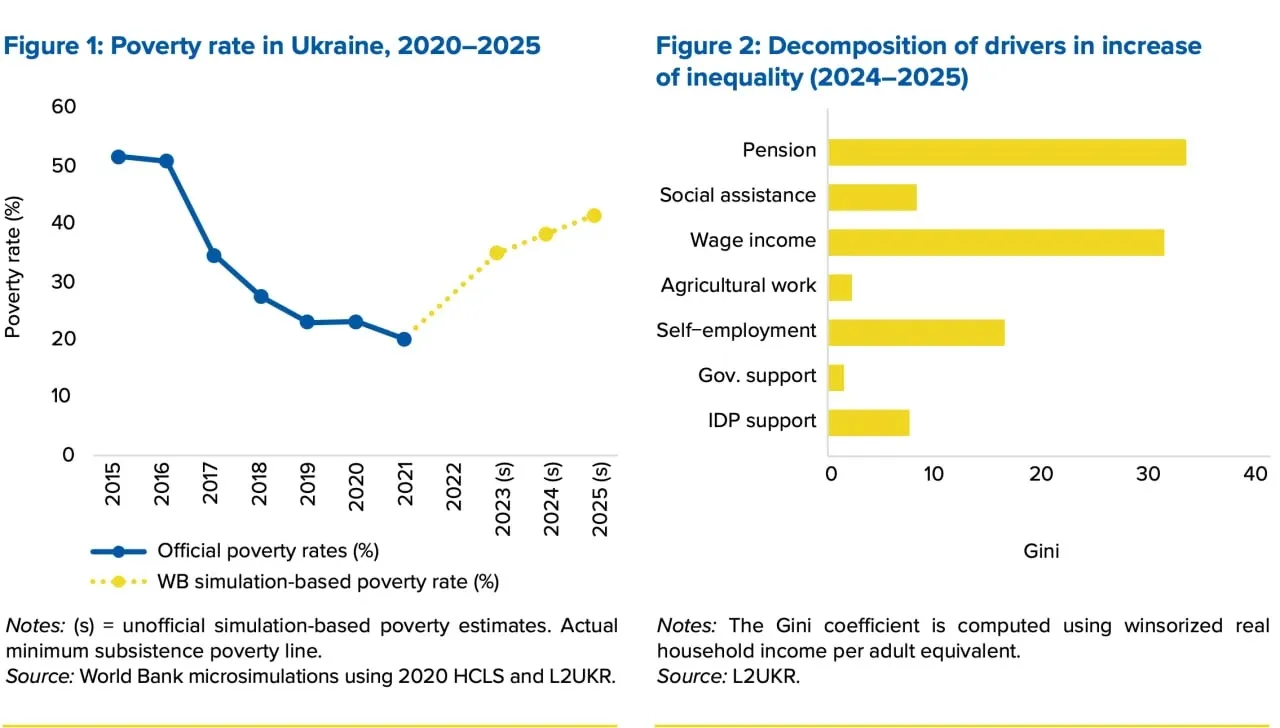
In 2025, 41.6% of Ukraine’s population lived below the poverty line, compared to 37% a year earlier. Since the start of the full-scale war, the poverty rate has effectively doubled. These figures are cited by the World Bank in its study, “Listening to Ukraine.”
The rise in poverty was accompanied by increasing inequality. The Gini coefficient* rose from 0.44 in 2024 to 0.50 in 2025, while in 2023 it stood at 0.41.
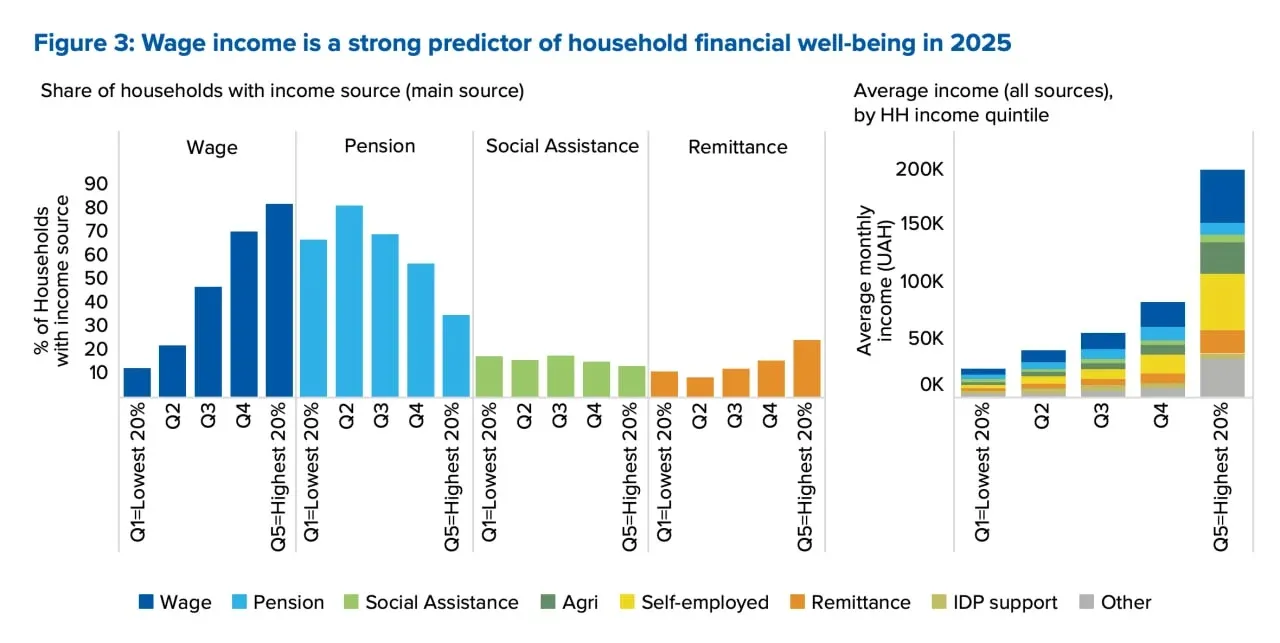
Real labor income for the poorest quintile of households fell by more than 30%. In wealthier groups, by contrast, it rose by more than 10%.
*The Gini coefficient is a measure of income or wealth inequality in a society, where 0 represents perfect equality: everyone has the same income, and 1 represents maximum inequality: one person receives all the income, while everyone else receives nothing.
The rising cost of living has become one of the factors contributing to the deterioration of households’ financial situation. In the fourth quarter of 2025, about 70% of families reported that their financial situation had worsened compared to the period before the full-scale invasion.
- Housing and utility prices have risen by approximately 50–70% since 2020;
- food prices have risen by approximately 70–80%, and in some regions—by nearly 90%;
- About 17% of households borrowed money to cover basic needs;
- Only about one in five households had managed to save money over the previous 30 days.
At the end of 2025, 35.4% of households reported that they were eating a limited variety of foods. In regions directly affected by hostilities or occupation, the figure was 43.5%.
Certain population groups face the greatest difficulties with income and employment.
- The employment rate for people with severe functional limitations was only 17%, compared to 44% among people without such limitations;
- 25.8% of veterans reported losing their jobs, compared to 12.2% of civilians;
- About 8.7% of households reported that at least one of their members had become disabled as a result of the Russian invasion;
- About 30% of households with children under six years of age belonged to the lowest income quintile.
The situation is compounded by infrastructure problems. Eighteen percent of households reported property damage, and in frontline and occupied areas, the proportion reached about 50%. In the fourth quarter of 2025, 27% of families reported unexpected interruptions in water supply, and average electricity availability dropped to approximately 18 hours per day.
Source: Listening to Ukraine
As a reminder, PrivatBank will launch a paid subscription service for customers in September.
The “Schoolchild’s Package” for 5,000 hryvnias is once again available on Diia.
National Cashback 2025–2026: What’s Changed and Where You Can Spend the Money.




