
Stolar and Mudra are unable to post bail in the millions
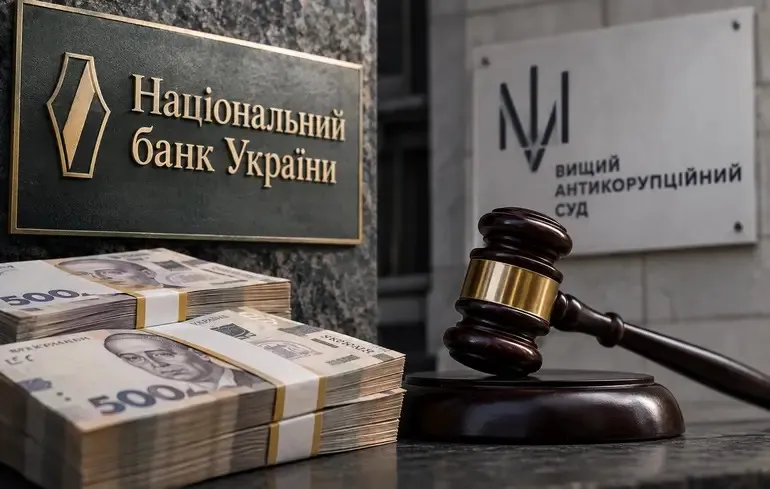
Banks are refusing to process payments for bail on behalf of People’s Deputy Vadym Stolar and former Deputy Head of the Office of the President Iryna Mudra. Bank representatives allegedly cite a recommendation from the National Bank, but the NBU denies any direct intervention.
An unusual situation regarding bail has arisen in the cases of People’s Deputy Vadym Stolar and former Deputy Head of the President’s Office Iryna Mudra. The courts have ruled that they may be released from custody or avoid arrest after posting substantial sums. However, according to ZN.UA sources, banks are refusing to process the relevant payments.
The banks allegedly cite financial monitoring requirements and a recommendation from the National Bank of Ukraine. The NBU itself denies that it interfered with the banks’ operations or instructed them to block such payments.
What Happened to Stolar’s Bail
On September 11, the High Anti-Corruption Court imposed a pretrial measure on Vadym Stolar in the form of bail set at 300 million hryvnias without detention. The court also imposed a number of procedural obligations on him. Stolar did not post the bail within the time limit established by law. This was reported by Transparency International Ukraine, citing a response from the High Anti-Corruption Court. By law, bail must be paid no later than five days after it is set, unless the court has changed the pretrial measure. However, according to ZN.UA’s sources, the problem is allegedly not that Stolar lacks the necessary funds.
The publication’s sources claim that the lawmaker informed the prosecution of his willingness to pay the full 300 million hryvnias. However, the banks refused to process the payment. According to the sources, the banks’ financial monitoring systems flagged the funds—which were to be transferred to the High Anti-Corruption Court’s account as bail—as high-risk. In some cases, the banks allegedly even terminated their banking service agreements with Stolar. Stolar himself also publicly stated that he could not post the bail because the banks refused to process the transfer. According to ZN.UA sources, Stolar proposed an alternative—to freeze 300 million hryvnias in his accounts.
Why Isn’t the SAP Requesting Stolar’s Arrest?
A separate question is why, after the bail was not posted, prosecutors did not ask the court to change the preventive measure to pretrial detention. ZN.UA sources attribute this specifically to problems with bank payments. If the SAP files such a motion with the court, Stolar will be able to provide documents confirming his attempts to post bail. These include requests to banks, refusals to process payments, and, according to sources, the termination of banking service agreements.
“If the SAP goes to court, Stolar will provide documents showing that he contacted the banks, but they refused to process the payments or terminated the banking service agreements. Under these circumstances, the court will not remand him in custody,” explained a law enforcement source speaking to ZN.UA. At the same time, only the court can make the final decision regarding a possible change in the preventive measure.
A similar situation with Mudra’s bail
According to ZN.UA, a similar issue arose with Iryna Mudra’s bail. On August 25, the High Anti-Corruption Court remanded the former deputy head of the Office of the President in custody for 60 days. At the same time, the court set bail at 20 million hryvnias as an alternative to detention. On September 2, the High Anti-Corruption Court’s Appeals Chamber upheld this decision. The court then reported that the bail had not been posted and that Mudra remains in custody.
According to sources at ZN.UA, Mudra had managed to pay 5 million hryvnias of her own funds. After that, according to the publication, her accounts were frozen. Mudra’s husband attempted to pay the remaining amount. However, sources claim that banks refused to process the payments. According to ZN.UA, her lawyers tried to pay the bail through several banks. They even explored the possibility of transferring money in small amounts—1,000 hryvnias at a time. But the banks would not accept even such payments. As a result, Mudra remains in custody, even though the court had provided for her release upon posting bail.
What Are the Banks Citing?
According to ZN.UA sources, in the cases involving Stolar and Mudra, the refusals came from the banks’ financial monitoring departments. In private conversations, bank representatives, according to the publication’s sources, explained their actions by citing a recommendation from the National Bank of Ukraine (NBU) not to process payments related to the posting of bail in these cases. At the same time, the publication’s sources draw attention to an important detail. Financial monitoring is supposed to verify the origin of funds and assess the risks of a specific transaction.
According to them, the problem arose when, instead of verifying the specific funds, they began blocking the very possibility of posting bail. “The funds must be verified. If they are legitimate and their origin is confirmed, the payment must be processed. It is unacceptable to simply block the very possibility of posting bail instead of verifying the funds,” explained a source speaking to ZN.UA.
At the same time, the law allows banks to refuse to process suspicious transactions and to halt them in certain cases. There is no specific prohibition in the law against processing a payment solely because it is intended for a court bail deposit, notes ZN.UA.
What the NBU Says
The National Bank denies allegations of manual interference in the banks’ operations. According to ZN.UA, the NBU stated that there has been no manual interference. The regulator also pointed out that, according to its information, 15 banks refused to process such payments. Therefore, the regulator considers the assumption that NBU representatives could have called each of them individually with instructions to be unfounded.
The NBU believes that the banks may have independently declined to process such transactions based on their own risk assessments and a desire to avoid reputational damage. In other words, there are currently two different explanations for why the collateral payments are not going through. According to ZN.UA’s sources, the banks are citing the NBU’s recommendation and blocking the payments during the financial monitoring stage. The NBU, however, asserts that it did not issue any manual instructions to the banks, and that financial institutions make their own decisions to refuse such transactions.
Thus, the issue of Stolar and Mudra’s bail has extended beyond the criminal proceedings themselves. It also concerns how banks should act when it comes to large payments intended to comply with a court ruling. So far, Stolar has not paid the 300 million hryvnias ordered by the court, and Mudra remains in custody because the bail set by the court has not been paid in full. Whether the situation changes will depend on the further actions of the parties, the banks, and court decisions.
On August 19, the National Anti-Corruption Bureau of Ukraine (NABU) and the Specialized Anti-Corruption Prosecutor’s Office (SAPO) announced Operation “Forest Gump,” in which, according to the investigation, members of the organization facilitated the laundering of 150 million hryvnia to post bail for one of the defendants in the “Midas” case. According to law enforcement, the funds passed through the accounts of shell companies.
On August 20, NABU and the SAPO released details of Operation “Themis,” which concerns the alleged unlawful seizure of real estate and corporate assets. According to the investigation, in the fall of 2025, members of the organization took control of two companies with assets totaling 248 million hryvnias, and in May 2026, they attempted to take control of real estate in Kyiv worth over 207 million hryvnias.
The NABU case files also mention Iryna Mudra and Maksym Mykytas, and Stolar is one of the individuals implicated in the investigation. Under the Constitution of Ukraine, a person is presumed innocent until proven guilty in accordance with the law and by a court conviction.
Stolar currently states that he is prepared to post the bail set by the court but claims that banking institutions are preventing the payment from being made.
The High Anti-Corruption Court has imposed a pretrial measure on Vadym Stolar, a member of parliament and a suspect in the “Themis” case. The court set bail at 300 million hryvnias.
Incidentally, the High Anti-Corruption Court is also determining a preventive measure for former Member of Parliament Maksym Mykytas in a new case involving the National Anti-Corruption Bureau of Ukraine (NABU) and the Specialized Anti-Corruption Prosecutor’s Office (SAPO).
Iryna Mudra has been detained and is currently undergoing investigative procedures at the NABU.
Mudra’s defense team has called for a critical assessment of the prosecutor’s statements.
The High Anti-Corruption Court is determining a preventive measure for Iryna Mudra: what is known.
“Corruption Must Be Controlled”: Who Is Iryna Mudra?
Iryna Mudra has reached a plea deal with investigators—social media reports.




