
October 2026 in Ukraine turned out to be surprisingly warm—reaching up to +20 in some places. Shevchenko’s “golden autumn” is evident in the beautiful photos shared on social media. Solar panels on rooftops and in private yards should be working better than ever. It would seem that there haven’t been any large-scale rocket attacks on power facilities in quite some time. Yet the very same Kyiv residents spend 8–10 hours a day without electricity—and that’s just according to the scheduled outages. On top of that, there are emergency blackouts that Ukrenergo announces without warning, sometimes several times a day. Meanwhile, Ukraine… continues to sell electricity abroad.
The paradox here is only apparent at first glance. In reality, this is a systemic problem with specific technical nuances: the high-voltage lines and substations connecting Kyiv and other cities to the rest of Ukraine’s power grid are being systematically destroyed. It is these very facilities that have come under attack—and it is their damage that has made the capital a hostage to a shortage that cannot be offset by either warm weather or solar power generation.
Why is Ukraine sitting in the dark during warm and sunny weather, and how does it manage to sell energy abroad at the same time? UA.News, together with experts, investigated the issue.
What Actually Happened: Not a “Blackout,” but a Chronic Power Shortage
Technically, in October 2026, Kyiv and Ukraine as a whole did not experience a complete blackout. But what is happening is a chronic, grueling regime of restrictions that disrupts normal life just as much as any blackout would.
This isn’t about any specific recent damage, but rather the cumulative effect of “equipment fatigue.” The power grid has been under attack throughout the years of the war. Each individual strike may not have caused all that much damage—but collectively, they have worn the system down to its limit. The power reserves, which normally allow for covering peak loads and compensating for unexpected outages, have been exhausted.
When there is no such “safety cushion,” any fluctuation—a cold snap, a surge in consumption, or yet another attack on even a single facility—triggers a chain reaction. That is precisely why Ukrenergo resorts to emergency blackouts time and again: it is a necessary safety measure, without which the system could easily collapse.
Why Kyiv Suffers the Most: A City Without Its Own Power Generation
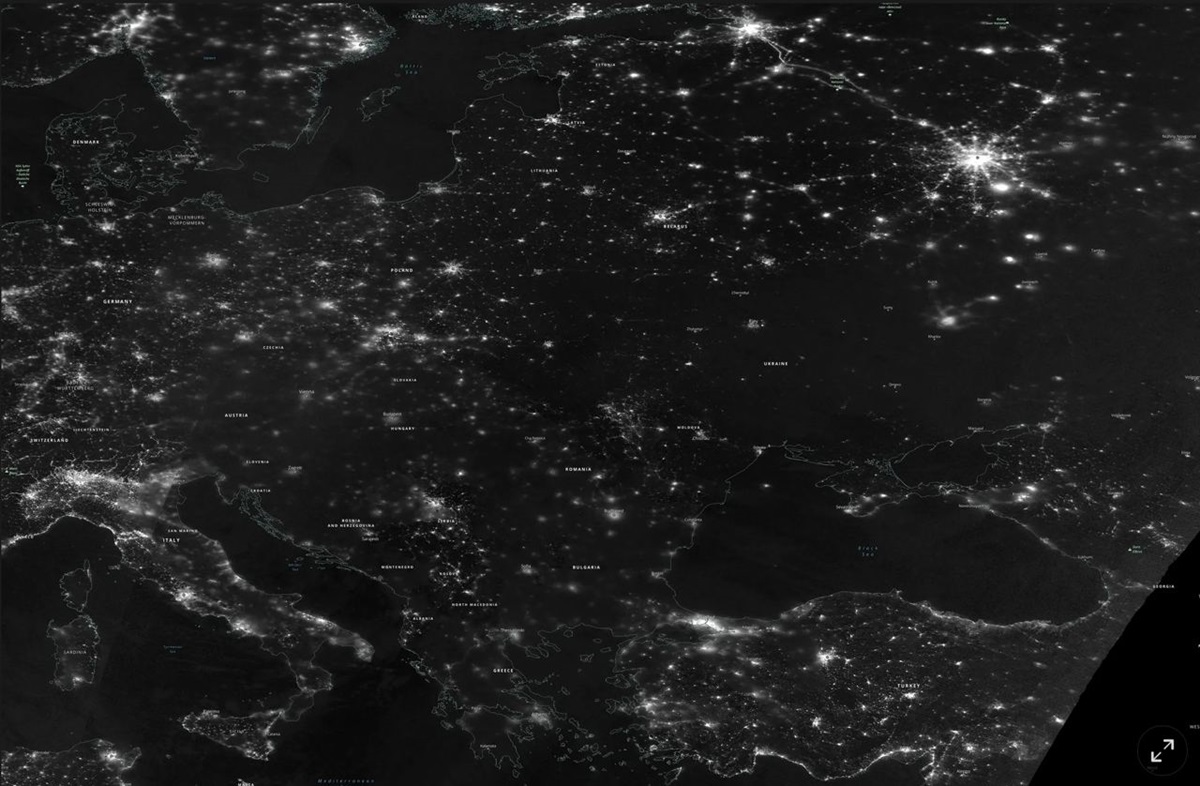
The key to understanding Kyiv’s blackouts lies in the structure of the capital’s energy balance. Kyiv has no local power generation—none at all. Just a few years ago, local sources—primarily CHPP-4, CHPP-5, and CHPP-6—covered about 50% of the city’s electricity needs. But after a series of attacks, all of these facilities have effectively been taken out of service; as of now, they are not generating any power. There is simply no local power generation in Kyiv.
What does this mean in practice? The city consumes electricity that someone must supply to it. It can only be transmitted via high-voltage lines from external sources—primarily from the Rivne and Khmelnytskyi nuclear power plants. It is precisely these lines and the substations that serve them that have become the Russians’ main target at this time.
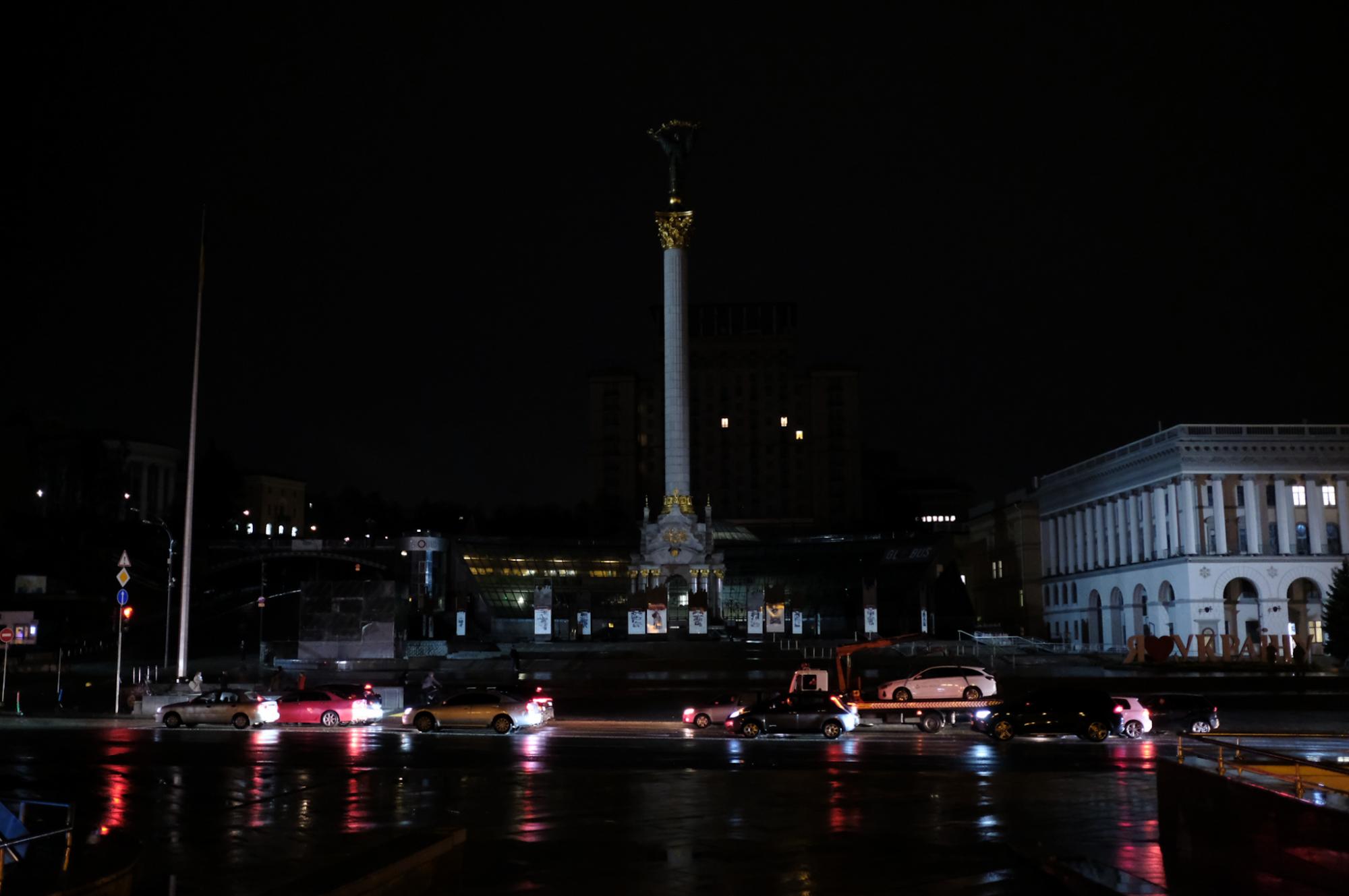
The “Kyivska” substation plays a particularly important role—it is the hub through which electricity from the Rivne Nuclear Power Plant flows to the capital. According to Oleg Popenko, head of the Union of Utility Consumers, this substation is “practically destroyed,” and its transmission capacity is “minimal.” While it previously provided enough power to meet a significant portion of Kyiv’s demand, the situation is different now: the electricity shortage in Kyiv has reached 70%.
This is not just some abstract figure. It means that even if the Rivne Nuclear Power Plant is operating at full capacity, it is simply physically impossible to “deliver” that power to Kyiv’s consumers. The transmission lines are damaged, and the substations cannot handle the load. The electricity is there—but they can’t deliver it.
The
“Kyiv” Substation: How a Single Node Determines the Lives of Millions
To understand the scale of the problem, imagine the power grid as the body’s circulatory system. A nuclear power plant is the heart that produces “blood”—electricity. Power lines are the arteries and veins. Substations are the valves and nodes that regulate blood flow. If an artery is severed and a valve is destroyed, blood cannot reach the organ—even if the heart is functioning properly.
The “Kyivska” substation is exactly such a valve. It receives electricity from the Rivne NPP and transmits it to the Kyiv city grid. Damage to this node means that even when power is being generated, the capital receives only what can physically pass through the damaged infrastructure.
This is a critically important point. Attacks on substations do not simply deprive Kyiv of electricity—they force nuclear power plants to operate under restrictions. Nuclear reactors cannot be “sped up” or “slowed down” at will; it’s not the same as turning a light on or off in a room: sudden fluctuations in load are dangerous for them. Therefore, when transmission lines are damaged, the nuclear power plant is forced to reduce output—and the power shortage becomes even more severe.
Solar Panels: Why “Green” Generation Isn’t Saving Kyiv
The warm, sunny fall of 2026 did indeed benefit the operation of solar power plants. Construction of solar power plants is in full swing in Ukraine—the plan was to bring online about 1,000 MW of solar generation by the end of the year. But there are a few “buts” that make solar energy almost negligible in the context of Kyiv’s problems.
First, solar power plants represent distributed generation. They operate primarily at the local level: on a building’s roof, a farm, a small community, and so on. It cannot replace the capacity provided by nuclear power plants, nor can it be transmitted over long distances the way a high-voltage grid does.
Second, solar power generation, oddly enough, depends on the weather. Even in warm October, there are cloudy days. And most importantly, the sun shines during the day, while consumption peaks in the morning and evening. Without powerful energy storage systems, solar power plants simply cannot cover the evening peak.
Third, and most importantly: even if solar panels generated enough electricity, it would need to be transmitted to Kyiv’s grid. And the grid—that very high-voltage infrastructure—has been damaged by Russian shelling. Solar power plants are of no help where the problem lies not in generation but in transmission. In other words, solar power is a useful but localized solution. It does not solve the systemic problem: Kyiv lacks sufficient transmission capacity to receive electricity from outside sources.

Electricity
Imports: Help Is Available, but It Isn’t Reaching Kyiv
Recently, Ukraine has sharply increased its electricity imports. This indicates that Kyiv has the capacity to purchase electricity abroad—the relevant agreements with partners are in place. But imports are only part of the equation. Electricity purchased from the EU is delivered primarily to the western part of the country. To reach Kyiv, it must travel through the very same high-voltage grid that has been damaged by shelling. Imports do not create new lines—they merely supply power to the existing ones.
Moreover, imports are subject to capacity limits. The transmission capacity of cross-border power lines is physically limited. Even if Ukraine wanted to purchase twice as much electricity, it would not be possible to “pump” it through the existing transmission lines.
Therefore, imports are an important but insufficient tool. They help balance the system but cannot compensate for the loss of domestic generation or damage to the transmission infrastructure. Meanwhile, the official rolling blackout schedules in Kyiv are striking even against the backdrop of the situation across Ukraine.
Why Emergency Blackouts Occur and How We Sell Energy to Europe
Emergency blackouts are not a whim of energy officials nor a bureaucratic precaution. They are a protective mechanism. When the grid frequency drops below a critical level, automated systems begin to disconnect consumers to prevent a complete system collapse. If this is not done, a cascading failure could occur, which in turn would lead to a full-scale blackout.
Emergency blackouts are used not only as a safeguard against accidents. They have become a balancing tool in the face of chronic shortages. When generation is insufficient and imports do not cover the shortfall, dispatchers are forced to cut off consumers—otherwise, the system will not hold up.
This means the problem won’t go away on its own. Even if there are no new attacks tomorrow, the power shortage will persist because damage to the infrastructure cannot be repaired in a single day. Repairing high-voltage substations is a complex and time-consuming process.
At the same time, Ukraine continues to sell electricity abroad. Exporting electricity from Ukraine during blackouts is not “treason,” but a technical paradox of logistics. At first glance, the situation seems absurd: Ukrainians sit in the dark for hours while the country sells more electricity to Europe than it imports. However, the reason lies solely in the condition of the distribution networks.
Due to constant attacks on high-voltage substations, the internal power lines have been severed. It is often simply impossible to transmit power from nuclear power plants to the central or eastern regions (in particular, to Kyiv). At the same time, the border infrastructure in the west of the country is operating stably—the Russians haven’t reached it yet.
Since power plants continue to generate electricity that cannot be transported within the country due to damaged grids, this surplus is directed for export to the EU. That’s the whole answer to the question “why are we without power, but selling it to Europe?”—because it’s easier to sell it to Europe than to deliver it to consumers in Ukraine.
Expert
Opinions
Serhiy T., a senior engineer at one of Kyiv’s thermal power plants, who asked UA.News not to disclose his last name, commented on the situation as follows.
“I understand the outpouring of ‘betrayal’ in the media. How can this be—we’re sitting in the dark, but we’re selling electricity to Europeans? It sounds absolutely wild. But the people who are outraged by this simply don’t understand how the power grid works. It’s very simple. Kyiv has no power generation of its own at all. Everything has been destroyed by the Russians. At the same time, the nuclear power plants are operating; they’re generating electricity. This energy is delivered to Kyiv via 750 kV high-voltage substations, such as the one in Makariv, which is currently under regular attack by the Russians. When it becomes impossible to deliver the energy, the capital is left without power. But at the same time, we still have transmission lines available to deliver power to Europe; we have an interconnected power grid. The nuclear power plants continue to generate power regardless—it makes no difference to them whether the transmission infrastructure has been destroyed or not. They simply continue to generate power. Where should it go? It can’t be delivered to Kyiv. But it has to go somewhere, right? So they sell it, generating revenue for the economy. In other words, this isn’t “treason”—it’s just how the infrastructure works. Yes, it works poorly, it works incorrectly—it’s not how it should be. But it is what it is,” the expert noted.
Energy expert and head of the Union of Utility Consumers, Oleg Popenko, notes:
“We have power generation, mainly from nuclear power plants. They operate in base-load mode. It’s extremely difficult to shut down this generation, but the problem is that it can’t function as flexible generation. It’s very slow. It runs constantly in the background and produces energy. But this energy has to be transmitted somehow—through high-voltage substations. And the Russians have been severely damaging these substations in recent weeks. It’s impossible to transmit energy to the end consumer. Everything has been destroyed in Kyiv and the surrounding region. We have no local generation capacity. And there’s no way to transmit the energy. “Once we repair the substation, we’ll need to supply power to the end consumer. But while repairs are underway, we’re selling the power to Europe. Once it’s repaired, the power will go to the consumer. It’s all very simple,” noted Oleg Popenko.
What’s Next
In the near future, Kyiv—and indeed all of Ukraine—is unlikely to return to normal power supply. Weather conditions are currently contributing to lower consumption; the warm fall means people are using heaters less. But as the cold weather sets in, the situation will worsen. Experts are already warning that when temperatures drop to -5°C and below, Kyiv may be without power for 20–22 hours a day.
This does not mean the city will be plunged into a total blackout. But it does mean that strict power rationing will, unfortunately, become the norm for months to come. Repairing damaged substations and power lines requires time, resources, and safe working conditions. As long as shelling continues, it is impossible to fully restore the infrastructure.
The only things that can alleviate the situation are reducing electricity consumption, continuing to import electricity, and gradually restoring damaged facilities. But these measures do not solve the problem immediately. They merely mitigate it.




