
In Kharkiv, a student set his apartment on fire after being scammed over the phone
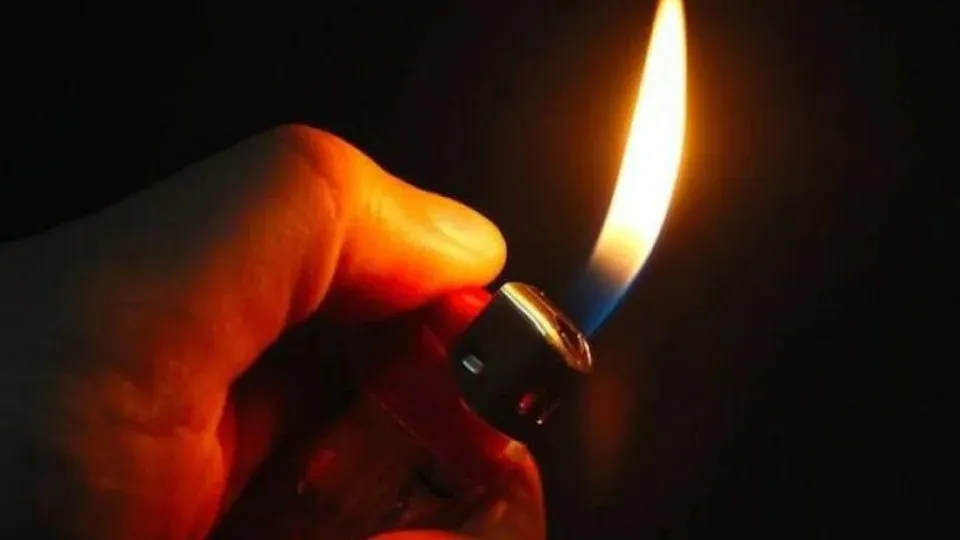
In Kharkiv, a fourth-year college student set fire to an apartment door after receiving a call from a man who identified himself as an SBU officer. The young man believed he was helping to expose a woman who was allegedly working for Russia, but he ended up on trial and was convicted.
The Kholodnogorsk District Court of Kharkiv found the fourth-year student guilty of setting fire to the front door of an apartment in a high-rise building in August 2025. The story began with a date to which the young man arrived bearing flowers. He had met the girl online and arranged to meet her at the address she had given him. When the student arrived at the building, he received a phone call from an unknown man. According to the young man, the caller identified himself as an SBU employee.
What the man said on the phone
As the student recounted in court, the stranger claimed that the girl he was supposed to meet was allegedly collaborating with Russia. The man offered to help the student assist the security service in exposing her. To do this, he was supposedly supposed to douse the apartment door with a flammable mixture, set it on fire, and record everything on video.
The student agreed to carry out this “task.” He bought a charcoal lighter, but, according to him, forgot to buy matches. Near the building, as the student claimed, someone handed him a lighter.
After that, the student set the mixture on the floor near the door on fire. The fire spread to the apartment’s front door. However, he didn’t stop there. Later, he returned, poured more of the lighter fluid on the door, and filmed the arson on video.
There were people in the apartment
At that moment, three people were inside the apartment—a volunteer, his wife, and his son. After setting the fire, the student left the building. He then called his sister and told her what had happened. It was his sister who advised him to call the police. After that, the student contacted law enforcement.
The student claimed he had been deceived
During the trial, the young man did not admit guilt. He explained that he truly believed the person on the phone was an SBU employee. According to him, he agreed to set the fire because he thought he was carrying out an assignment for the Ukrainian security service.
The student claimed that he had been the victim of deception and psychological manipulation. In other words, according to his account, he did not intend to harm the apartment’s residents or their property. The young man believed he was assisting law enforcement in an alleged operation against a person linked to Russia. At the same time, the court viewed his actions specifically as a criminal offense, regardless of who the man on the phone actually was.
Compensation Was Paid to the Family
During the trial, it emerged that the student had compensated the family for material and emotional damages. However, this fact did not automatically lead to the termination of the criminal proceedings. The court separately assessed the circumstances of the arson, the evidence, and the defendant’s own explanations. The case file indicates that the incident occurred on August 1, 2025. The criminal case number is 642/6717/25.
Thus, according to the student’s account, he fell victim to a person who posed as an SBU officer and convinced him to set fire to the door of someone else’s apartment. However, carrying out such a “task” led to criminal liability. This story also highlights the danger of phone scams in which criminals pose as law enforcement officers and, under the pretext of a “special operation,” force people to commit illegal acts.
In such cases, the mere fact that an unknown person claims to be an employee of the SBU, the police, or another government agency does not confirm their identity. Illegal actions do not become legal simply because they are labeled a “special service assignment.” This was reported by the Judicial and Legal Gazette.
In Poland, Odessa-based female professors were detained after attempting to purchase a batch of diplomas from a Warsaw university.
Earlier in Kyiv, a 24-year-old law student was detained for offering men the opportunity to fictitiously “become students” at a Polish university for $10,000 in order to travel abroad.


