
Ukraine Wasn't Prepared for the High-Speed Geran-4 and Geran-5 Missiles — Rakhmanin
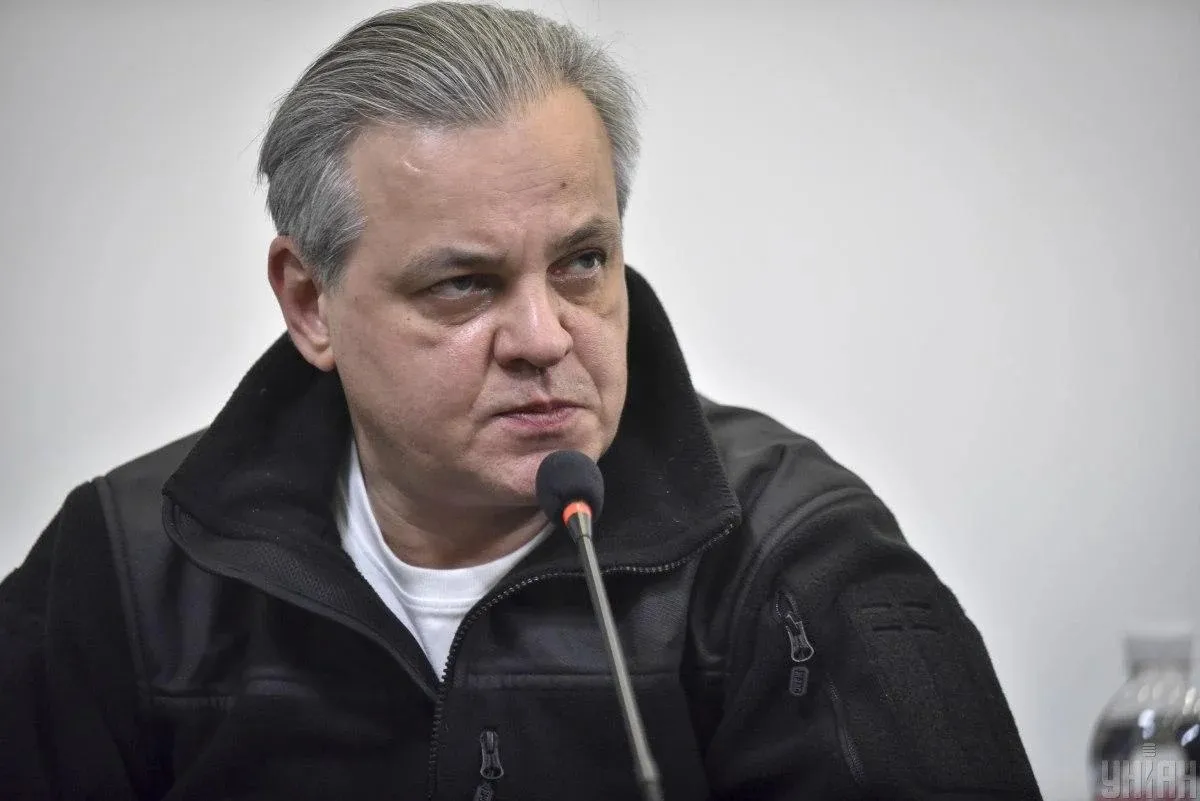
Ukraine knew that Russia was working on jet-powered versions of attack drones, but did not expect the “Geran-4” and, especially, the “Geran-5” to be deployed on a large scale so quickly. This assessment was provided by Serhiy Rakhmanin, a member of parliament and a member of the Verkhovna Rada Committee on National Security, Defense, and Intelligence. According to him, the main challenge now is not only to develop an interceptor but also to make it affordable enough to launch mass production.
Ukraine had been preparing for the arrival of Russian jet-powered drones, but, according to MP Serhiy Rakhmanin, it did not have enough time to fully prepare for the arrival of the new “Geran-4” and, especially, “Geran-5” models. Rakhmanin is a member of the parliamentary committee on national security, defense, and intelligence.
According to the lawmaker, information was available regarding Russia’s preparations for the mass deployment of jet-powered drones. When the first such drones—specifically the “Geran-3”—appeared, Ukraine had already begun setting goals for the development of interceptor drones. But Ukrainian developers initially focused on different specifications. “It’s fair to say that we somewhat missed the emergence of the ‘Geran-4’ and especially the ‘Geran-5,’” Rakhmanin said.
At the same time, the lawmaker emphasized separately that this does not mean Ukraine knew absolutely nothing about Russia’s new weapons. “We missed only one thing—and even that is a very relative term. It’s impossible to obtain 100 percent accurate intelligence. We knew that these systems were being developed; we just weren’t prepared for them to be implemented so quickly and scaled up so rapidly,” he explained.
Why Jet-Powered Drones Are More Challenging for Air Defense
One of the main problems is flight altitude. According to Rakhmanin, the “Geran-4” and “Geran-5” can enter the range of Ukrainian air defense at altitudes of 7 to 10 kilometers, and in some cases, even higher.
By comparison, a significant portion of so-called “light” air defense systems—which previously operated effectively against conventional “Shahed” drones—are designed to engage targets at lower altitudes. Rakhmanin lists “Strela,” “Osa,” “Gepard,” “Shilka,” and “Tunguska” among such systems. “All of our ‘Strelas,’ ‘Osas,’ ‘Gepards,’ ‘Shilkas,’ ‘Tunguskas,’ and so on, which shot down a large number of ‘Shaheds,’ proved powerless against jet-powered drones,” the deputy said.
There is another problem—speed. Rakhmanin says that, depending on the model, such drones can fly at speeds of approximately 450–500 km/h, and in some cases, up to 650 km/h. Because of this, conventional interceptor drones often simply cannot catch up to the target in time.
That is precisely why Ukraine needs new interceptors that will be faster than conventional drones and equipped with target-tracking capabilities.
The main challenge is not only to develop them but also to mass-produce them
Rakhmanin believes that it is technically possible to create a jet-powered interceptor drone. But it is much more difficult to ensure that it is both effective and doesn’t cost more than the target itself. “The problem right now isn’t developing such an interceptor drone, but making it effective and relatively inexpensive,” the lawmaker noted.
One of the most expensive components of such a drone is the guidance system. Additionally, a turbojet engine is required. According to Rakhmanin, cheaper versions of such engines can cost around $15,000–20,000. But certified, high-quality engines for serious interceptors can cost anywhere from $45,000–50,000 to $100,000. Therefore, such an interceptor could easily become very expensive. In fact, this presents a complex economic problem: you cannot indefinitely use an expensive interceptor to shoot down cheap attack drones.
Russia has greater manufacturing capabilities
Another issue Rakhmanin highlighted is engine production. According to him, Russia has at least two domestic companies that manufacture turbojet engines. This allows it to increase production of such engines and, consequently, scale up the production of jet-powered drones.
Ukraine also has facilities capable of producing turbojet engines. However, as the deputy asserts, their capabilities are significantly more limited, and it is currently difficult to rapidly ramp up production to meet the needs of the Armed Forces. He also addressed the issue of components from China.
According to him, Russia has access to a large number of Chinese components and ready-made drones. Ukraine does not have such access. “We don’t have that kind of unlimited access,” said Rakhmanin.
At the same time, Ukrainian intelligence data and expert analysis also indicate that Russia actively uses foreign components in its drones. For example, Ukrainian experts identified 96 foreign components in one of the “Geran-4” drones shot down in the Kyiv region.
Ukraine is already testing new interceptors
Despite the challenge, work on countermeasures against jet-powered drones is already underway. On September 3, President Volodymyr Zelenskyy stated that Ukrainian manufacturers have prototypes of high-speed interceptors, and the main task is to bring them up to the required level of effectiveness and rapidly scale up production.
On September 25, the results of tests on these interceptors were discussed separately at a meeting of the General Staff. A decision was also made to launch production in Ukraine of various types of jet engines. The Ukrainian military is already using new countermeasures against Russian jet-powered drones. For example, on September 19, the SBU reported twice in one day on the successful use of a Ukrainian interceptor against a “Geran-5.”
At the same time, scaling up such systems remains a challenge. On September 28, Zelenskyy stated that the overall drone shoot-down rate is about 70%, but for jet drones, it is currently significantly lower—about 57%. The president noted that new interceptors continue to be actively tested.
What Rakhmanin Fears
The lawmaker does not predict that Russian drones will be able to destroy all of Ukraine’s infrastructure. But he warns that significant losses are possible if Ukraine does not receive sufficient air defense systems, missiles, and funding for new developments. “Not everything will be destroyed. A large amount, unfortunately, will be destroyed. How much—that will depend on how much our partners help us,” Rakhmanin said.
According to him, aircraft can also be partially effective against jet-powered drones. Ukrainian fighter jets—including Soviet MiG-29s and Su-27s, as well as Western aircraft—are capable of intercepting such targets. However, there is also a problem with missile stocks here. Rakhmanin asserts that Ukraine needs additional air-to-air missiles, specifically AIM-9s. According to him, Ukraine has long been asking its partners for such munitions.
In addition, Ukrainian specialists are working on adapting ground-based anti-aircraft systems to engage targets at higher altitudes and on mobile electronic warfare systems.
Russia continues to ramp up its deployment of such drones
The issue of jet-powered drones is becoming increasingly pressing due to the pace at which Russia is deploying them. According to Rakhmanin, Moscow has been able to scale up production of new models quite quickly. This is consistent with data from Ukrainian authorities: Zelenskyy previously stated the need to accelerate the production of interceptors precisely because of the growth in Russian production of high-speed strike drones.
Earlier, *The Economist* also reported that Russia is stockpiling jet-powered drones and ballistic missiles and may use these reserves during a new wave of strikes against Ukraine before winter. According to the publication, Ukrainian officials expect the campaign against Kyiv to intensify and cite November as a possible peak. Therefore, the challenge for Ukraine now is no longer simply to create a single effective interceptor. It is necessary to make these systems affordable enough, establish mass production, equip them with engines and guidance systems, and simultaneously increase the number of missiles for aircraft and ground-based air defense systems.
It is precisely this scale, according to Rakhmanin, that may become the main challenge in the coming months. At the same time, Ukrainian authorities are already announcing tests of new interceptors and the ramp-up of production of the necessary components. He spoke about this in an interview with Radio NV.
Since August 27, 235 air raid alerts have been recorded in Kyiv, lasting a total of 261 hours—more than 10 days. Ihor Klymenko, Secretary of the National Security and Defense Council, stated that the intensity of Russian attacks has become a new challenge for Ukraine’s air defense forces. According to him, new Ukrainian interceptors are already undergoing testing, and some combat units are using them in the field. Ukraine is preparing to move to mass production of these systems.




