
Ukraine has verified more than 20,000 cases of children being deported
In Ukraine, 20,610 cases of deportation or forced displacement of children as a result of Russian aggression have already been verified. The Ministry of Justice emphasizes that this figure is not final: information continues to come in, and each case must be verified individually.
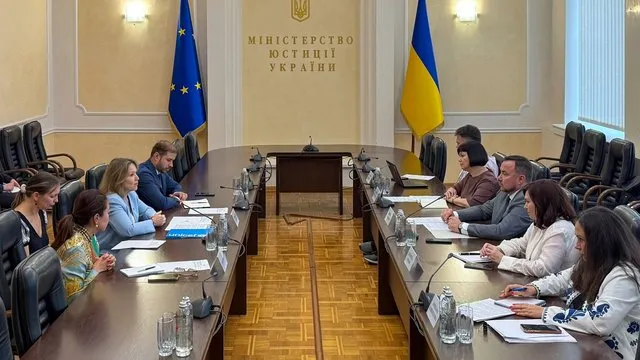
A working meeting took place on August 11. The main topic of discussion was the return of Ukrainian children whom Russia deported or forcibly displaced after the start of the full-scale war. The Ministry of Justice reported that, as of now, 20,610 such cases have been confirmed.
At the same time, officials emphasize that this does not mean the number of children is final. New data continues to come in, and information about each child must be verified. “Currently, 20,610 cases of deportation or forced displacement of Ukrainian children have been verified. This figure is not final, as information continues to come in, and each case requires separate verification,” the Ministry of Justice noted.
Why it is so important to determine the fate of every child
The process of returning a child begins with the simplest, yet at the same time very complex, step—determining exactly where the child is and what has happened to them. The Ministry of Justice states that Russia is not providing Ukraine with complete information about deported or forcibly displaced children.
As a result, Ukrainian authorities and international partners are gathering data from various sources. This data must be verified, cross-checked, and confirmed. This work makes it possible to locate the children and lays the groundwork for their return to Ukraine.
The Ministry of Justice maintains a Registry of Information on Children Deported or Forcibly Displaced in Connection with the Russian Federation’s Armed Aggression Against Ukraine. The Ministry also coordinates the work of the Interagency Commission, which is responsible for verifying this information.
Maslov Spoke About Assistance for Children
During the meeting, representatives of Ukraine and UNICEF discussed more than just the return of children. The parties also discussed the development of a justice system that is safe and understandable for children. They discussed legal and psychological support, the protection of minors’ rights, and the further development of existing assistance mechanisms. “Today, Ukrainian children are facing severe hardships as a result of Russia’s armed aggression against Ukraine. Our task is to ensure they have access to fair justice and the necessary legal and psychological support,” said Denys Maslov.
According to him, Ukraine continues to build a child-friendly justice system despite the war and other challenges. “Despite all the challenges, Ukraine continues to develop a child-friendly justice system, and we look forward to further systematic partnership with UNICEF in this area,” the minister added.
Ukraine Wants to Strengthen Cooperation with UNICEF
Maslov also emphasized that the protection of children and the development of juvenile justice remain among the Ministry of Justice’s priorities. This area is also important for Ukraine’s fulfillment of its obligations on the path to European Union accession.
The Ministry of Justice emphasizes that cooperation with international partners should not be merely formal. The main goal is to achieve concrete results for every child and to maintain support mechanisms that have already proven effective. Following the meeting, Ukraine and UNICEF confirmed their readiness to deepen their partnership.
Future efforts will continue to focus on locating and returning deported children, protecting their rights, and providing legal and psychological assistance. At the same time, the number of verified cases may change, as the Ukrainian side continues to gather new information and verify data already received. This was reported by the Ministry of Justice following a meeting between Minister Denys Maslov and the head of the UNICEF Office in Ukraine, Anne-Claire Dufay.
The Ukrainian government has changed the terms for the use of destroyed Russian military equipment. Under the new regulations, some of the captured enemy weapons and specialized military equipment will be sent abroad to be used as museum exhibits and for thematic exhibitions.




