
A Ukrainian surgeon has developed a unique method for treating varicose veins
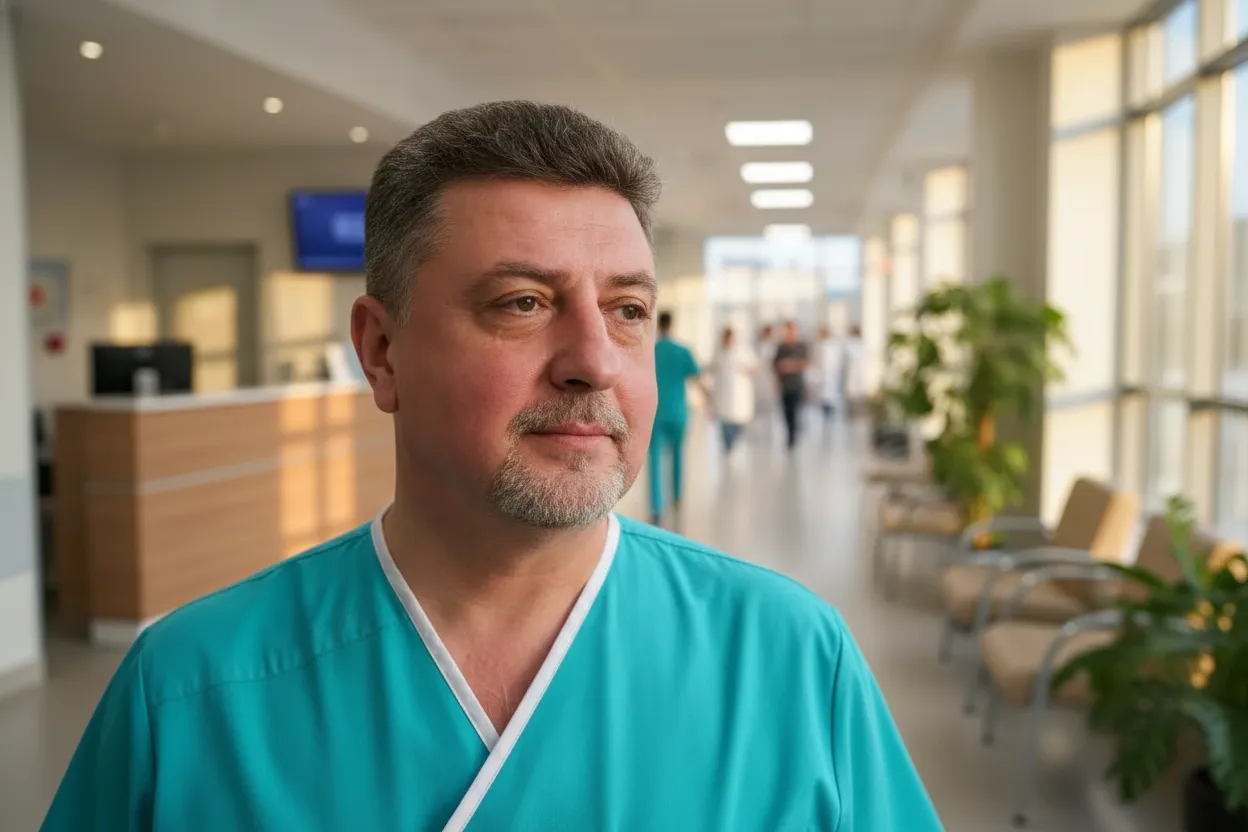
Vascular surgeon Vladislav Gorbovets has successfully adapted a technology for electrocoagulation of living tissue, based on research by the Paton Institute, for the treatment of varicose veins.
The vascular surgeon shared this information in an interview with Glavkom.
The latest Ukrainian method of endovenous electrofusion has demonstrated 100% effectiveness in closing veins over the past eight years of observation.
This invention has become a high-tech alternative to generally accepted global standards in phlebology and has already gained recognition in specialized European scientific publications.
The innovative technology allows for a significant reduction in blood loss, shortens the duration of surgeries, and significantly accelerates the patient recovery process.
The first large-scale trials of this Ukrainian medical development were conducted under combat conditions in the ATO zone.
The use of the device for welding living tissue provides an advanced algorithm for controlling the surgical process, offering significant advantages over traditional lasers.
Vladislav Gorbovets explained the technological advantages of his method in detail: “We achieve better results: in our cases, the vein closes 100% of the time. With laser coagulation, for example, it may close in 90–92% of cases, but 100% is never achieved. We have had 100% successful ablation results over the past eight years, which we have published both domestically and internationally, including in leading European journals.”
The domestic technique guarantees a higher level of safety thanks to a minimal number of postoperative complications and complete independence from foreign supplies.
“This means we have a minimal number of complications compared to laser coagulation. In addition, the equipment, instruments, and all consumables are manufactured in Ukraine… In this sense, we don’t need a ‘phlebological Ramstein’ for someone to bring us something from somewhere. And this means that the cost of this procedure is lower than that of laser coagulation,” emphasized Vladislav Gorbovets.
The imperfection of laser process control algorithms often leads to incomplete vessel closure and recurrence of the disease.
“…because when sealing a vein with a laser, the control algorithm during the procedure is imperfect, so the vein may not be completely sealed. Consequently, the vein may reopen, thereby causing the disease to recur due to this recanalization. Our method of electrocoagulation of veins does not have consequences such as recanalization. Therefore, the risk of recurrence is practically nonexistent,” the doctor noted.
A significant achievement for the developers was the minimal level of pain experienced by patients during the rehabilitation period.
The surgeon stated: “The advantage of our technique is that we have observed a much lower level of postoperative pain, which does not even require painkillers… A measure such as postoperative pain is rated on a numerical scale from 0 to 10. Zero means no pain, 10 means unbearable pain. For the vast majority of our patients, the postoperative pain rating is 0 or up to 3 points—that is, moderate pain.”
In Kyiv, a surgeon performed surgery on a woman with cancer; he now faces prison
Oleksandr Bebykh is under investigation for a botched plastic surgery


