
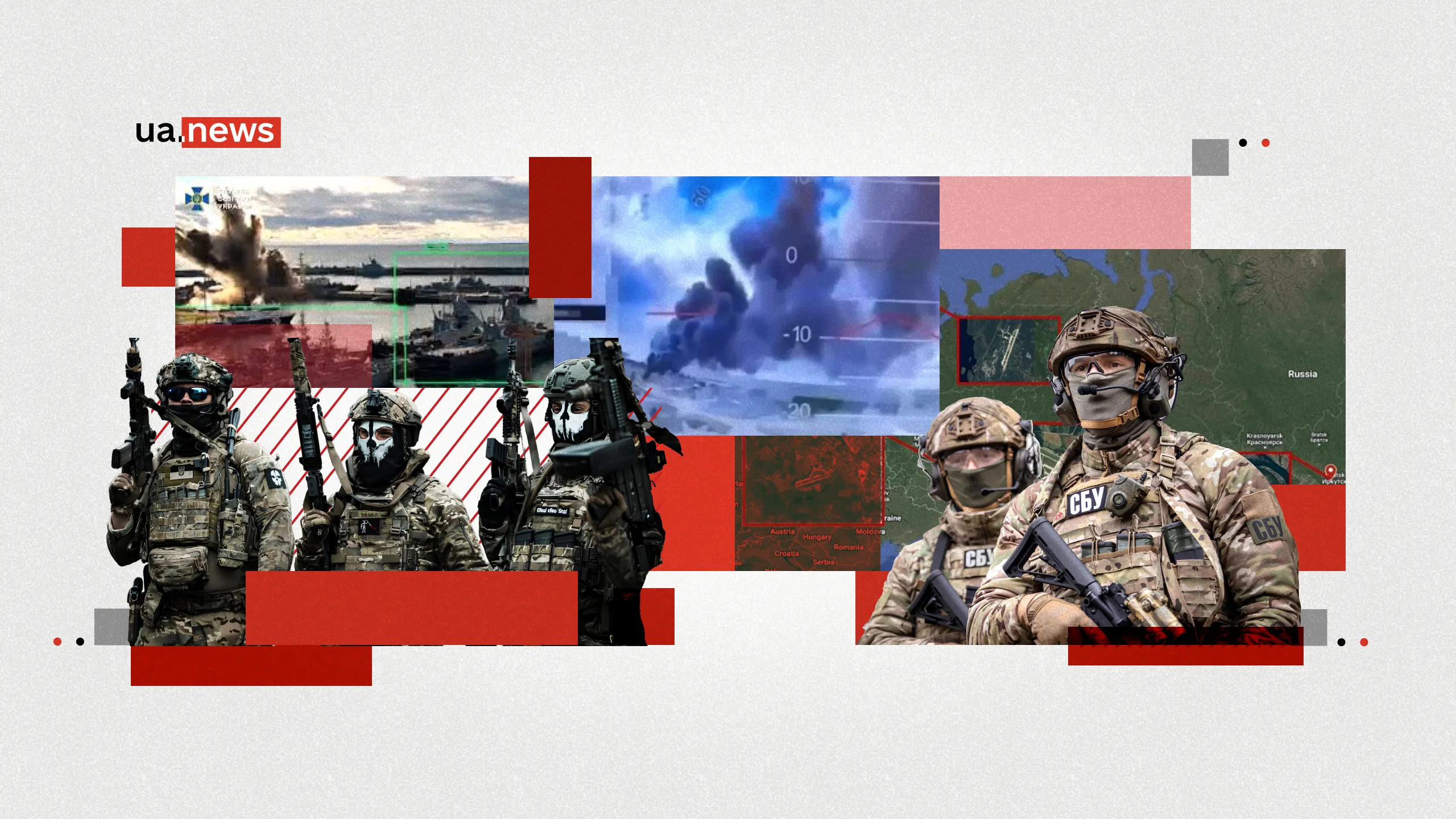
In 2025, Ukraine’s special services finally transformed Russia’s rear areas into a full-fledged battlefield. On the territory of the aggressor state, something regularly explodes, burns, or is destroyed in one way or another. The Kremlin has been forced to spend colossal resources to protect key facilities that were previously considered untouchable.
This strategy relies on unmanned systems and a deeply integrated agent network operating in enemy rear areas. Its aim is to undermine Russia’s military-industrial potential, as well as its economic and even psychological resilience, demonstrating that there are almost no safe zones left.
The culmination of this year-long strategy was the recent strike (December 15, 2025) on a Russian Kalibr-missile-carrying submarine in the port of Novorossiysk. As a reminder, Novorossiysk became the main base of the Black Sea Fleet after Russia suffered systematic losses in Crimea. The choice of target carries a dual meaning: first, these submarines are used to conduct missile terror against Ukraine; second, it is a heavily protected military facility, making the strike even more symbolic.
In this article, UA.News recalls the loudest and most successful Ukrainian strikes against Russian rear areas. Read more about the best operations of the SBU and HUR in our feature.
Operation “Spiderweb”
Operation “Spiderweb,” carried out by the Security Service of Ukraine (SBU), went down in history as the most destructive and coordinated strike against Russian strategic aviation in its entire existence. Its goal was to disable a critical portion of airborne cruise missile carriers.
Thanks to carefully planned and highly precise drone strikes on deep rear airfields—particularly Olenya (Murmansk region) and Belaya (Irkutsk region)—an unprecedented result was achieved. According to SBU estimates, up to 40 aircraft based at these strategic facilities were hit as a result of the operation.
Among the destroyed or disabled targets were at least eight Tu-95MS strategic bombers, the primary carriers of Kh-101/Kh-555 missiles, as well as A-50, Tu-160, Tu-22 aircraft, and other critically important auxiliary equipment.
The total value of the damaged aviation reportedly exceeded $7 billion, and the operation at least temporarily disabled up to one-third of all strategic cruise missile carriers possessed by Russia. The strike also forced Moscow to redeploy scarce S-400 and S-300 air defense systems to protect these airbases, which in turn weakened frontline positions.

Sabotage Against Military Facilities in Kaliningrad
An operation by the Main Intelligence Directorate (HUR) conducted on June 14 in the Kaliningrad region became a textbook example of asymmetric warfare and confirmed Ukraine’s ability to operate even in the most isolated regions of Russia—including the Kaliningrad enclave. The sabotage targeted energy infrastructure supplying power to nearby Russian military-industrial and armed forces facilities.
HUR agents first drained the cooling fluid from a substation power transformer and then carried out a controlled arson attack. This sequence ensured maximum and prolonged disabling of the facility. Financial losses are estimated at around $5 million, while the strategic significance lies in cutting power to critical production capacities in the isolated enclave.

Strikes on the “Shadow Fleet”
Throughout 2025, maritime warfare evolved into systematic strikes, including against the so-called “shadow fleet,” which helps the Kremlin circumvent international sanctions and finance the war through resource exports. The culmination was a series of coordinated SBU sea drone attacks in late November–early December 2025.
On November 28, two tankers—Kairos and Virat—part of Russia’s oil sales scheme, were hit almost simultaneously. A few days later, another commercial tanker, Midvolga 2, carrying sunflower oil, was damaged. Since the attacks occurred near the Turkish coast (about 80 nautical miles offshore), they raised concerns in Ankara.
In December, drones also struck the large tanker Dashan. These systematic attacks significantly increased commercial risks for Russia, achieving—at least partially—an economic blockade of Russian exports through the Black Sea.

Disabling Chornomornaftogaz Platforms
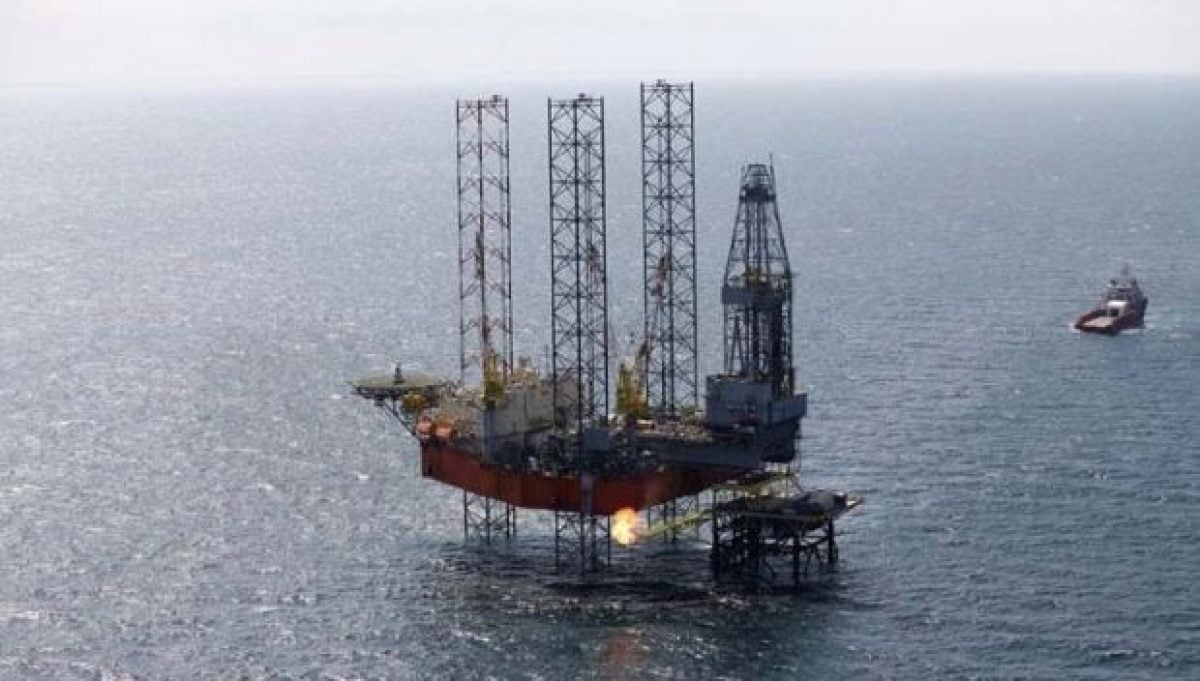
The campaign against drilling platforms seized by Russia from Chornomornaftogaz has continued throughout most of the war and reached a decisive phase in 2025. These “rigs,” including the infamous Boyko towers, have burned multiple times, most recently in November. Ukraine systematically targeted these facilities because Russia turned them into military outposts, using them for reconnaissance and deployment of advanced radar systems.
Eventually, the occupation “authorities” in Crimea were forced to officially acknowledge a complete halt in operations at all offshore fields illegally exploited by Chornomornaftogaz in the Black Sea.
From a military perspective, the demilitarization of the platforms deprived the Black Sea Fleet of key stationary reconnaissance and monitoring points in the northwestern Black Sea, creating a significant “blind zone.” From an economic perspective, the full cessation of extraction led to a reduction in overall resource production in occupied Crimea.
Extending the War to the Caspian Sea
Perhaps the most ambitious element of the 2025 “deep strike” strategy was the expansion of the theater of operations all the way to the Caspian Sea. Operations conducted by the Special Operations Forces (SOF) proved that Ukrainian services can operate even within Russia’s internal waterways, previously considered completely isolated from any influence.
In December 2025, successful strikes on two Russian vessels in the Caspian Sea were recorded. This is of enormous significance, as Russia actively uses the Caspian Flotilla and internal river systems (via the Volga–Don Canal) to transport military cargo, including Kalibr missiles, deep in its rear. In addition, Russian oil extraction platforms were struck three times in one week, with some subsequently ceasing operations entirely.
Success in the Caspian indicates deep penetration by agent networks and the ability to attack supply routes, creating an entirely new front for Russia’s internal security. Notably, the distance from Ukraine to the Caspian Sea exceeds 1,300 kilometers.

Final Chords in Novorossiysk
Novorossiysk and its harbor have repeatedly become targets of successful Ukrainian strikes. Attacks on November 14 alone halted as much as 2% of global oil supplies. However, the December 15, 2025 operation became the quintessence of Kyiv’s “maritime warfare” strategy.
The SBU, jointly with the Navy and using Sub Sea Baby underwater drones, successfully struck—for the first time in history—a Russian Project 636 Varshavyanka-class submarine. The vessel, estimated to cost around $400 million, reportedly suffered critical damage and was effectively put out of action, according to SBU statements. Russia, however, denies this.
The submarine carried four launchers for Kalibr cruise missiles, a key weapon of terror against Ukrainian cities. The strike on the submarine in Novorossiysk—now the fleet’s main base due to the danger in Sevastopol—shatters the myth of “safe harbors” for the Black Sea Fleet. It represents a powerful psychological and military blow, forcing Moscow to spend even more resources protecting its strategic assets.
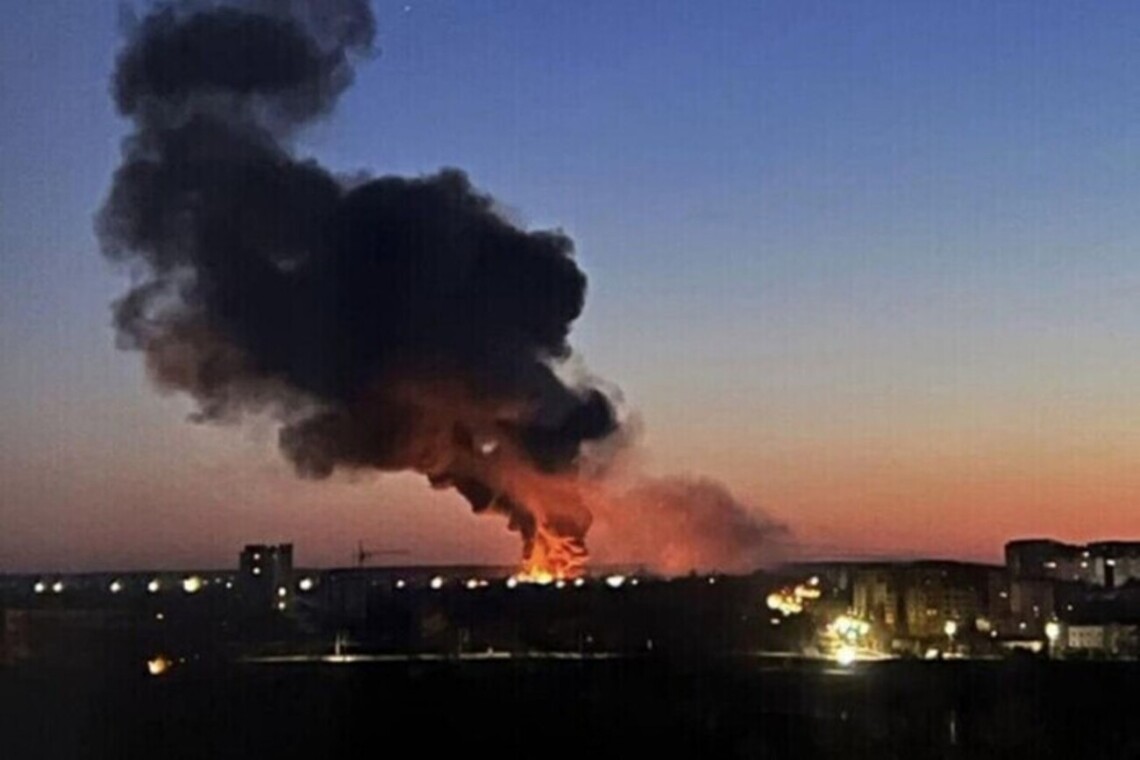
In summary, the results of 2025 indicate a qualitative shift in the nature of warfare. Ukrainian special services are consistently implementing a strategy of deep pressure, turning vast areas of Russia into an operational zone where various attacks, operations, and sabotage actions are carried out regularly. Systematic strikes on strategic aviation, financially painful attacks on the “shadow fleet” complicating oil exports, and sabotage against the military-industrial complex have created serious security challenges for the Kremlin.
These achievements not only undermine military infrastructure and logistics but also force Russian leadership to reallocate critical military resources, pulling air defense systems and general security forces away from the front line. The successful strike on submarines in Novorossiysk and the expansion of operations into the Caspian Sea demonstrate that Ukraine possesses the necessary technologies and agent networks for deep asymmetric strikes.
Most likely, unless the war suddenly ends through diplomacy, similar strikes will continue in 2026, gradually expanding their geographic scope.


