
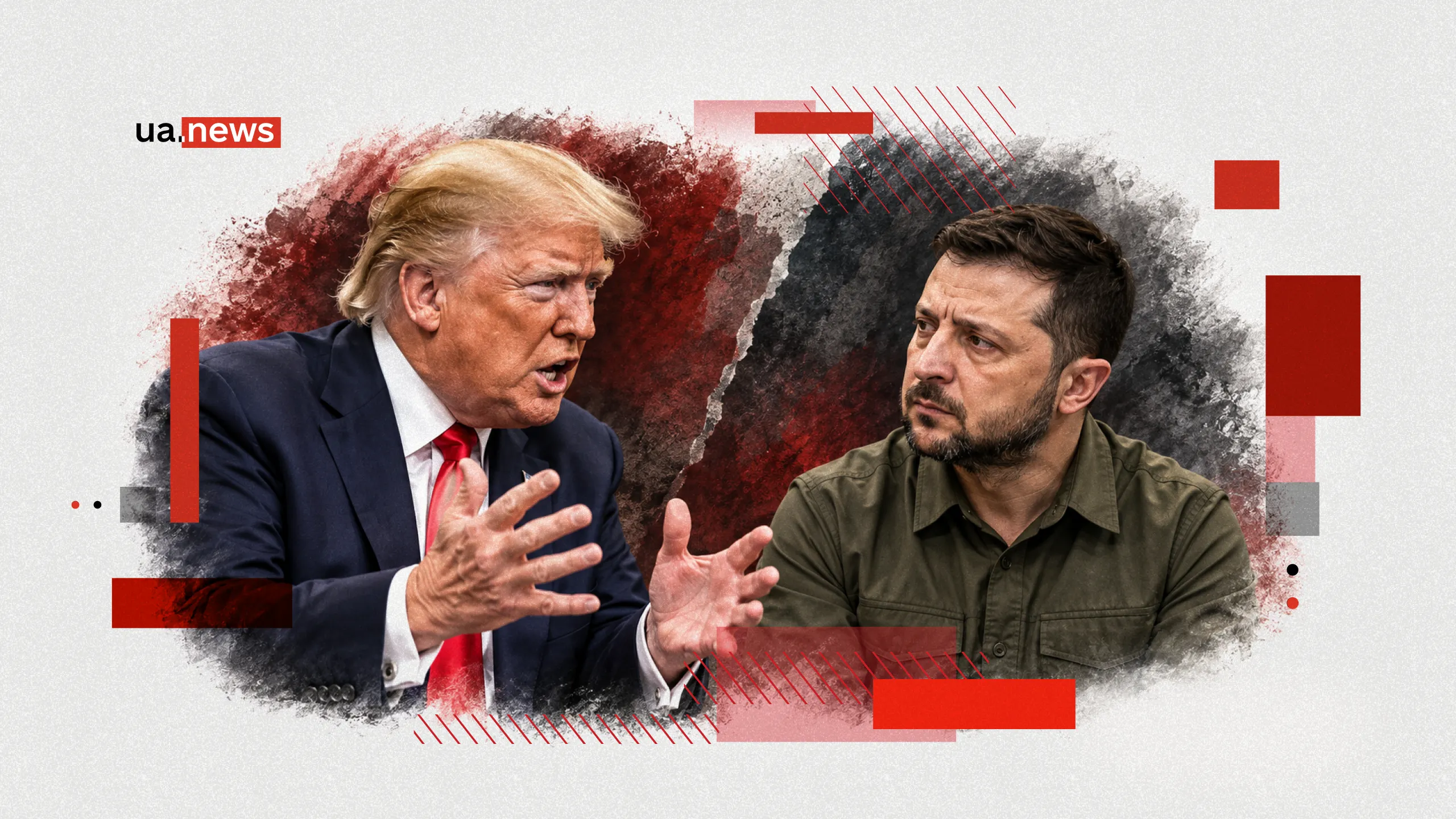
Donald Trump has once again slipped back into his favorite mode. After he and Vladimir Putin struck the so-called “diesel deal” — an agreement to supply Russian fuel to global markets in exchange for the de facto lifting of sanctions — the U.S. president’s rhetoric toward Volodymyr Zelenskyy has become openly hostile.
Within a few days, Trump managed to declare that it was “time for Ukraine to get a new president,” that Zelenskyy “chronically fails to strike deals,” that he “doesn’t want to end the war and probably never did,” and also accused the Ukrainian head of state of “creating problems for the world” by continuing strikes on Russian oil refineries. Zelenskyy has responded with restraint—in particular, by proposing to hold elections on the condition of a 60-day complete ceasefire by Russia—but his reactions reveal a growing sense of irritation.
This raises the question: How politically dangerous are these statements for the Ukrainian president? Could they truly undermine his position both domestically and on the international stage, or are Trump’s words merely loud rhetoric with no real impact on policy? UA.News political analyst Mykyta Trachuk, together with experts, examined the issue.
Historical Context: Why Washington Has Always Been Kyiv’s “Senior Partner”
To understand the current situation, it’s worth recalling the role the United States has played in Ukrainian politics throughout the decades of independence. This role was not merely important—it was, one might say, dominant. The U.S. has always served as Ukraine’s “senior partner”—a stronger force on whose position so much depended.
One of the most striking examples is the “Kolchuga scandal” of the early 2000s. In 2002, the U.S. accused Ukraine of Leonid Kuchma allegedly personally authorizing the sale of “Kolchuga” radar systems to Iraq. This led to Kyiv’s de facto international isolation, a significant reduction in U.S. aid, and a sharp deterioration in relations with the West. Kuchma came under such pressure that he eventually even decided to leave the political arena.
Next, we can mention the 2004 presidential election. After the second round, in which Viktor Yanukovych won, a so-called “third round” took place (although technically it was a recount of the second round). Be that as it may, this was not provided for by Ukrainian law. The U.S. openly supported the opposition led by Viktor Yushchenko, and it was in part thanks to this support that he was able to come to power. This was an example of Washington’s direct, albeit informal, influence on Ukraine’s domestic political process.
Interestingly, the situation essentially repeated itself in 2014. During the Maidan, the U.S. did not support Viktor Yanukovych and generally sided with the protesters. The outcome is well known: Yanukovych lost power—and very quickly at that—and the U.S. played a significant role in this process. And during Petro Poroshenko’s presidency, Washington showed little enthusiasm for the imposition of martial law in 2018. When it became clear that this support was no longer directed toward Poroshenko, he also lost the election.
All these examples illustrate an important pattern: the U.S. has indeed had—and continues to have—significant political influence over Ukraine. But this influence has never been absolute. It has always depended on the specific situation, on the particular U.S. leader, on the willingness of the Ukrainian elite to heed American “signals,” and on the extent to which Washington itself was prepared to ensure compliance—or non-compliance—with its own demands.

The
Current Situation: Why Trump’s Threats No Longer Work as They Used to
An interesting fact: For years, Russian propaganda has repeated the claim that “Ukraine is an American colony” and that the Ukrainian government is a “U.S. puppet.” But the events of recent months—and especially recent weeks—conclusively prove the exact opposite: Kyiv’s level of sovereignty in decision-making remains quite high. And this is most clearly evident precisely during Trump’s presidency.
Let’s look at the hard facts. Trump demanded that Zelenskyy stop striking Russian oil refineries. Zelenskyy continued the strikes—and nothing happened. Trump threatened to halt the sharing of intelligence, and as of now, Kyiv is indeed not receiving warnings from its American partners about ballistic missile strikes—or at least not every time. But at the same time, Ukraine continues to fight, and there is no indication that it will stop doing so in the near future. Zelenskyy has made it clear: Kyiv will fight even under these conditions.
This is a fundamentally different situation from what we saw under Kuchma, Yushchenko, Yanukovych, or Poroshenko. Back then, U.S. pressure could indeed have led to a sharp policy reversal or even a change in government. Now—it cannot.
Why is that? First, Zelenskyy has strong support from Europe, and this goes beyond mere declarations. European leaders continue to provide large-scale financial and military aid, and politically, Zelenskyy remains a key figure for them, embodying resistance to Russian aggression and the entirety of European policy in this arena. As long as this support remains, American pressure is not decisive.
Second, within Ukraine, Zelenskyy retains the support of key elite groups. Yes, attitudes toward the president vary, and for many, they are openly negative. However, we see no signs that any kind of internal elite conspiracy against him might take place in the near future. And without that, any external statements—even from the U.S. president—remain just statements.
Third, Trump shows no willingness to coordinate pressure with Europe. On the contrary, his actions—the “diesel deal,” blocking new sanctions against Russia, statements about an “energy truce” that no one but him has confirmed, and so on — tend to alienate European allies rather than unite them with Washington.
What’s more, the current U.S. president does not seem to regard Europe as a partner at all. And without Western unity, U.S. influence on Kyiv is significantly diminished.
Of course, it cannot be said that Trump’s words have no significance at all. That would be a mistake. They create certain political awkwardness, complicate diplomatic efforts, provide ammunition to Zelenskyy’s domestic opponents, and may influence the sentiments of some voters. But they are no longer capable of “toppling” the Ukrainian president the way they once could. The mechanism whereby an American leader says something negative about the Ukrainian president, and the latter loses power—or something along those lines—no longer works.
Expert
Opinion
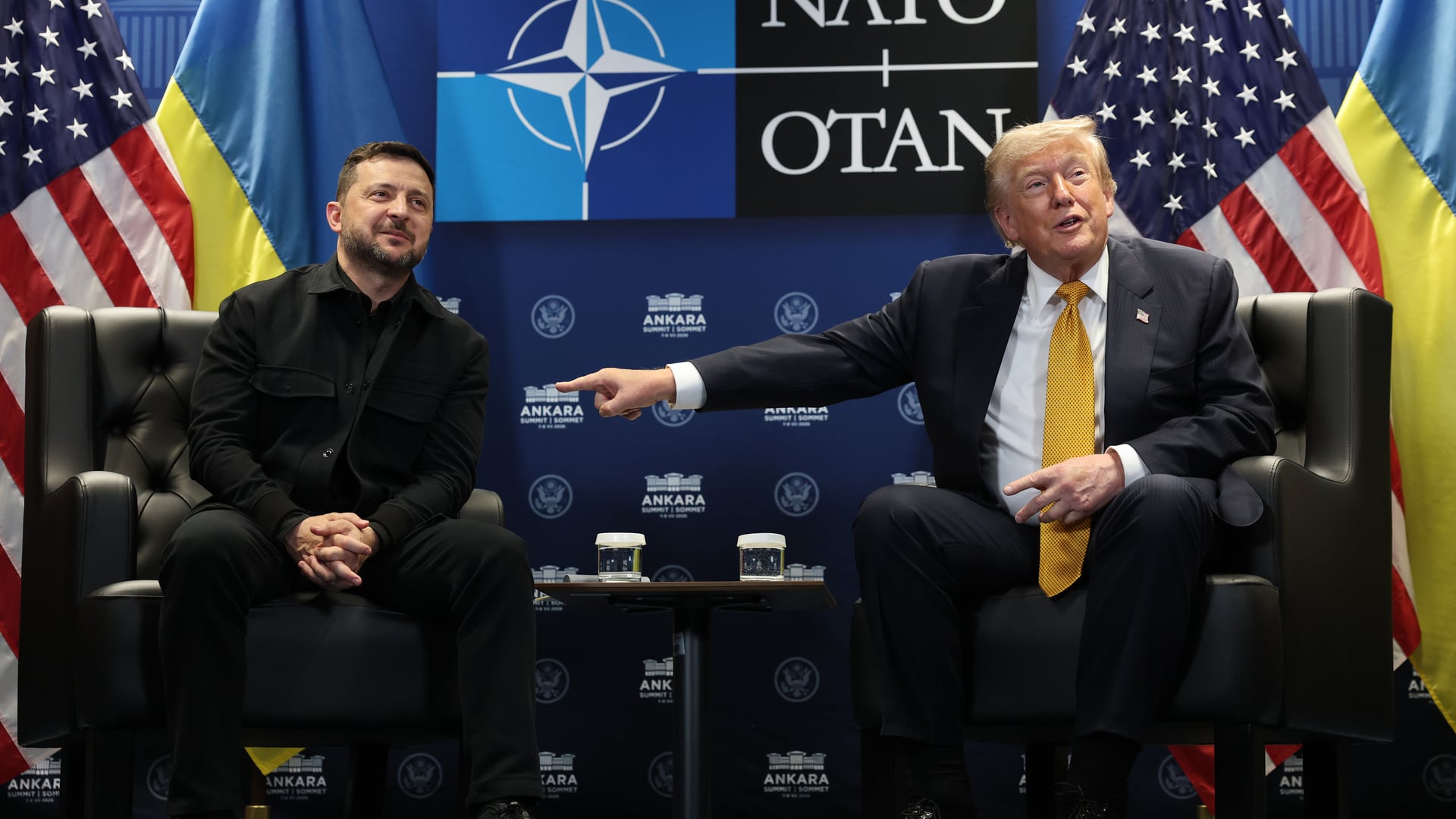
Political analyst Maksym Honcharenko notes: Donald Trump’s statements about Ukraine’s unwillingness to end the war and his calls for a change in the country’s political leadership represent a direct shift in focus. Instead of discussing Russia’s responsibility for initiating and continuing the aggression, the American leader is shifting the focus to persuading the Ukrainian side to compromise.
“This weakens Kyiv’s negotiating position and creates additional pressure. But how critical is this right now? Here, it is important to distinguish between Trump’s typical sharp rhetoric and Washington’s actual policy. The political significance of these statements is determined solely by whether they lead to concrete decisions. In fact, we have the following: a reluctance to impose a broader package of sanctions against Russia, but at the same time, the resumption of intelligence sharing with the U.S. after an alarming hiatus. Such moves, while not providing greater stability or reliability, do signal that Washington’s interests run deeper than simply “playing into the Kremlin’s hands.” Most likely, we are dealing with the White House’s desire to tie the negotiation processes even more closely to itself and gain almost complete control over Ukraine’s position. “Therefore, even if there is no immediate suspension of aid right now, this does not guarantee its stability in the future,” Goncharenko believes.
The expert says that for the Ukrainian side, there are currently two political dimensions: domestic and foreign. On the domestic political level, the U.S. president’s statements may intensify the debate over the cost of continuing the war. We should also expect extensive involvement by Russian propaganda in popularizing this topic and promoting “capitulationist” arguments.
“The foreign policy level will require diplomatic flexibility from Kyiv. Ukraine is forced to simultaneously reaffirm its readiness for negotiations and maintain U.S. support, while also preventing the responsibility for the lack of a peace agreement ‘here and now’ from being placed entirely on Ukraine. Diplomatically, this leaves very little room for maneuver. Clearly, this complicates the formation of a unified negotiating position with the West.
However, it is still too early to conclude that the United States has changed course. A positive scenario here would be Trump’s disappointment in Russia’s ability to reach an agreement and his realization that the Kremlin perceives diplomatic concessions as weakness. This could lead to yet another “shift” in the American leader’s rhetoric, similar to what we’ve already seen after several failed attempts to initiate negotiations. The negative scenario involves increased pressure on Kyiv and an attempt to “force” Ukraine to the negotiating table through coercion. However, it is highly unlikely that either of these scenarios will fully materialize. There is only one realistic scenario at the moment: continued support for Ukraine and the maintenance of sanctions pressure on Russia, but against the backdrop of Trump’s erratic rhetoric. The latter will create new challenges for the Ukrainian leadership and force the country’s diplomatic stance to be flexible. But in reality, Washington will not completely withdraw its support for Ukraine, and the presence of the European Union as another interested party will give Kyiv room to maneuver,” concluded Maksym Honcharenko.

In summary, Trump’s “anti-Zelensky” rhetoric remains a serious political irritant, but it is no longer a mortal threat. It reflects Washington’s frustration, its desire to shift the blame for the failure of peace initiatives onto Kyiv, and, likely, an attempt to create a narrative favorable to Trump—that of a “strong leader” who “put these Ukrainians in their place.” But it lacks the leverage that once allowed the U.S. to change the government in Kyiv or at least significantly influence its policies.
As long as Zelenskyy remains “on good terms” with European partners, as long as he retains at least some domestic support, and as long as Trump remains an antagonist to Europe, the U.S. president’s statements will not create critical political problems for the Ukrainian leader. They may be irritating, they may complicate matters, and they may create a negative media backdrop—but they won’t bring the entire structure crashing down.
The history of U.S.-Ukrainian relations has indeed seen times when Washington was the decisive force. But those times, it seems, are over. Today, as we can see, the Ukrainian government enjoys a fair amount of autonomy from the wishes of the United States. The only question is whether this balance will be maintained going forward—and whether Trump will find other, more effective levers of pressure. So far, however, there are no signs of this.




