
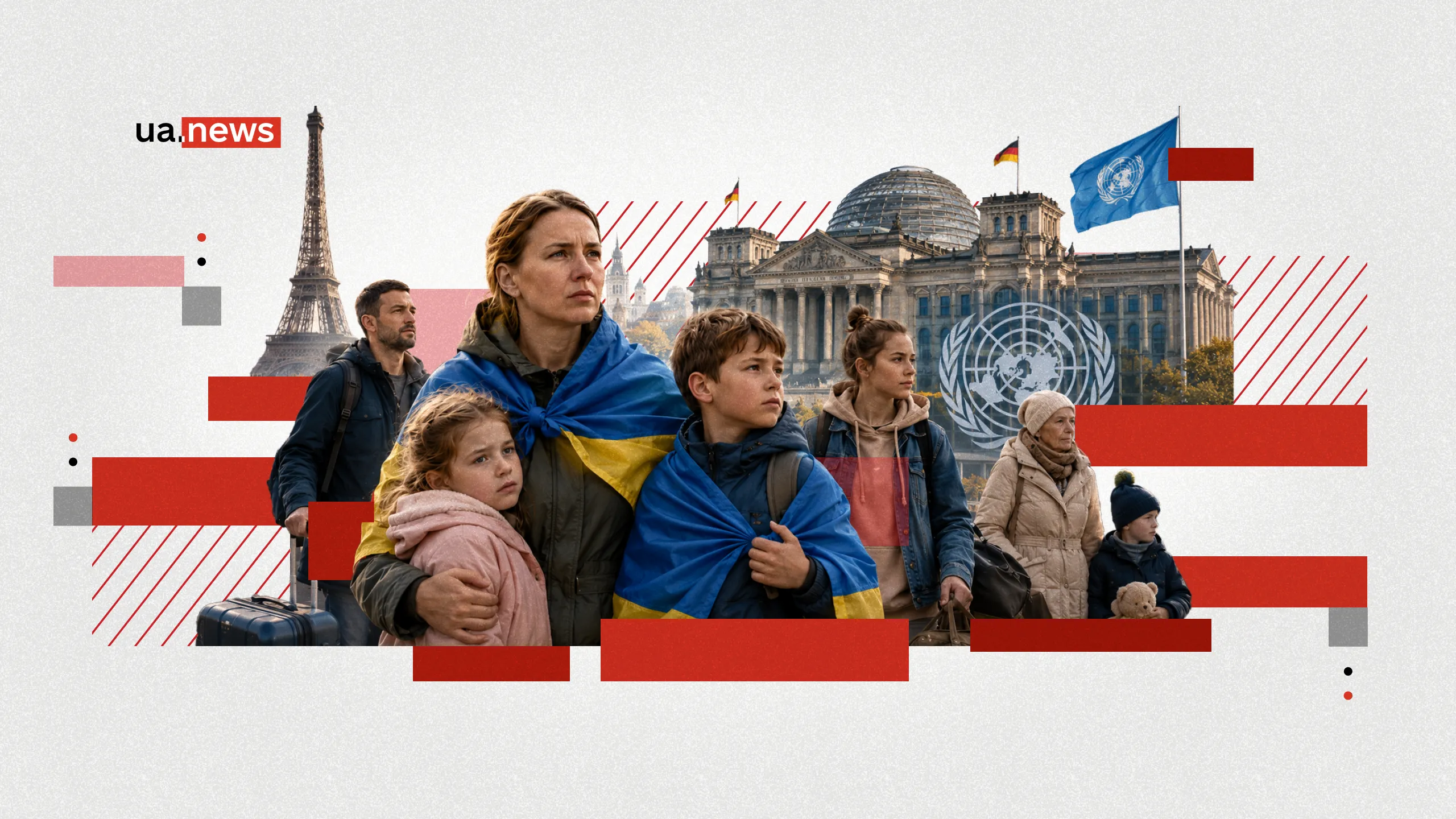
In early May, the Office of the United Nations High Commissioner for Refugees (UNHCR) published a document addressing a topic of great importance and sensitivity for both Ukraine and Europe. It is titled “Transition from Temporary Protection: Projected Stay, Legal Pathways, and Policy Options for Refugees from Ukraine.” As the title suggests, it focuses on Ukrainian refugees who fled to the EU due to Russian aggression.
Behind the report’s official academic language lies a harsh and deeply troubling conclusion for the state: even if the war were to end tomorrow, millions of Ukrainians will never return home. And no one knows what to do about it—except perhaps to accept it as a given.
The authors of the report do not appeal to emotions and, on the whole, do not express concern for Ukraine’s demographics. This is a dry analytical study, a purely expert assessment, employing agent-based modeling—a method that allows for predicting the behavior of large groups of people under various scenarios. And these forecast scenarios make one reflect on the fact that Ukraine has already lost a significant part of its demographic future. The only question is how much these losses will increase in the future.
So what does the UN report say? What scenarios do the Organization’s experts foresee? What will happen to Ukrainian refugees? UA.News political analyst Mykyta Trachuk looked into the matter.
Millions of people in no hurry to go home
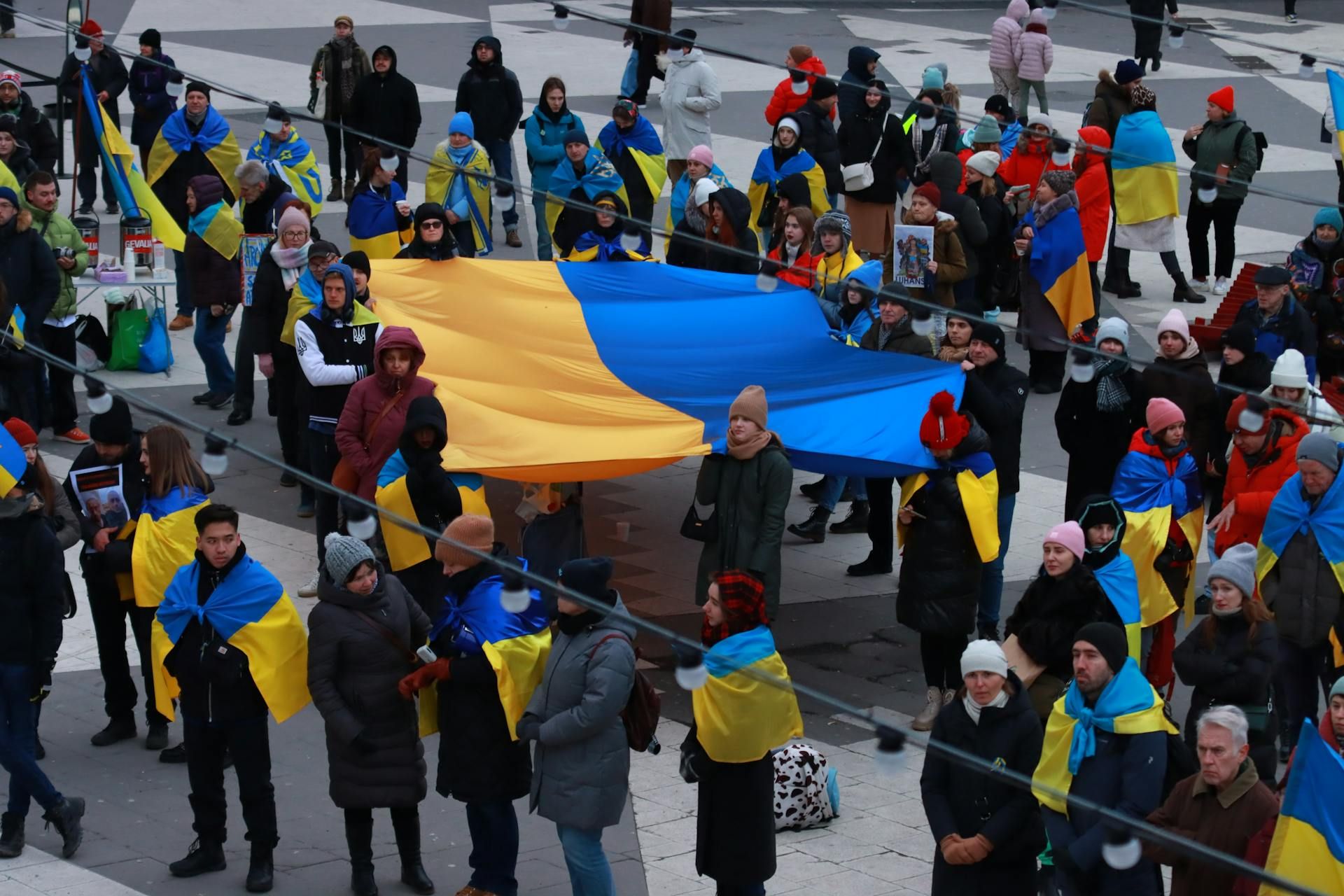
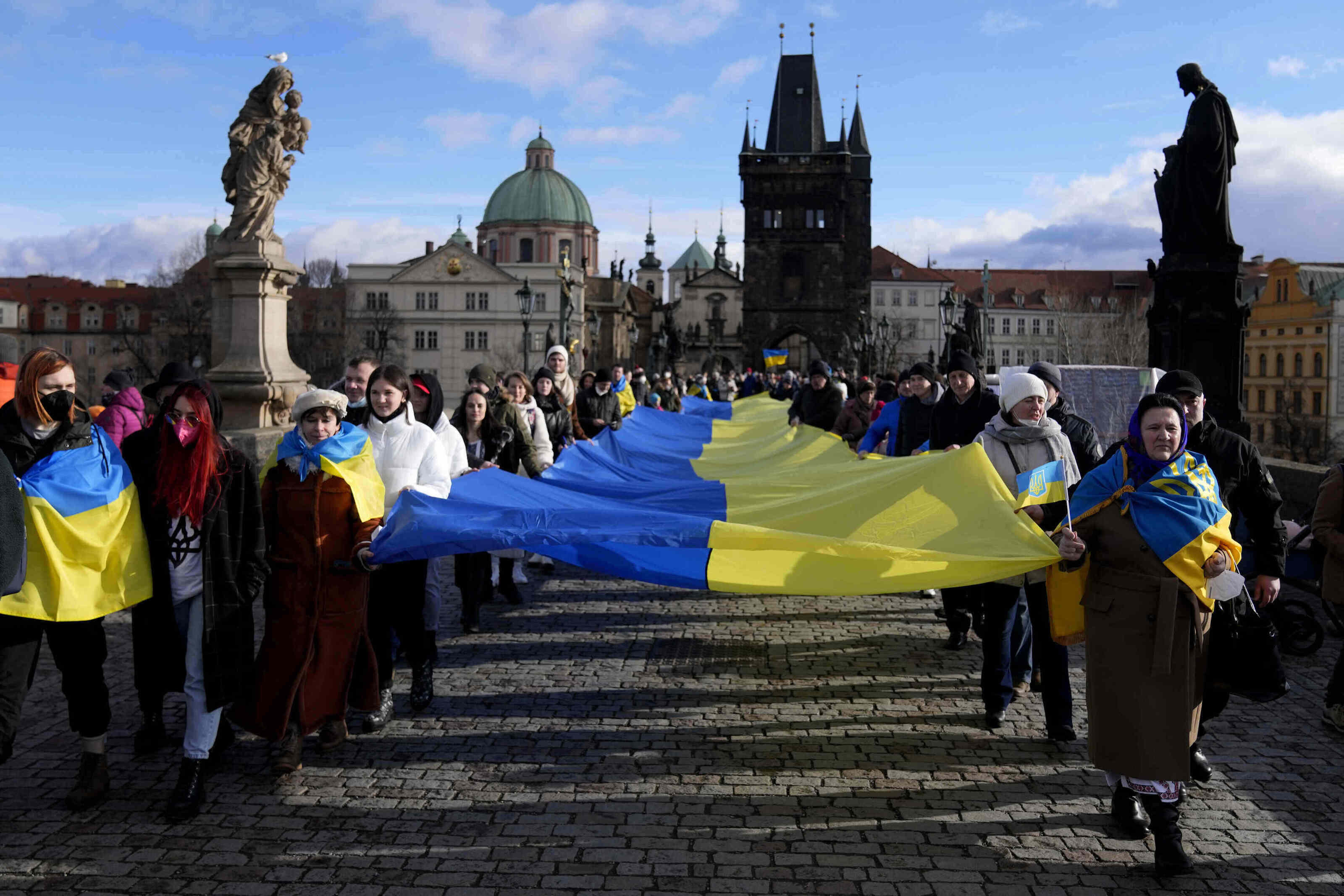
As of the end of February 2026, nearly 4.5 million Ukrainian refugees were under temporary protection in European Union countries. Another 800,000 were in the UK, Moldova, Norway, Iceland, Serbia, and other European countries that are not part of the EU. In total—about 5.2 million people. And this report does not even mention the several million people who have settled in Russia and Belarus. In any case, for comparison—this is more than the population of Finland, Denmark, Slovakia, or Bulgaria, and comparable to the population of Austria.
Since 2022, these people have had access to housing, healthcare, schools, and the EU labor market, and many have taken advantage of this right. Children have enrolled in European schools, and adults have found jobs. New connections, habits, and ways of life have formed. Life has more or less settled into a routine.
Temporary protection in the EU remains in effect until at least March 2027. But what happens next? The UN envisions three scenarios, and none of them is comforting for those in power, experts, or ordinary people who, for some reason, still dream of a mass return of Ukrainians home.
The UN’s Three Scenarios
So, the UN Refugee Agency sees three potential scenarios for how events might unfold.
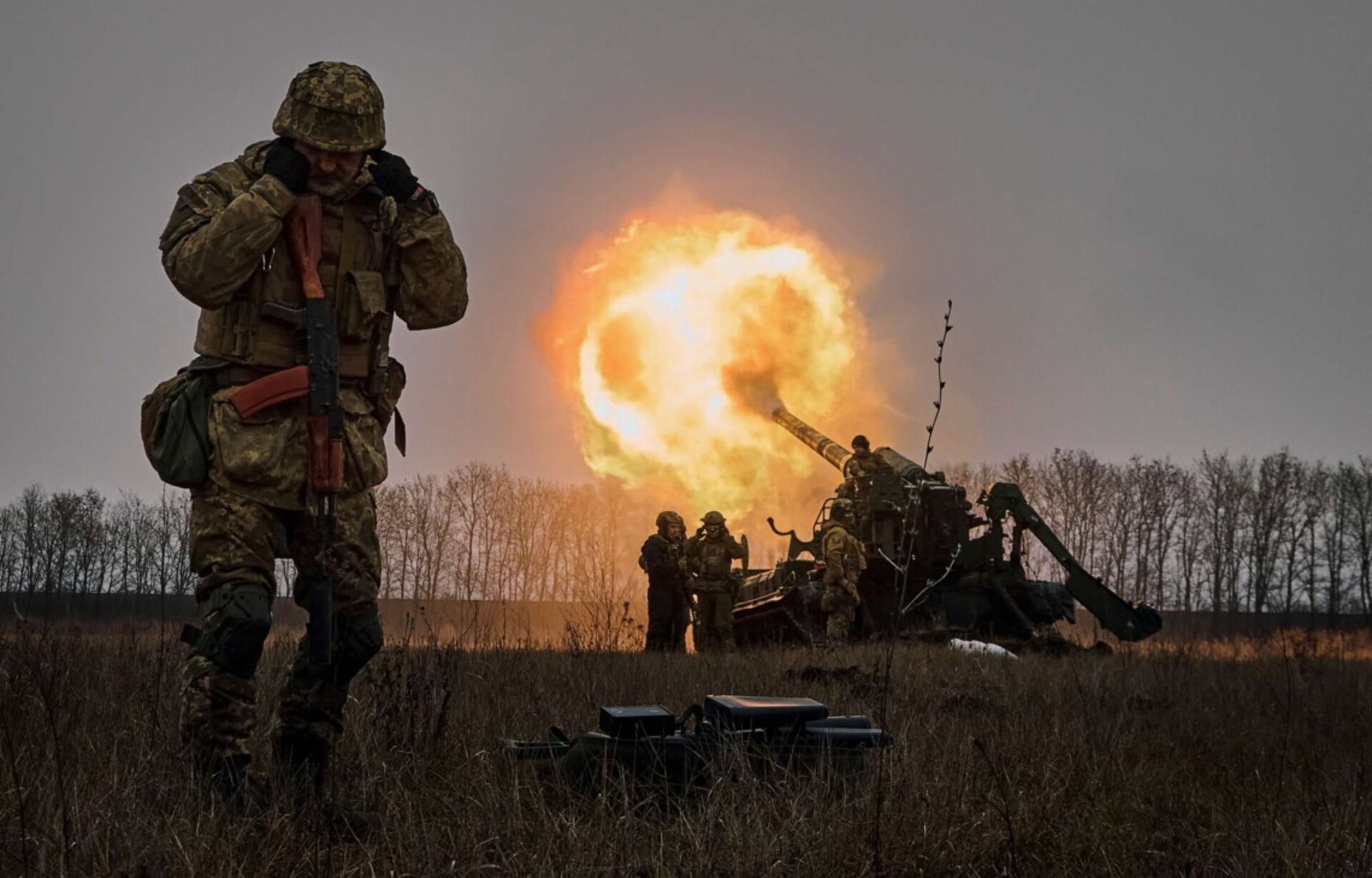
Scenario number 1 — the war does not end. Unfortunately, this is the most likely path; it is called “continuation of the war” or the status quo. In this scenario, hostilities continue until the end of 2029 at the current or higher intensity. There is almost no investment in reconstruction—only humanitarian and military aid. In this case, according to UN estimates, 99% of Ukrainian refugees will remain in Europe, meaning nearly all of the same 5.2 million.
Of course, the temporary protection regime would be extended annually in this scenario. But the agency emphasizes: even if it is extended, a significant number of Ukrainians are already beginning to transition to alternative legal statuses: work visas, student permits, family reunification, asylum, and so on. This means that after 2027, they will increasingly remain in Europe not as temporarily protected persons, but as full-fledged residents. That is, effectively forever.
This scenario is the most catastrophic for Ukraine, not only because of the war itself, but also because of irreversible demographic depletion. People who left at the start of the invasion will have spent seven years abroad by 2029. Their children will no longer remember Ukrainian schools. Their employers will be European companies. The return of such citizens will be the exception rather than the rule.
Scenario No. 2 — “fragile peace” with concessions. This is the scenario examined in the greatest detail in the report. Under this path, hostilities cease by the end of 2026, but Moscow retains control over the occupied territories. In this case, investments in reconstruction will be moderate or high in territories controlled by Ukraine. Temporary protection in the EU ends in March 2027.
And this is where the numbers speak for themselves. Even under this rather optimistic scenario (the war has stopped, but part of the territory remains under occupation), up to 3 million Ukrainian refugees will remain in Europe. That is 56% of the current number!
Let’s consider this: there is peace, and there is relative security in the country. Yet most are not returning. Why is that?
The UN cites several reasons. First, families with children who have already integrated into the European education system are much less likely to return. Second, people from eastern and southern Ukraine—who make up the majority of those remaining—simply cannot physically live at home due to the destruction of their homes or the occupation of their territories. Third, many are simply afraid of a repeat of the aggression. Fourth, and this is key: people have simply grown accustomed to a better life in Europe and, quite simply, do not want to return, so to speak, “to the ruins.”
According to UN projections, the largest number of Ukrainians will remain in Germany—nearly 800,000. In Poland—over 530,000; in Spain—about 130,000; in the Netherlands—nearly 70,000. And these will no longer be “refugees” who need to be rescued. We’re talking about new communities that work, pay taxes, rent or buy homes, use local healthcare, and so on. In other words, fully-fledged residents.
Finally, there is scenario number 3—a Ukrainian victory. Unfortunately, as of today, it seems the most far-fetched. But even the best-case scenario (victory, liberation of all occupied territories)—does not bring millions of people home! The UN models this situation: hostilities have ceased, and temporary protection ends in March 2027. And what happens next? The fact is that 1.67 million Ukrainians will still remain abroad. That is nearly a third of the current number of refugees.
The report’s authors emphasize that even in the event of victory, the key conditions for return—namely housing, jobs, demining and security, social services, and so on—cannot be met immediately. People will not go home the day after a peace agreement is signed. They will observe, wait, and analyze the situation. And while they wait, their lives in Europe will become increasingly comfortable and predictable, which, again, negatively affects the decision to return.
Who is staying in the EU and why is this a problem
The UN does not limit itself to general figures. Experts provide a detailed collective portrait of those who are likely to remain in Europe for the long term.
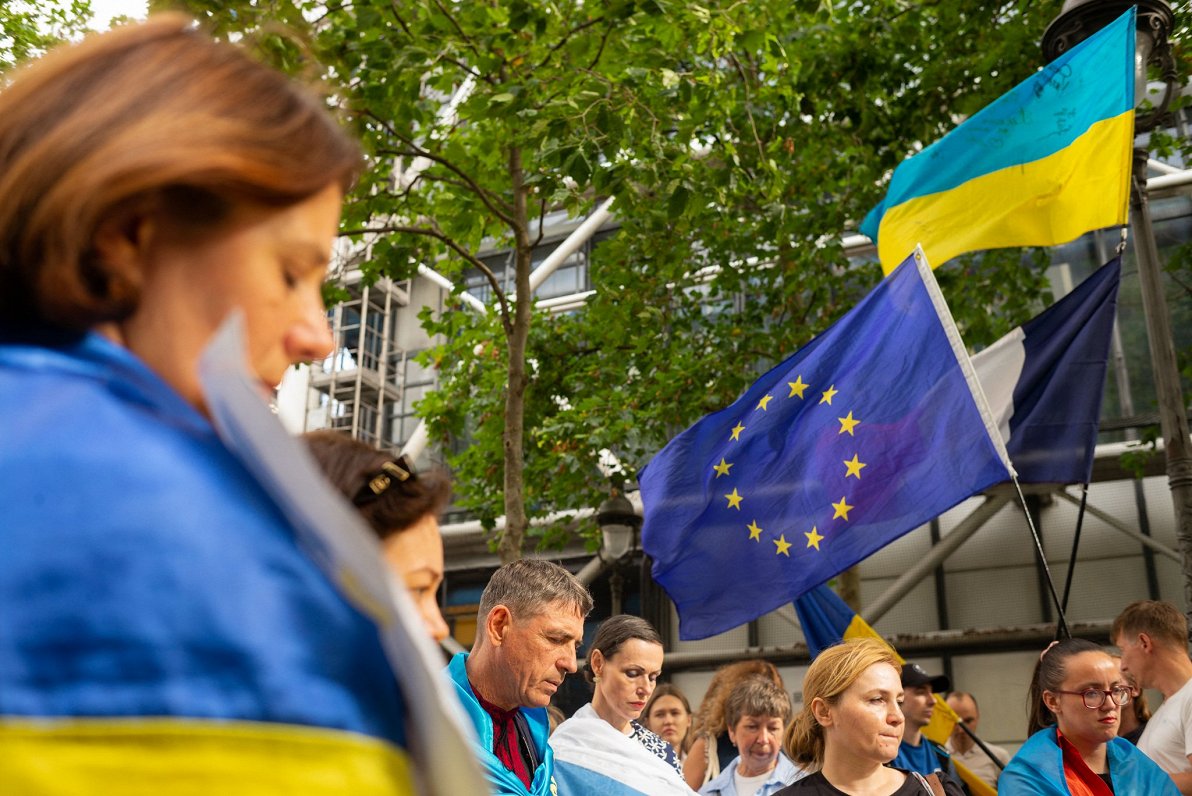
Indeed, the majority of those who will never return to Ukraine are families with children, where at least one adult is employed. They have housing, the children attend school, and the parents are gradually improving their qualifications. It is this group that has the highest chances of obtaining a work permit in the EU and staying there permanently. In Western and Northern Europe, the concentration of such families is highest—which is why, according to forecasts, the return rate there will be the lowest.
But there is another social group: the elderly, single parents, or mothers with children. Their chances of obtaining a work visa or residence permit through the labor market are minimal. At the same time, they do not want to or cannot return to Ukraine—due to age, health issues, lack of housing, or the occupation of their hometowns. For this group, asylum becomes the only realistic way to stay in Europe. And here a systemic problem arises: European countries are not prepared for a wave of asylum applications from, say, a million people at once, as the systems would simply collapse. This would mean long lines, social tension, and the risk of secondary migration—where Ukrainians begin moving from country to country in search of better conditions.
However, if this process unfolds gradually, it is unlikely to cause any fundamental upheavals. These citizens, in the end, will simply remain on European social welfare. Yes, from a moral standpoint, this may seem at least ambiguous, but from the perspective of an ordinary person, it all makes perfect sense. Where is it better to receive a pension or social security—in Ukraine or in the EU? As they say, it’s a rhetorical question.
A separate section of the report is devoted to what is known in English as the “cliff edge.” This refers to the potential abrupt termination of temporary protection in March 2027 without any transitional mechanisms, grace periods, or new legal statuses.
If this happens, millions of people will find themselves in a legal vacuum. Their access to housing, healthcare, employment, and social benefits could be cut off overnight. The UN calls this a “catastrophic scenario”—not only for Ukrainians but also for European countries themselves, which thus risk the collapse of their administrative systems.
What this means for Ukraine
For Ukraine itself, the UN report is not just an analytical document, but yet another demographic diagnosis. We can talk as much as we want about the return of refugees and territories, about support programs, about forced deportations (which won’t happen anyway—these are just the dreams of a few people in Ukraine), about some kind of patriotic duty, and so on. But the reality is this: a significant portion of those who left will never return, and this is a matter of basic human logic.
The authors of the report directly urge European governments: prepare long-term legalization mechanisms, simplified residence permits, transitional statuses, etc. Do not let the situation reach a “cliff edge” in March 2027. Otherwise, everyone will suffer—both Ukrainians, who will lose their homes, and Europeans, who will face significant social tension.
The UN does not offer ready-made solutions, but it sends a clear signal: the time for hopes and mantras about “mandatory return” is long past. Europe is not pushing Ukrainians out, despite isolated statements—and Ukrainians, for their part, are in no hurry to go home. And this holds true under any scenario.
The people who have left are predominantly young women of childbearing age, children, teenagers, and young able-bodied men. That is, the demographic core of the nation—literally its most active and enterprising members. Entire generations that were supposed to rebuild the country after the war have already been lost.
And the most interesting thing is that this loss cannot be fought—it can only be acknowledged. Acknowledge it and try, by any diplomatic means, to end the war as quickly as possible so that at least someone returns here. Because otherwise, even after many more years of bloodshed, no one will return.




