
The Kremlin is sending high school graduates to community colleges instead of 10th grade
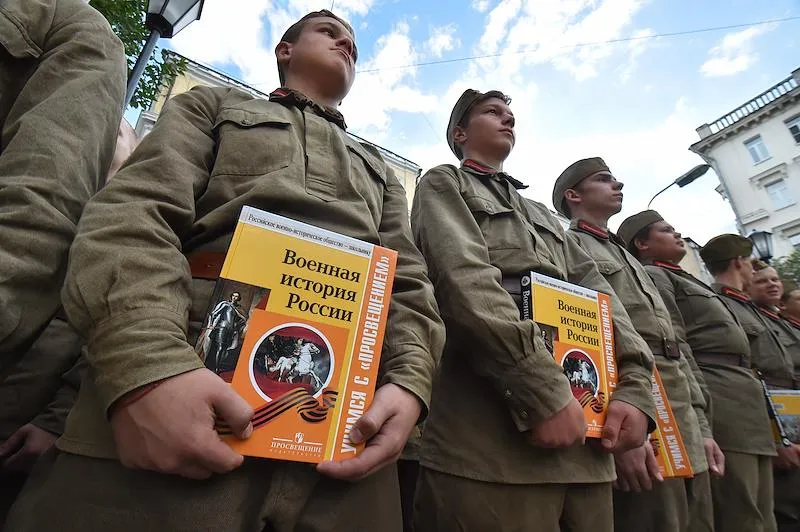
In Russia, an increasing number of ninth-grade graduates are unable to advance to the tenth grade. Ukraine’s Foreign Intelligence Service believes this is part of the Kremlin’s policy to provide the defense industry with a workforce and increase the pool of potential recruits for future military conscription.
According to intelligence reports, not only weaker students but also top students are being turned away. Instead, students are being advised to enroll in community colleges and technical schools.
The Ukrainian Foreign Intelligence Service stated that Russian authorities are increasingly restricting the ability of ninth-grade graduates to continue their education in high school. According to the SVR’s assessment, this practice is linked not only to educational reforms but also to the needs of Russia’s military economy. Intelligence officials believe that the Kremlin is attempting to solve two problems at once—to fill an acute labor shortage at enterprises and to increase the number of people who can be drafted into the army in the future.
Even high-achieving students are being turned away
According to the SVR, parents and students from various regions of Russia have recently been complaining more and more frequently that their children are not being admitted to 10th grade. This applies not only to students with low grades. According to intelligence reports, even students with excellent and good grades are being turned away and advised to continue their education at colleges or technical schools.
According to the Foreign Intelligence Service, such complaints are coming in from Chuvashia, Primorsky and Krasnodar Krais, Irkutsk, Novosibirsk, and Kemerovo Oblasts, Udmurtia, and other regions. Officially, schools attribute these rejections to the student’s average high school GPA, the results of the state final exams, or the competitive admissions process for specialized classes.
Russia is facing a labor shortage
The intelligence report noted that this policy coincided with statements by Russian authorities regarding an acute labor shortage. In particular, Russian Labor Minister Anton Kotyakov stated that over the next six years, the country will need about three million new workers in blue-collar professions.
According to him, the greatest need is for production equipment operators, machine operators, and other industrial specialists. That is why Russia is actively increasing enrollment in colleges and technical schools and promoting blue-collar professions.
It’s becoming increasingly difficult to get into university
The Foreign Intelligence Service notes that after the start of the full-scale war, the Russian authorities changed educational regulations. For the third year in a row, the majority of ninth-graders, upon completing basic school, are enrolling not in the 10th grade but in vocational education institutions. According to intelligence data, this figure reached 62% in 2025.
At the same time, it has become more difficult to gain admission to universities in Russia. The Foreign Intelligence Service explains that competition for state-funded spots has intensified after a separate quota—10% of all state-funded spots—was allocated to participants in the war against Ukraine and their children. In addition, Russian authorities have reduced the number of fee-paying spots in many educational programs.
Intelligence sees another goal
According to Ukraine’s Foreign Intelligence Service, transferring the majority of high school students to colleges serves another important purpose. The Foreign Intelligence Service notes that studying at such institutions significantly limits the possibility of obtaining a deferment from mandatory military service.
As a result, the number of young people who could be recruited into the Russian army in the future is increasing. “In this way, the Kremlin is using the education system as a tool to simultaneously meet two strategic needs—filling the labor shortage in industry and replenishing the ranks of the army waging war against Ukraine,” the Ukrainian Foreign Intelligence Service emphasized.
The intelligence agency also cited a statement by CIA Director John Ratcliffe, who previously claimed that in certain sectors of the front, the average life expectancy of a Russian soldier is 20–30 minutes. According to the Foreign Intelligence Service, the Kremlin’s current education policy is further evidence that the Russian authorities are increasingly subordinating the education system to the needs of the war. This was reported by the Foreign Intelligence Service of Ukraine.
The Ministry of Defense has certified and authorized the use of the new “General Chereshnya” FPV unmanned aerial system in the Armed Forces of Ukraine.
The Ministry of Defense has standardized and authorized the use of the new Ukrainian-made B-1 unmanned aerial system within the Armed Forces of Ukraine. These ultra-light bombers are designed to strike concentrations of personnel, vehicles, and armored equipment.


