
Russian drones are already reaching speeds of up to 320 km per hour
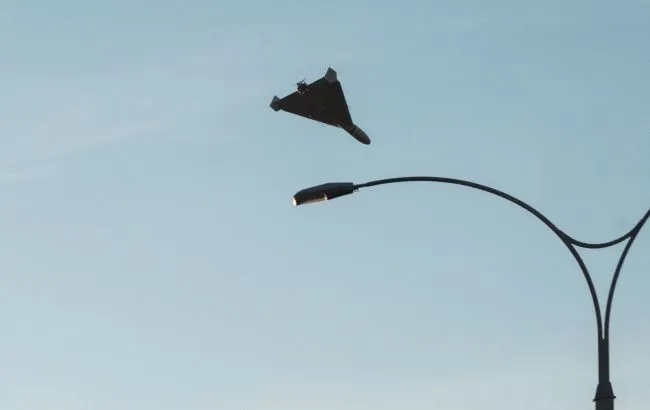
Russia is ramping up production of high-speed jet drones capable of reaching speeds of over 320 km/h. According to Sergei Beskrestnov, the president’s advisor on defense technology, as reported by “Flash,” in August, Russia launched about 2,500 such “Shahed” drones at Ukraine, and Moscow plans to produce tens of thousands of new drones by 2027.
Russia is actively developing a new generation of strike drones that are significantly faster than conventional kamikaze drones. Serhiy Beskrestnov, the Ukrainian president’s special adviser on defense technology known by the call sign “Flash,” spoke about this in an interview with The Guardian. RBC cites his remarks.
According to Beskrestnov, the new wave of Russian drones and missiles is equipped with Chinese jet engines. Thanks to this, some drones can accelerate to speeds exceeding 320 km/h. This poses an additional challenge for Ukraine. The faster a drone moves, the less time there is to detect it, lock onto a target, and destroy it.
Russia Is Increasing the Number of Jet-Powered “Shaheds”
According to Beskrestnov’s assessment, the scale of such drone use has already increased significantly. In August, according to his data, Russia launched approximately 2,500 jet-powered “Shaheds” at Ukraine. By comparison, there were about 1,500 in July. This means that in just one month, the number of such launches could have increased by about a thousand.
Jet-powered drones are already being used in sustained attacks on Kyiv and other major cities. Their high speed allows them to cover the distance to the target more quickly and complicates the work of air defense systems. At the same time, it is important to note that the figures cited are an estimate by a Ukrainian official, not officially confirmed statistics.
Moscow Plans Tens of Thousands of New Drones
According to Beskrestnov, Russia is preparing to increase production even further. By 2027, he estimates, Moscow plans to manufacture approximately 36,000 jet-powered drones. In addition, Russia reportedly plans to produce another 30,000 drones with piston engines. These are slower but cheaper and can be used for massed attacks.
Thus, we are talking about the potential production of approximately 66,000 attack drones of two types in a single year. For Ukraine, this means that the problem lies not only in the development of faster drones. Russia is simultaneously trying to increase their numbers.
Missiles may be added to the drones
Beskrestnov also warned of a possible increase in the number of other weapons. According to him, by 2027, Russia could receive another 10,000 inexpensive “Banderol” cruise missiles and approximately 10,000 “Dan-T” missiles.
If these plans are carried out, Moscow will have significantly greater capabilities to launch massive strikes against Ukrainian infrastructure. However, estimates regarding future production are projections, not guaranteed figures. Actual volumes may be influenced by Russia’s production capacity, access to components, and other factors.
Ukraine Is Developing Its Own Interceptors
Against this backdrop, Ukraine is attempting to develop its own response to Russia’s high-speed drones. Beskrestnov stated that Ukrainian companies are working on autonomous interceptor drones. One such device already exists as a prototype. According to him, between four and six Ukrainian companies are currently working on jet-powered interceptors.
The problem is that these designs are not yet ready for mass production. In other words, Ukraine already has the technological solutions, but cannot yet produce them in quantities sufficient to counter the potential scale of Russian attacks. Mass production has now become one of the main priorities.
Why Jet-Powered Drones Are Harder to Shoot Down
A conventional attack drone can fly relatively slowly, so air defense forces have more time to react. The situation is different with jet-powered drones. If a drone is traveling at speeds exceeding 320 km/h, it covers the distance to the target more quickly. This shortens the time from the moment it is detected to the moment it reaches the strike zone.
That is precisely why specific interception capabilities are needed to combat such targets. According to Beskrestnov, the main burden of countering jet-powered drones currently falls on fighter aircraft. This means that significantly more expensive and sophisticated systems are used to destroy them than those that could be employed against slower drones.
Ukraine needs cheaper interception methods
There is also an economic aspect to the problem. If Russia launches thousands of cheap drones, it becomes difficult to use expensive air defense missiles or fighter jets against each one.
Therefore, Ukraine is looking for interceptors that can be mass-produced and used specifically against large-scale attacks. The idea is to reserve expensive air defense systems for more complex targets, while having specially designed drones intercept some of the drones. However, for this to happen, Ukrainian designs must undergo testing, meet the necessary performance requirements, and transition from prototypes to mass production.
Russia is trying to overwhelm with numbers and speed
The situation is gradually changing the nature of the air war. Previously, the main problem was large waves of relatively slow attack drones. Now Russia is adding faster jet-powered drones to the mix. At the same time, Moscow is trying to increase the total number of drones. As a result, Ukraine faces two challenges at once—speed and sheer volume.
According to Beskrestnov’s assessment, Russia has already significantly ramped up its use of jet-powered “Shaheds,” and its plans for 2027 call for the production of tens of thousands of new drones. In response, Ukraine is developing its own interceptors, but they have not yet reached the stage of mass production. That is why, in the near future, the key question will be not only what new drones both sides are developing, but also which side will be able to scale up their production more quickly. This is reported by The Guardian


