
Taganrog Could Have Been Left Without Air Defense After Ukraine's Strikes
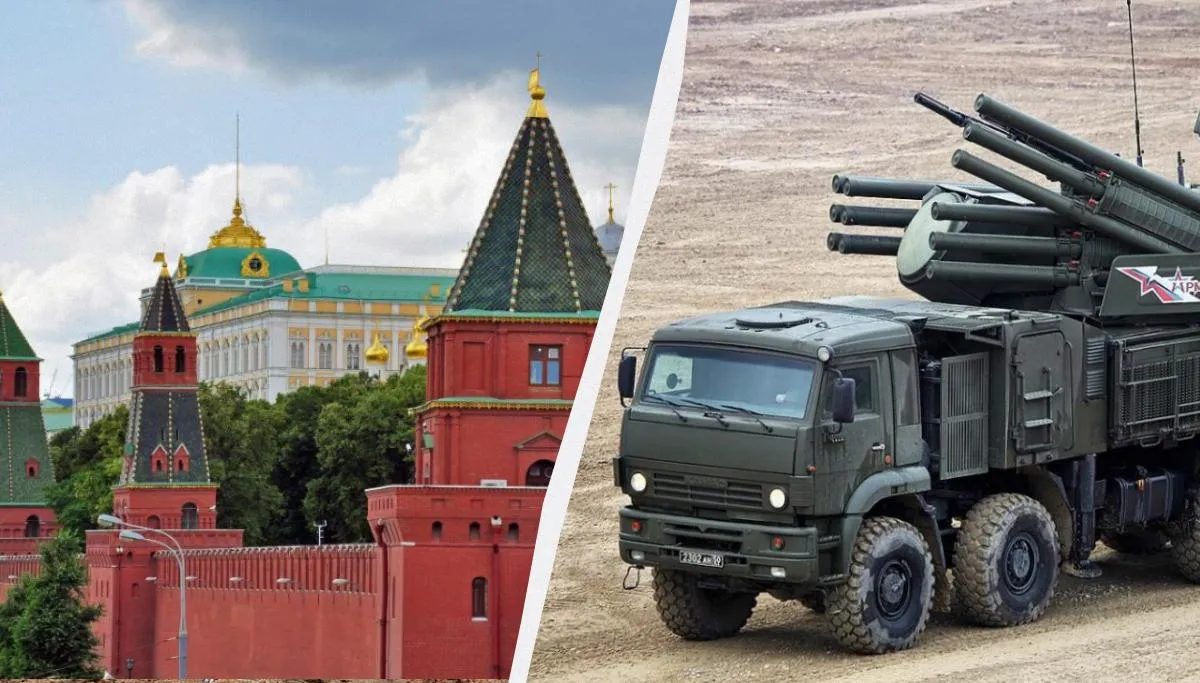
Taganrog, which is home to industrial facilities and military installations critical to the Russian army, may have been left without its primary air defense assets. According to information from a specialized Telegram channel, which was analyzed by Defense Express, following Ukrainian strikes, the city allegedly no longer has any Pantsir, S-300, or S-400 systems. At the same time, according to analysts, Moscow and the residences of Russian leadership continue to receive significant quantities of air defense systems.
The Russian city of Taganrog is of great importance to the Russian Armed Forces and its military-industrial complex. The city is located approximately 40 kilometers from the border with Ukraine and about 180 kilometers from the front lines. Due to its location and the number of military and industrial facilities, it has long been a key logistics hub for Russian forces.
However, the situation regarding the city’s defense may have changed significantly. Defense Express reports that in recent days, Taganrog has likely been left without its main air defense systems. The source of this information is the specialized Telegram channel “Spy’s Dossier.” According to the channel, the city allegedly no longer has any “Pantsir” anti-aircraft missile and gun systems, nor any S-300 or S-400 systems. There is currently no separate official confirmation of the complete withdrawal of these systems from Taganrog.
Analysts link the possible weakening of air defense to strikes by the Ukrainian Defense Forces on Russian military and defense facilities. In particular, on September 12, Defense Express reported that two Russian “Pantsir-S1” systems had been destroyed in Taganrog. These systems are used to protect critical facilities from air attacks.
Why Taganrog Is Important to Russia
The G. M. Beriev Taganrog Aviation Scientific and Technical Complex operates in Taganrog. This is one of the facilities involved in the repair and modernization of Russian military aircraft. Specifically, Defense Express identifies it as one of three sites where Tu-95MS strategic bombers were repaired and modernized.
The facility is also involved with Russian long-range radar detection aircraft, specifically the A-50 and A-100 “Premier.” In addition to military aviation, the plant also works with Be-200 amphibious aircraft. In other words, this is not just an ordinary industrial enterprise, but a facility of significance to the Russian aviation sector and defense industry.
Ukrainian strikes have repeatedly disrupted the plant’s operations. Defense Express notes that the plant is suffering significant losses due to the strikes on the TANTK facility. To keep it operational, Russia has also tasked the plant with producing “Molniya” attack drones.
Thus, the loss or redeployment of air defense systems from Taganrog could have far greater consequences for Russia than simply weakening the defenses of a single city. If reports of the absence of “Pantsir” systems, S-300s, and S-400s are confirmed, important military and industrial facilities there will remain more vulnerable to new strikes.
The city also has a military airfield
In addition to the aviation plant, Taganrog is home to a military airfield. According to Defense Express, it is actively used by the Russian military transport aviation. This is another factor that makes the city important to the Russian army.
Taganrog began to play an important logistical role for Russia following the occupation of Crimea and the start of the war in 2014. After the full-scale invasion began, this role only grew stronger. Through the city and its infrastructure, Russia can support the operations of various military facilities and enterprises.
In addition, Taganrog is home to other enterprises involved in drone production. It also houses warehouses where drones are stored. Some of these facilities have already been targeted by Ukrainian strikes.
That is precisely why Taganrog is far more important to the Russian army than it might seem at first glance. A strike on a single facility there could disrupt production, aircraft maintenance, logistics, or troop support. And the lack of adequate air defense coverage—if the information is confirmed—only increases the risks to these facilities.
Russia is strengthening Moscow’s defenses
Against this backdrop, analysts are drawing attention to the situation around Moscow. According to Defense Express, the Russian capital and Vladimir Putin’s residences are protected by a large number of air defense systems. At the same time, the publication estimates that the number of such systems around the capital continues to grow.
Analysts see a striking contrast here. On the one hand, Russia has a limited number of modern air defense systems and is forced to distribute them among a large number of critical facilities. On the other hand, Moscow remains one of the top priorities for the Russian military leadership.
Defense Express notes that several rings of air defense can already be seen around Moscow. According to the publication’s assessment, Taganrog—despite its military-industrial significance—may have lost some or all of its primary air defense assets.
This could have practical implications for Ukraine. If Russia is indeed forced to withdraw air defense systems from key industrial and military regions and redeploy them to the capital, this demonstrates the limited capacity of the Russian air defense system. At the same time, it is still too early to speak of a complete lack of protection for Taganrog as a definitively established fact.
What This Means for Ukraine
Defense Express believes that the weakening of air defense in Taganrog creates new opportunities for the Ukrainian Armed Forces. First and foremost, this refers to the potential targeting of military enterprises, aviation infrastructure, warehouses, and other facilities that supply the Russian army.
At the same time, the mere fact that air defense systems have been withdrawn does not mean the city is now completely defenseless. Russia may use other means to detect and engage aerial targets, as well as rapidly redeploy systems between regions. Therefore, definitive conclusions can only be drawn once additional confirmation becomes available.
Another detail remains telling. The Ukrainian military has already reported the destruction of Russian “Pantsir” systems in Taganrog, and Defense Express had previously drawn attention to problems with the protection of local facilities. The publication’s report also noted that during one of the previous strikes on the Taganrog Aviation Plant, an S-300 or S-400 battery was stationed near the plant but was unable to repel the drone attack.
Thus, Taganrog could find itself in a rather difficult situation for Russia. The city remains important for military aviation, the production and repair of military equipment, and logistics. At the same time, however, according to analysts, its defenses may have been significantly weakened following a series of Ukrainian strikes. If this assessment is confirmed, the Russian command will have to decide what is more important to it—protecting strategic facilities far from the capital from strikes or maintaining the maximum concentration of air defense forces around Moscow. Defense Express reports on this.
Earlier, the Russian occupation authorities sentenced a 24-year-old resident of the Donetsk region to 14 years in a strict-regime penal colony for allegedly passing information to Ukrainian intelligence about the deployment of Russian troops in the Donetsk region.
Previously, two residents of the Kramatorsk district were found guilty of treason and sentenced to 15 years in prison with confiscation of property.
The Southern District Military Court in Rostov-on-Don sentenced Andriy Gulak, a 61-year-old resident of the Donetsk region, to 5 years and 4 months in prison. The Russian side accused the man of allegedly participating in a terrorist group due to his service in the “Azov” regiment.




