
Ukrainian deep-strike forces penetrated 1,900 km into Russia
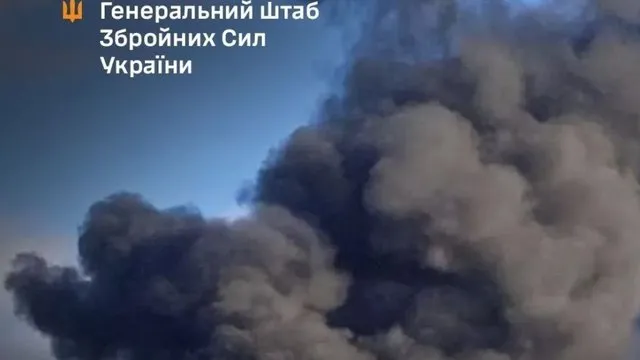
In August, Ukrainian long-range strikes on Russian territory reached nearly 1,900 km. According to the Ukrainian Ministry of Defense, over the course of the month, the Defense Forces struck 12 major Russian oil refineries, three fuel terminals and oil depots, as well as facilities in the gas, petrochemical, and defense industries.
In August, Ukrainian deep strikes reached targets up to 1,900 km from Ukraine’s state border. According to the ministry, Ukrainian forces struck 12 major Russian oil refineries in August. Their combined capacity is approximately 100 million metric tons of petroleum products per year.
The Ministry of Defense emphasized that these were specifically facilities in the Russian oil industry that are of great importance for fuel production. “Up to 1,900 km—that is how far Ukrainian deep-strike operations reached into Russia in August,” the ministry reported.
Which refineries were targeted
Among the facilities the Ministry of Defense lists as having been struck are “Lukoil-Permnefteorgsintez” and “Orsknefteorgsintez.” Both facilities are located approximately 1,500 km from Ukraine’s state border. “Tobolskneftekhim” is located even farther away, at a distance of about 1,900 km.
The Ministry of Defense cites this distance as the maximum depth of Ukrainian deep strikes in August. Thus, Ukrainian strikes extended beyond Russia’s regions bordering Ukraine. The targets were located deep within Russian territory, particularly in regions that Moscow had long considered to be far from the hostilities.
It wasn’t just oil refineries that were targeted
In addition to oil refineries, Ukrainian forces struck two gas processing and petrochemical plants. Also, according to the Ministry of Defense, three large fuel terminals and oil depots were hit.
Another target was facilities belonging to the Russian military-industrial complex. In August, Ukrainian forces struck two military-industrial complex facilities. Among them, the Ministry of Defense names the “Kamensky Plant.” According to the Ukrainian ministry, two workshops at this facility were destroyed, and four others were significantly damaged.
The facility itself is significant for Russian defense production, which is why the Ukrainian side considers its destruction to be one of the key achievements of the August strikes.
Why Strikes on Oil Refineries Are Important
Russia needs oil refineries not only for the civilian market. They produce gasoline, diesel fuel, and other petroleum products used in transportation, industry, and military logistics.
Therefore, attacks on large oil refineries can create problems on several levels at once—from oil refining to supplying fuel to the domestic market. This is particularly evident given the challenges the Russian fuel market has already been facing this year.
Gasoline production in Russia has declined due to drone attacks and the shutdown of certain refineries. By the end of August, according to Reuters estimates, it had fallen to approximately 80,000 metric tons per day, while domestic consumption stood at about 115,000 metric tons. In some Russian regions, restrictions on fuel sales have already been imposed due to shortages.
The strikes are reaching farther and farther
Separately, the Ministry of Defense specifically highlights the distance to the targets. The strikes on facilities 1,500 km from the Ukrainian border demonstrate that Ukrainian long-range weapons can reach targets deep within Russian territory.
The farthest target mentioned by the ministry in its report is “Tobolskneftekhim”—approximately 1,900 km from the border. This is significant from a military standpoint as well. The farther a facility is located from the front lines, the more Russia must factor in the risk of attacks on facilities that were previously considered relatively safe from Ukrainian strikes.
At the same time, the Ministry of Defense does not disclose all the details regarding the means used to carry out these attacks.
August Recap
Overall, the Ministry of Defense lists several main categories of targets struck during August. These include 12 large oil refineries, two gas processing and petrochemical plants, three large fuel terminals and oil depots, as well as two facilities belonging to the Russian military-industrial complex.
The combined capacity of just these 12 refineries is approximately 100 million metric tons of petroleum products per year. The most distant targets were located approximately 1,500–1,900 km from the Ukrainian border. The Ministry of Defense stated that such strikes are intended to raise the cost of continuing the war for Russia. “We are raising the cost of the war for the aggressor. Russia will pay for everything,” the ministry said.
At the same time, the figures and estimates cited are based on data from the Ukrainian Ministry of Defense. Information regarding the extent of damage to specific facilities and the actual impact of the strikes on their continued operation may require further confirmation.
Nevertheless, the scale of the reported damage indicates that Ukrainian long-range strikes are increasingly targeting key facilities of Russia’s energy and defense industries far from Ukrainian territory. The Ukrainian Ministry of Defense reported this on September 2.
Vladimir Putin likely decided to further escalate the war after several weeks of deliberation over the summer. According to The Economist, the Russian dictator may be seeking to preserve his power and life through this escalation.
As a reminder, on the afternoon of August 30, Russian forces attacked Kyiv with strike drones. Explosions were heard in the capital, and air defense forces engaged enemy targets.




