
Ukrainian fortifications in Donetsk region could test Russia’s offensive — YLE News
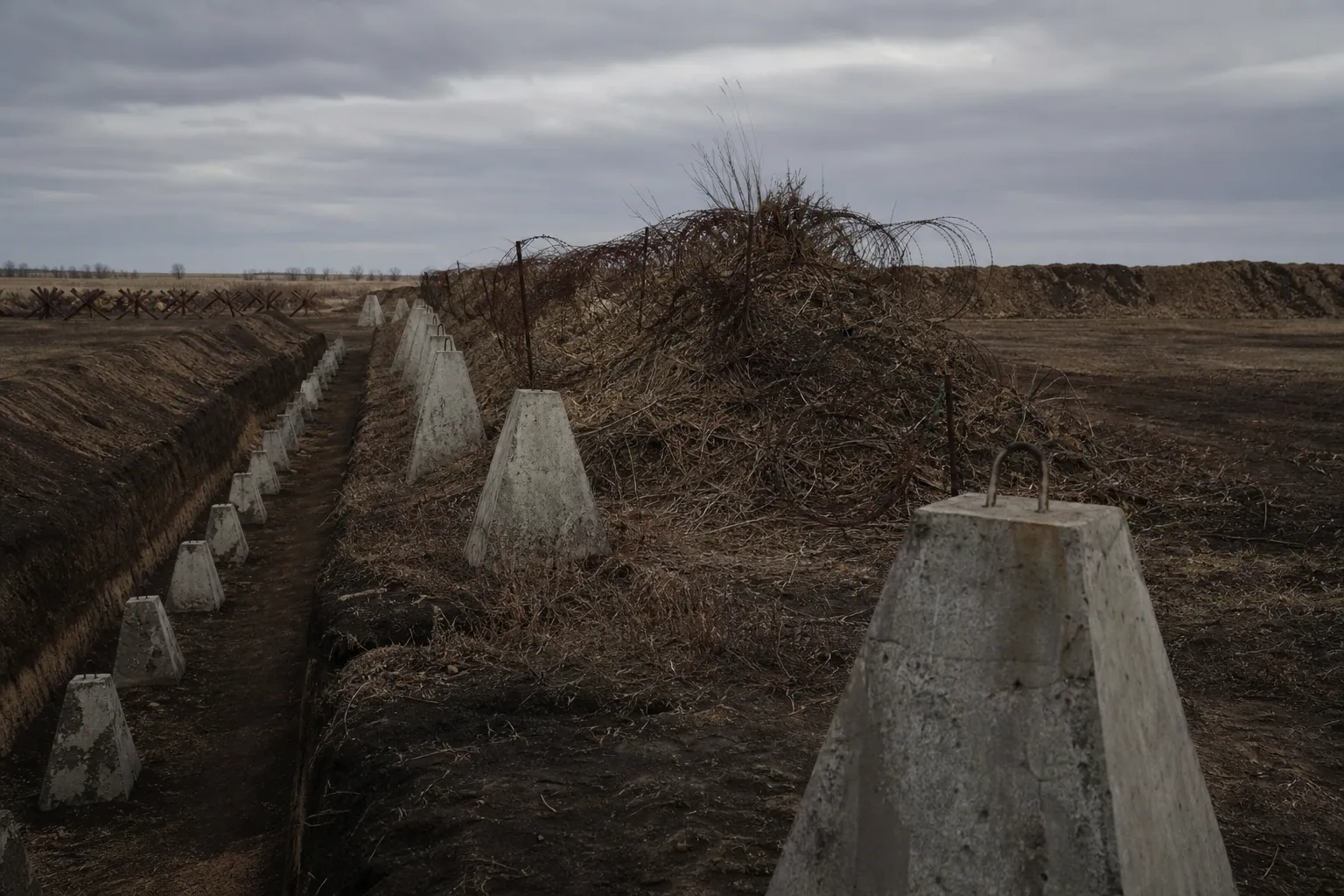
Troops of the aggressor state Russia advancing in Ukraine’s Donetsk region are approaching the main line of Ukrainian defensive fortifications. It consists of triple anti-tank ditches, barbed-wire obstacles and minefields, and is intended to hold back the advance of both armored vehicles and infantry.
This is reported by YLE News, citing Pasi Paroinen, an expert at Black Bird Group. In his assessment, Russian forces had previously overcome older defensive structures, but now face the first continuous and significantly stronger defensive line.
Defense on the approaches to Kramatorsk
According to Paroinen, Russia has been trying for several years to advance toward Kramatorsk and Sloviansk from the north and south. On the southern section of this axis, the pace of Russian troop advances has increased somewhat in recent weeks, as the terrain favors the infiltration tactics they employ. Russian forces are seeking to reach areas west of Kramatorsk.
The expert noted that the fortifications are also equipped with transverse anti-tank ditches and obstacles. This configuration is intended to complicate maneuvering for Russian units that may break through into one of the defensive sectors. At the same time, there are inevitably gaps in the defense system, and Russian troops may try to destroy fortifications with guided aerial bomb strikes.
More current news is available on the UA.News Telegram channel Telegram.
Situation on the Lyman axis
On the northern section of the encirclement effort, near Lyman north of Sloviansk, the Russian offensive has largely been halted, according to Paroinen. This sector is defended by Ukraine’s 3rd Army Corps, which the expert described as one of the elite formations of the Ukrainian military.
At the beginning of summer, the advance of Russian forces north of Lyman appeared threatening, but Ukrainian troops carried out counterattacks and pushed back the enemy’s forward units. Paroinen did not rule out that Ukrainian forces may try to encircle Russian units that have advanced far to the west, but stressed that there is a lack of information from the area due to strict operational security.
Risks of the autumn period
The expert believes that in the short term, the situation for Ukraine appears relatively stable: fortifications cover the southern direction, while the Russian offensive in the north is currently contained. At the same time, foggy weather in autumn may limit the use of drones, which are important for defense.
Among the long-term problems, Paroinen named the need to replenish the Ukrainian military by approximately 30,000 service members every month, as well as Russia’s missile strikes on Ukraine’s defense industry and weapons depots. In his view, Russia will continue attempts in the coming months to encircle Sloviansk and Kramatorsk from two directions.




