
Ukrainian troops are rolling back the Russian foothold near Dvorichna
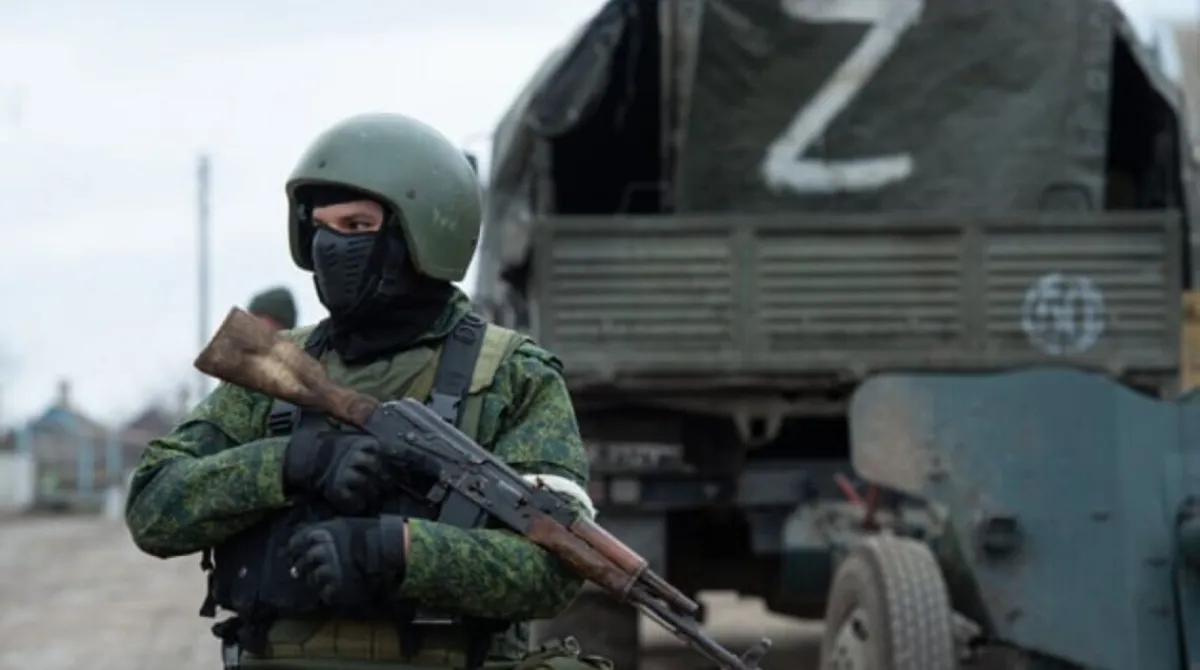
Ukrainian defenders are stepping up pressure on Russian forces near Dvorichna in the Kharkiv region. According to Viktor Tregubov, head of the communications department for the Joint Forces Operation, the Russian bridgehead on the right bank of the Oskol River is gradually shrinking.
He made this statement during a television broadcast while answering questions about the situation in the Kupiansk sector, Borova, and Dvorichna.
“The situation in the Borova area is fairly stable. As for Dvorichna, the Russians are slowly losing ground there; they are under quite effective pressure. Unfortunately, we’re not yet talking about the liberation of Dvorichna itself, but rather about the reduction of the Russian foothold on the right bank of the Oskol River,” he said.
Tregubov explained that this push to pin the Russians against the river in itself prevents them from carrying out any active operations in the direction of Kupiansk, which is a major positive.
“As for Kupiansk, we divide the area into two parts, the right and left banks. On the right bank, it is precisely this pressure—exerted toward Dvorichna by Ukrainian troops—that is squeezing the bottleneck through which the Russians are trying to move their forces into Kupiansk. So far, [Ukrainian troops—ed.] haven’t completely closed the bottleneck; there’s still a portion of the area controlled by the Russians and a ‘gray zone’… And in the very north of the city, these small infantry groups are still present,” the spokesperson noted.
He reported that (these groups—ed.) are not advancing, but that the Armed Forces of Ukraine will need some more time and effort to “flush them out” of that area.
“However, if we look at the left bank of the Oskil River, the situation there is not exactly the same, but it is less favorable for Ukrainian troops, because there, the Russians are putting pressure on the Ukrainian bridgehead on the left bank and are actively trying to move through occupied Pishchane toward Kupiansk-Vuzlovyi, pushing right through the center of this bridgehead,” Tregubov stated.
The spokesperson reported that the main efforts of Ukrainian troops are focused on preventing the Russians from doing so and on destroying the forces attempting to advance there.
When asked whether there had been any changes in the enemy’s frequency of drone use—particularly along the fiber-optic cable—amid strikes on businesses and warehouses such as Ozon and Wildberries, he replied that there had been no changes in his area of responsibility. Tregubov said that fiber-optic cables are becoming scarcer, but there are “still enough for now.”
“Yes, indeed, we’ve managed to create some problems for the Russians with fiber-optic cable production and, consequently, with drone production using that cable. That’s a fact. There are definite effects. In our areas of operation, we’ve even observed a certain effect due to the “shutdown” of Russian oil refineries. Some units of the Russian military also experienced certain problems with the supply of fuel and lubricants. But let’s see if this will have any strategic significance at all, say, over the next few months,” the spokesperson noted.
As a reminder, last night the Russians fired Kalibr missiles at a high-rise building in Odesa.
In the Black Sea near Odesa, two Azerbaijani sailors were killed on September 9 as a result of a drone attack on the Somali-flagged tugboat TEDY.
In Odesa, on September 10, a Russian attack damaged the warehouse buildings of a volunteer organization where humanitarian aid and essential supplies were stored.




