
The new Firefly guided munition was unveiled in Ukraine
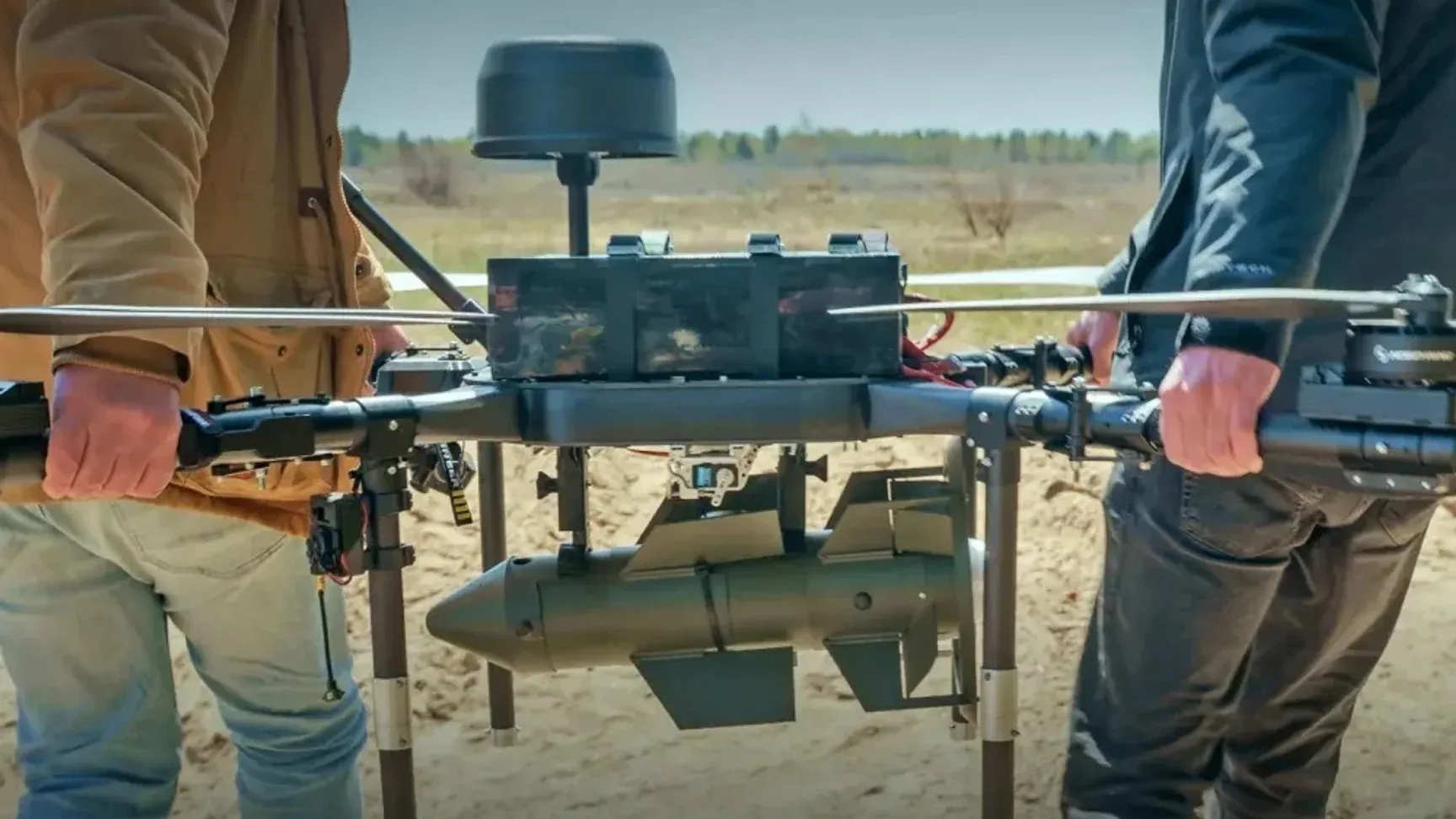
The Ukrainian Ministry of Defense has unveiled a new class of guided munitions called Firefly. According to the developers, it autonomously adjusts its flight path after launch, maintains accuracy even when subjected to electronic warfare, and allows drones to operate from a safer altitude.
The Ukrainian Ministry of Defense, in collaboration with the Brave1 platform, has unveiled a new class of guided munitions—Firefly. The development is already being called an important step for Ukrainian drones, as it is expected to address one of the main challenges facing bomber drones—the need to fly close to the target. Firefly was developed by military specialists within the Ministry of Defense. According to the ministry, the munition can operate effectively at altitudes of up to 800 meters.
Once released, Firefly does not simply fall straight down. It independently calculates its route, adjusts its trajectory, and heads toward the target. The Ministry of Defense notes that the system maintains its accuracy even when the enemy employs electronic warfare measures. “After being released, the munition independently calculates its flight path and adjusts it toward the target, maintaining accuracy even under the influence of enemy electronic warfare,” the Ministry of Defense reported.
Thanks to this, the operator no longer needs to lower the drone to deliver a precise strike. This stage was often one of the most dangerous, as the drone became an easy target for enemy small arms fire.
Brave1 explains that the new technology could significantly change the tactics for deploying Ukrainian bomber drones. “Previously, the need to descend for targeting made Ukrainian UAVs visible and vulnerable to enemy small arms fire. Firefly is set to completely change the logic of operations,” the Brave1 platform noted.
According to the developers, the new munition is designed to destroy enemy bunkers, fortifications, and other protected positions. At the same time, the drone can remain at a greater distance from the target, which increases its chances of safely completing its combat mission. The Ministry of Defense reported that Firefly has already been tested on Ukraine’s main bomber drones. During the tests, the system demonstrated its effectiveness and readiness for mass production.
The next step is to scale up this technology. Following a corresponding government decision, the Ministry of Defense has been authorized to grant rights to use the technology to private defense companies. This means that Ukrainian manufacturers collaborating with the Brave1 platform will be able to integrate Firefly into their own production lines and increase the output of new guided munitions.
The Ministry of Defense emphasizes that the development of such technologies is one of the key areas of modernization for Ukrainian weaponry. The new solutions are intended to make the use of drones more effective, increase the accuracy of strikes, and at the same time better protect operators and the drones themselves while carrying out combat missions. This was reported by the Ministry of Defense and Brave1.
Drones attacked one of Russia’s largest petrochemical complexes—the Gazprom Neftekhim Salavat plant in Bashkortostan. The Afipsky oil refinery in the Krasnodar Krai was also targeted.
Ukrainian UAVs attacked energy facilities and air defense systems in occupied Crimea.




