
The Ukrainian Armed Forces have liberated more than 80 square kilometers in Donetsk Oblast
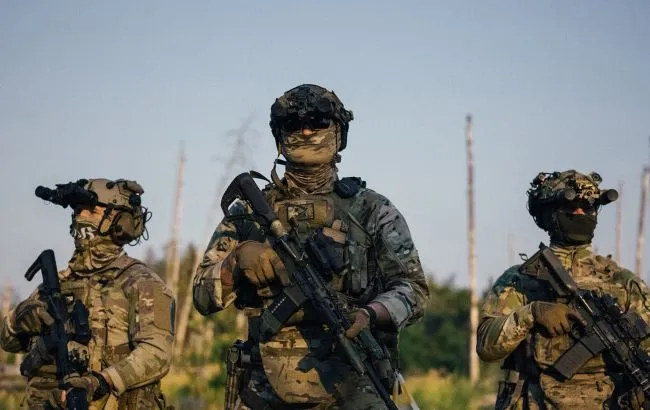
The Ukrainian military has reported the first results of Operation “Vivaldi” to liberate territories in the Donetsk region. According to the Third Army Corps, several settlements and the outskirts of another have been cleared of Russian troops, and the total area of liberated territory now exceeds 80 square kilometers.
The Third Army Corps reported on the initial results of Operation “Vivaldi” in the Donetsk region. Ukrainian forces are conducting offensive operations and gradually pushing Russian troops back from their positions. According to the corps, Novoselivka, Oleksandrivka, Yarova, and the outskirts of Korovyi Yar have already been cleared of occupiers.
The military also reported the liberation of Seredne. The total area of territory that has been returned to Ukrainian control as part of this operation exceeds 80 square kilometers. “A total of 75 square kilometers of territory has been de-occupied, and Seredne adds another 10 square kilometers. Together, this is larger than the area of Zhytomyr and nearly as large as Chernihiv,” the Third Army Corps noted.
How the Russians Tried to Advance
The corps reported that Russian forces attempted to use small groups that infiltrated the so-called gray zone. The Third Corps refers to this tactic as “flag-wavers.” These are small groups of Russian soldiers who hid in the gray zone, sometimes changing into civilian clothing, and opened fire on Ukrainian positions.
According to the Russians’ plan, these groups were supposed to help the main forces gradually advance. “Small groups of occupiers hiding in the gray zone would change into civilian clothes, launch attacks on our positions, and were supposed to facilitate the enemy’s slow advance,” the military explained. To counter this tactic, a joint command center was established at the tactical level. Its mission was to coordinate the actions of various units to detect and eliminate Russian groups.
Ukrainian military cut off logistics
Another important result of the operation in the Third Corps is said to be the strikes against Russian logistics. Ukrainian forces managed to disrupt supplies to Russian units in the combat zone. As a result, the Russian army was forced to move key elements of its logistics further away from the front lines.
“It was so effective that the enemy was forced to move critically important supply links farther and farther into the rear to evade our strikes,” the corps reported. Disrupting logistics is of critical importance to Russian forces. The farther ammunition, equipment, and other essential resources must be transported, the more difficult it becomes to supply units directly at the front.
What losses has the Russian army suffered?
The Third Army Corps also reported on the Russian army’s losses during the first phase of Operation “Vivaldi.” According to their data, the Russians lost over 1,500 soldiers and more than 12,000 drones. Armored vehicles, artillery, vehicles, and specialized equipment were also destroyed.
The corps used a vivid analogy to describe the scale of the destroyed Russian equipment. “If you piled all this scrap metal in one place, it would form a hill as tall as a five-story building—a man-made hill that the enemy built for itself,” the military stated.
Meanwhile, Ukrainian units continue to hold their defensive positions along their section of the front. The Third Army Corps emphasized that the Kharkiv–Sloviansk highway remains under the control of the Armed Forces of Ukraine. Operation “Vivaldi” is ongoing. Ukrainian troops continue to work on liberating territories and containing Russian forces in the Donetsk region.
Soldiers from the 4th Assault Battalion of the 92nd Separate Assault Brigade filmed the moment a Russian soldier blew himself up in a forest strip using a drone. The Russian soldier detonated a grenade after being struck by Ukrainian drones.
Ukrainian forces struck a Russian “Nebo-M” mobile radar complex near the Millerovo military airfield. The target was located approximately 175 km from the front line.




