
Corruption scandals in Ukraine and U.S. President Donald Trump’s stance on pressuring Ukraine to end the war are fueling the activities of far-right forces in Europe, which have never made a secret of their sympathies for the Kremlin.
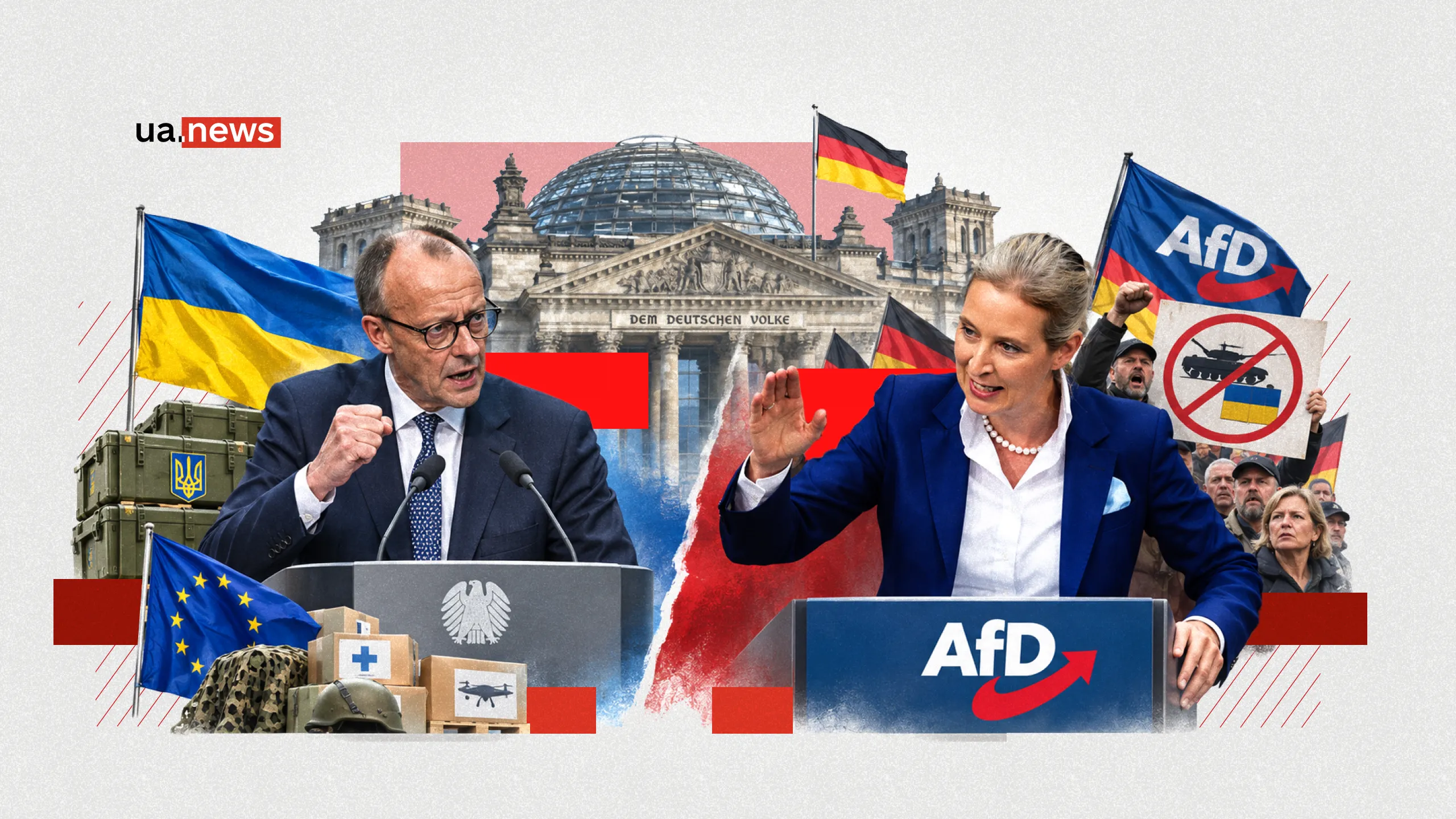
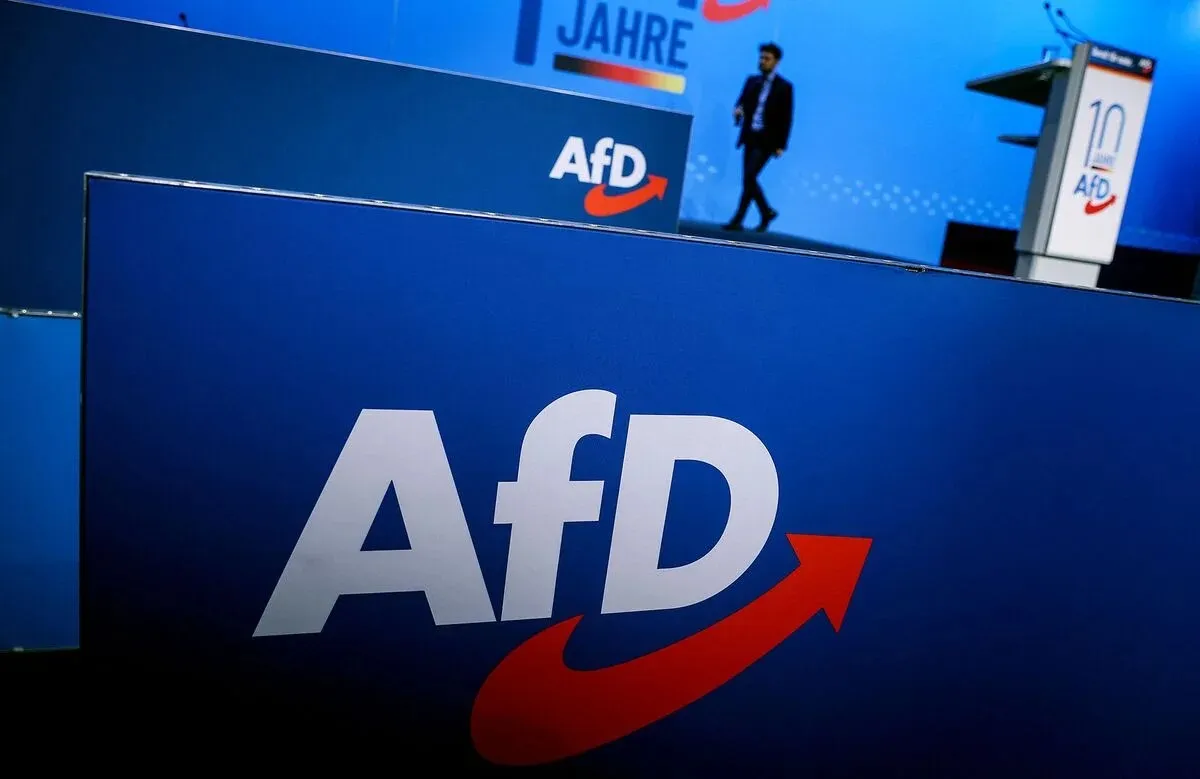
One of the parties most loyal to Russia, “Alternative for Germany” (AfD), has launched a new round of confrontation with German Federal Chancellor Friedrich Merz, who has consistently advocated for support of Ukraine.
At the same time, the AfD is promoting the idea of restoring economic ties with Moscow and resuming Russian gas supplies to Germany. The party’s latest initiative is to organize a trilateral summit between Germany, the U.S., and Russia in Abu Dhabi in 2027—excluding Ukraine.
UA.News examines whether the far right is capable of cutting off aid to Ukraine in the near future, what the AfD’s proposed summit in Abu Dhabi means, and what Ukrainian experts on international affairs think about it.
AfD Parliamentary Initiatives: From Audits to Cutting Off Aid
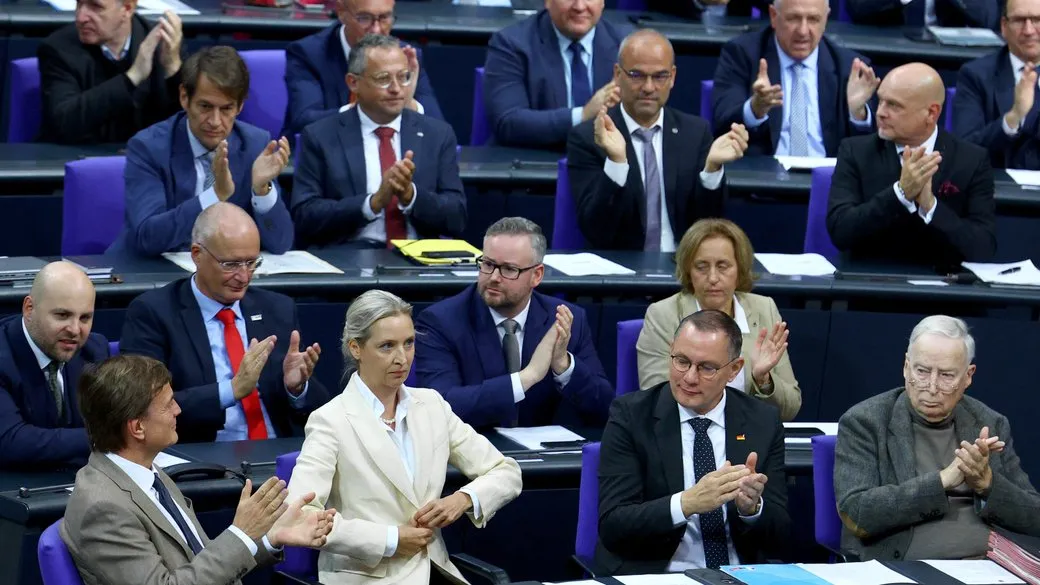
Following its success in the September 2026 elections in Saxony-Anhalt, where the AfD received nearly 44% of the vote, its representatives are stepping up pressure on the federal government, demanding an end to aid to Ukraine.
With its anti-Ukrainian rhetoric, the AfD continues to mobilize its electorate amid rising fuel prices and social problems.
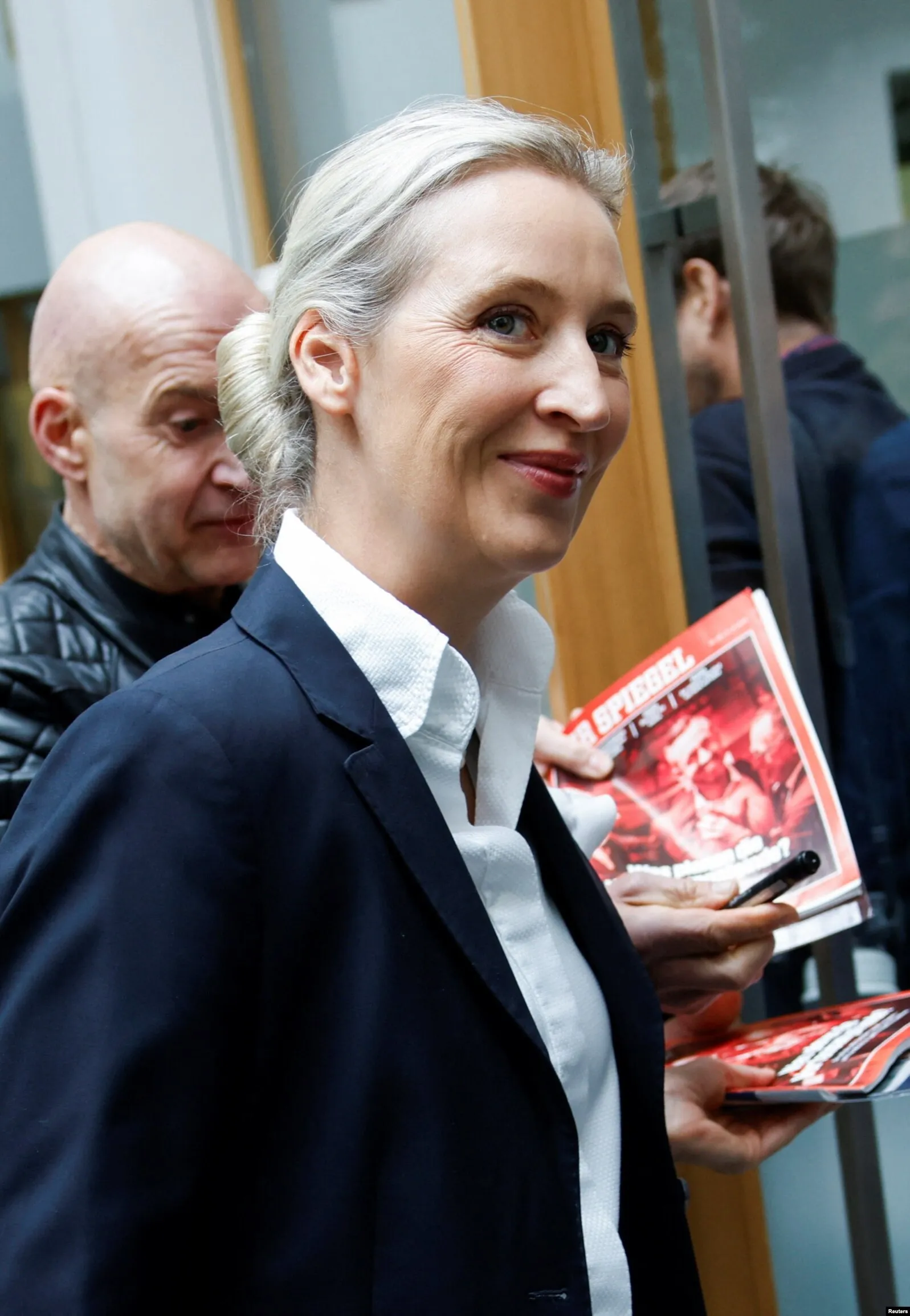
“Diesel fuel is 2.25 euros, drinks are 30 cents more expensive, and cigarettes will soon cost 12 euros, and Merz wants to pour even more taxpayer money into Ukraine, because it’s still not enough and will never be enough. Only ‘Alternative for Germany’ will put an end to this policy against our own people!” said AfD leader Alice Weidel, criticizing the latest aid package for Ukraine. At the same time, she ignored the fact that the rise in fuel prices began precisely after the war in Iran.
Another attack on the policies of Friedrich Merz’s government came in the form of a parliamentary inquiry by the AfD faction, led by Michael Espendiller, in September 2026. Far-right lawmakers demanded a report on the total cost of support for Ukraine. The document addressed funding, its recipients, areas of allocation, and oversight mechanisms.
In response to the AfD’s inquiry, the German federal government estimated the total costs of supporting Ukraine and Ukrainian refugees from the start of Russia’s full-scale invasion on February 24, 2022, through June 30, 2026, at approximately 100.9 billion euros, of which: 43.3 billion euros was for civilian aid; 57.6 billion euros was for military aid. Germany has either provided these funds or set them aside for future years.
The Kiel Institute for the World Economy analyzed the figures. Analysts noted that of the approximately 100 billion euros announced by Berlin, only 41.7 billion can be considered actual aid to Ukraine. 35.9 billion euros were spent within Germany, primarily to support Ukrainian refugees, and another 22 billion euros represent future commitments for military aid.
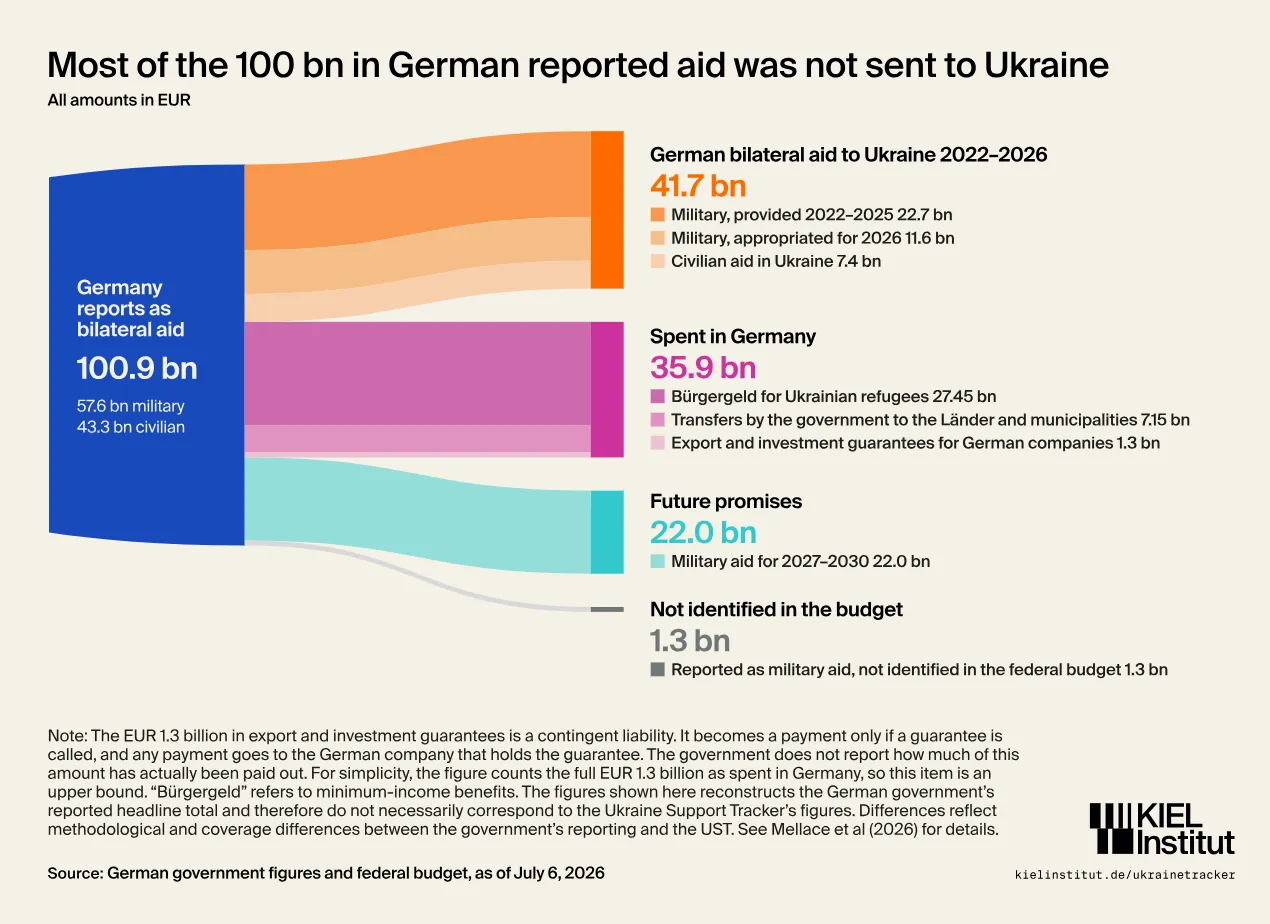
Thus, by combining arms deliveries, future budgetary commitments, and domestic social benefits for refugees into a single figure, the far right gained an opportunity for political manipulation.
The motion in September 2026 was not the AfD’s first attempt to push for a review of German policy toward Ukraine.
On January 27, 2026, the party’s parliamentary caucus submitted a proposal to the Bundestag titled “Formulating Realistic Peace Goals—Reviewing German Aid to Ukraine and Combating Corruption.” The lawmakers demanded the creation of a special unit within the German Foreign Ministry consisting of at least 50 staff members. It was proposed that the Federal Public Prosecutor’s Office be involved in its work. They were to monitor German deliveries of weapons, military equipment, and financial aid to Ukraine. The AfD also proposed introducing quarterly reporting to the Bundestag and creating a public online platform where citizens could track how the funds were being used.
However, the key part of the document did not concern the audit. The party demanded an immediate halt to all forms of support for Ukraine, particularly the supply of weapons. The only proposed exception was for humanitarian aid. Following a debate in the Bundestag, the document was referred to the relevant committees for further consideration.
In another parliamentary initiative in September 2026, the AfD opposed Ukraine’s membership in the European Union and funding for its reconstruction. The far-right party demanded that financial and military aid be scaled back until Ukraine agreed to serious peace negotiations with Russia.
Focus on Corruption in Ukraine and a Pro-Russian Course
The “trigger” for the German far-right’s campaign against funding for Ukraine was the “Midas” case. This investigation into large-scale corruption in Ukraine’s energy and defense sectors was detailed by NABU and the Special Anti-Corruption Prosecutor’s Office in November 2025. A wave of corruption scandals involving high-ranking Ukrainian officials and people close to President Volodymyr Zelenskyy continued into 2026.
Another episode that shocked the German public was the exposure of a criminal ring, at the center of which were high-ranking officials from the Security Service of Ukraine, the National Police, and the Office of the Prosecutor General, who, according to the investigation, received bribes amounting to millions for covering up illegal business activities.
Although these cases do not prove the embezzlement of German aid, for the AfD they have become an additional argument in favor of halting funding for Ukraine. In general, “Alternative for Germany” emphasizes that corruption in Ukraine threatens Germany’s own financial security.
At the same time, the AfD itself—which consistently advocates for restoring partnership with Moscow—has repeatedly found itself embroiled in high-profile political scandals. In October 2025, the party was accused of spying for Russia. Thuringia’s Interior Minister Georg Mayer stated that AfD lawmakers are exercising their right to submit inquiries to local authorities. In this way, they are gathering information about Germany’s critical and digital infrastructure, as well as its water and energy supplies.
“Their inquiries give the impression that the AfD is working on a list of tasks set by the Kremlin… Alternative for Germany is particularly interested in IT and equipment used by the police, for example, in the area of detecting and defending against drones,” the minister said.
Another area where the AfD’s positions align with Russian interests is energy. In September 2026, during a debate in the Bundestag, party co-chair Alice Weidel called on Chancellor Friedrich Merz to halt aid to Ukraine and resume purchases of cheap Russian gas. During the same debate, AfD lawmaker Jürgen Kögel spoke of “esteemed President Vladimir Putin,” claiming that he does not pose a military threat to NATO.
In May 2026, the AfD also initiated the creation of a parliamentary investigative committee regarding the sabotage of the “Nord Stream” pipeline. Among other things, the party proposed examining whether Germany’s relations with Ukraine should be adjusted in light of the circumstances surrounding the sabotage.
AfD
Political Initiative: A Summit Between Germany, the U.S., and Russia
This political line was continued by the AfD’s initiative to hold a trilateral summit in the spring of 2027 involving Germany, the U.S., and Russia. Abu Dhabi was proposed as the venue for the meeting. Ukraine, however, would not be invited to the summit.
Markus Fronmaier, deputy chairman of the AfD parliamentary group, announced the plans to organize the summit. According to him, the party advocates for the immediate lifting of Western sanctions against Russia and the restoration of economic ties, the restart of the “Nord Stream” gas pipeline, and its transfer to the management of a joint German-American company. The AfD’s position on Ukraine: a complete cessation of aid as a means of pressure to force Kyiv into negotiations and territorial concessions to Moscow.
“We cannot pour billions upon billions into a war that is foreign to us and that we do not understand, without being held accountable for it,” Fronmaier stated.
The chair of the AfD’s parliamentary caucus confirmed that Kirill Dmitriev—Vladimir Putin’s special representative for investment and economic cooperation with foreign countries—is involved in preparing this initiative. Dmitriev himself also confirmed planned contacts with AfD representatives and the holding of a joint forum in the second quarter of 2027. According to Fronmaier, it is Dmitriev who is coordinating the preparation of the summit with the American side.
It should be noted that official Berlin is completely distancing itself from the far-right’s proposals. Friedrich Merz’s government continues to support Ukraine. In particular, on November 3, following a meeting with Ukrainian President Volodymyr Zelenskyy, the German chancellor announced the next aid package.
“In these difficult times, Ukraine can count on Germany. We will continue to provide it with our full support. As winter approaches, two areas are particularly important: air defense and energy,” Merz said.

Yevhen Magda: There’s
no need to talk about any serious threats
Criticism of Ukraine is part of the overall anti-European rhetoric of “Alternative for Germany.” It is part of its effort to restore good relations with Russia. The AfD makes no secret of this and will take active steps in this regard, notes Yevhen Magda, director of the Institute of World Politics.
“Another issue is that, as of now, Saxony-Anhalt—where the AfD received the most votes—is Germany’s least populous federal state. This means that even with a premier from ‘Alternative for Germany,’ it cannot significantly influence the situation. Therefore, I don’t think it’s worth looking for any particularly drastic scenarios.
Second, I’d like to remind you that Germany is currently one of the leading providers of aid to Ukraine, having provided approximately 30 billion euros in assistance. This is a massive contribution to Ukraine’s defense capabilities and economic stability.
The parliamentary elections took place a year and a half ago, and Chancellor Merz did not take office until the spring of 2025. That means he still has 2.5 years left in his term. I don’t see any serious threats of the ruling coalition falling apart. This is because Germany’s political parties have a sort of firewall against cooperating with “Alternative for Germany,” at least at the federal level. So there’s no point in talking about any serious threats.
In my opinion, the situation will be quite favorable for Ukraine. But we must understand that to avoid criticism from our opponents, we need to be more consistent in our actions, and not create unnecessary grounds for criticism through corruption or other issues that are quickly spread by both Russian propaganda and “Putin-understanders” (pro-Putin politicians—ed.),” emphasizes Yevhen Magda.
Ivan Us: This is reminiscent of the format Russia wants with the U.S. and China
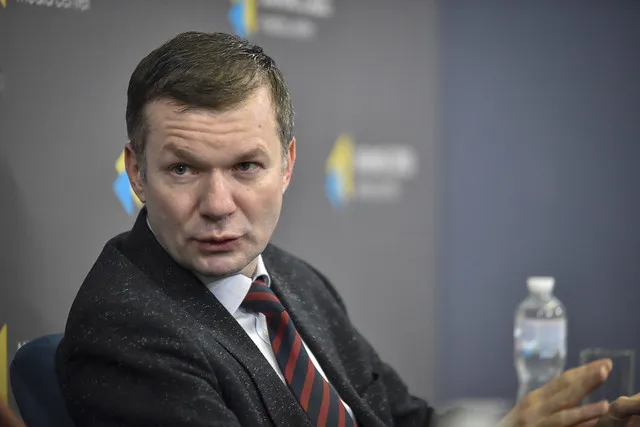
Ivan Us, chief consultant at the Center for Foreign Policy Studies of the National Institute for Strategic Studies, emphasizes that fatigue with the topic of Ukraine stems, among other things, from the fact that certain political forces believe: all current politicians who have worked to help Ukraine have done everything wrong.
“The position of all far-right forces—whether it’s Alice Weidel’s AfD in Germany or Marine Le Pen’s National Front in France—is to take the opposite stance. They say: if the current government is helping Ukraine, then we will oppose that aid. If the current government considers Russia a criminal state, then we’ll say that the Russians are our best friends.
This is a ploy to play on public sentiment to gain popularity. By and large, Donald Trump did the same thing when he said we shouldn’t help Ukraine because that’s what Biden and the bad Democrats were doing. What did that lead to?
The world saw that Trump’s policies and those of his team triggered a “blue wave” that led to the Republicans’ defeat. Therefore, these ideas about halting aid to Ukraine are an attempt to score political points by taking actions opposed to those of the current government,” notes Ivan Us.
As for the proposal for a three-way meeting without Ukraine, the expert believes this is an attempt by the far right to become a player on the international stage. Germany feels it has been left out of the process of shaping global policy. That is why they want a meeting with Russia and the U.S., but without Ukraine.
“This is reminiscent of the format Russia wants with the U.S. and China to decide the fate of the world. Such ideas will certainly not be well-received in European countries. I’ve spoken with many politicians from European countries, and they’ve told me that we don’t want a repeat of Yalta—that is, Yalta in 1945, when the entire world was divided among three leaders: Churchill, Roosevelt, and Stalin.
In particular, I spoke with the national security adviser to the President of Romania. He said, “We ended up in the Soviet Union’s sphere of influence back then. We don’t need that, and that’s why we don’t want these three—Trump, Putin, and Xi—to get together now and decide, for example, where Romania or Ukraine, which borders Romania, will end up. In other words, such ideas will be met with some resistance in European countries.
“Alternative for Germany,” which wants this meeting precisely to counter the position of the current government, can gain popularity just as quickly as it can lose it. After all, any populist remains popular exactly until the moment they start taking action. When they start taking action—and, as a rule, they act unprofessionally—their standing rapidly deteriorates, just as it did with Donald Trump.”




