
American Rheinmetall promotes Lynx XM30 as Bradley replacement in the US — Breaking Defense
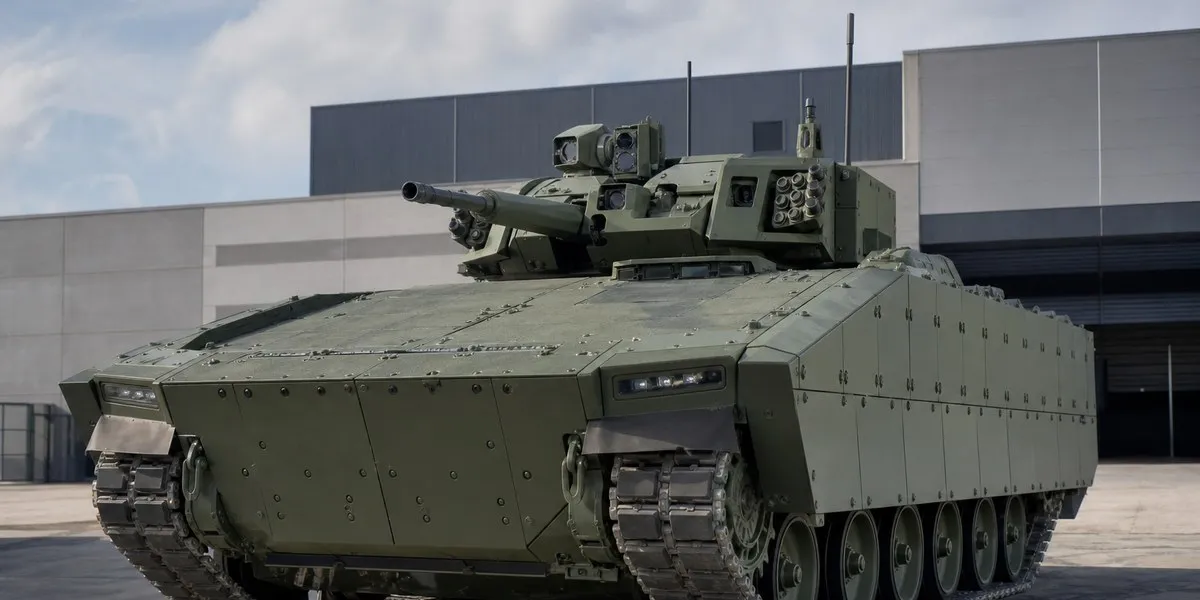
In the United States, American Rheinmetall has described its Lynx XM30 infantry fighting vehicle as an option to replace the Bradley, whose further modernization the US Army decided not to continue. As Breaking Defense reports in sponsored content, the main problem with the Bradley is said to be not its firepower, but the exhaustion of its capacity for further increases in weight, electrical power and computing capabilities.
American Rheinmetall senior vice president for programs Jim Schirmer said that the Lynx XM30 was designed with upgrades over 30 or more years of service in mind. According to him, the vehicle’s chassis, structure and suspension are intended to withstand more weight than it will have at the time of delivery, while the engine and transmission are to provide the necessary mobility under additional load.
Capacity for upgrades
The company representative claims that the vehicle will have a reserve of electrical power not used by its current systems, as well as an architecture for distributing that power throughout the vehicle. According to him, this approach should make it possible to install new equipment in the future without redesigning the basic structure. The company also said it has a reserve of computing power and available slots in some computing units.
More current news is available on the UA.News Telegram channel Telegram.
Schirmer cited the upgrades of the Abrams and Bradley during the Iraq War as an example: anti-RPG slat armor and CREW electronic warfare systems were installed on these vehicles to counter remotely controlled improvised explosive devices. According to him, these upgrades used part of the platforms’ weight and electrical power reserves.
Open architecture and crew
The article states that the US Army has defined the GCIA open systems architecture standard — Ground Combat Systems’ Common Infrastructure Architecture. It establishes requirements for interfaces and data structures, which is intended to allow qualified third-party companies to integrate new subsystems without mandatory involvement of the vehicle manufacturer.
American Rheinmetall also says that it involved service members and retired senior gunners in designing the workstations. Following their feedback, the company redesigned the software for the placement of controls and the presentation of information on screens, and also changed the design of the hatches and ramp. Two crew members were seated side by side; according to the company, both workstations allow them to drive the vehicle and fire the main armament.




