
AFP news director warns of AI risks for journalism — Dawn
Agence France-Presse Global News Director Phil Chetwynd, in a column for Dawn about the work of journalists in Nepal, said that the spread of generative artificial intelligence threatens professional journalism. In his assessment, AI news summaries may contain errors, while fact-checking, the work of correspondents on the ground, and countering disinformation require time, money and professional training.
The work of journalists in Nepal
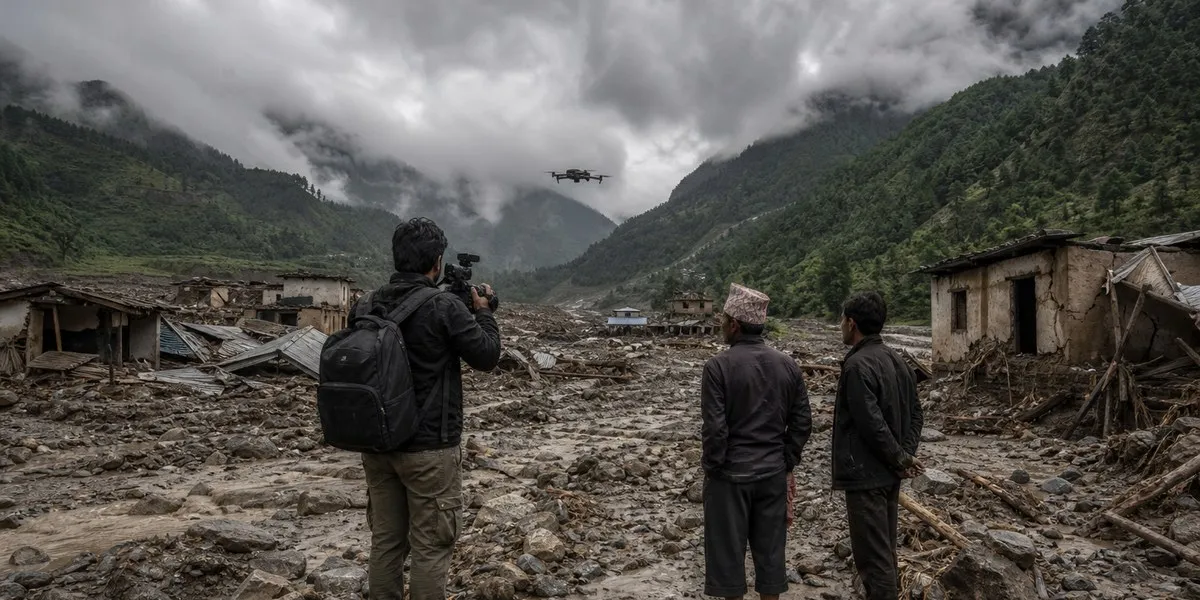
As an example, Chetwynd cited devastating floods on the Nepal-Tibet border that occurred after a massive glacial collapse at the end of August. According to him, more than 1,300 people were killed, and AFP sent a team of 11 journalists to remote areas of Nepal and India.
Three AFP correspondents based in Kathmandu set off for the scene within an hour after police confirmed the first major flood. One of the agency's photographers reached the main disaster area after 13 hours by motorcycle and truck, and later reached more remote areas aboard a humanitarian aid helicopter. His drone images of destroyed villages were seen in countries around the world.
More current news is available on the UA.News Telegram channel Telegram.
Deepfakes and fact-checking
The author wrote that alongside authentic images from the disaster area, deepfakes were being circulated featuring artificially generated footage of destroyed villages and bodies prepared for burial. In his view, tools that create news summaries using AI also make it possible to produce misleading visual content that can go viral on social media.
According to Chetwynd, more than 100 journalists at AFP work exclusively on debunking false information and fact-checking. The column was published as part of a campaign ahead of World News Day, observed on September 27.




