
Shoigu's daughter is teaching Russian students about the dangers of smartphones and cryptocurrencies
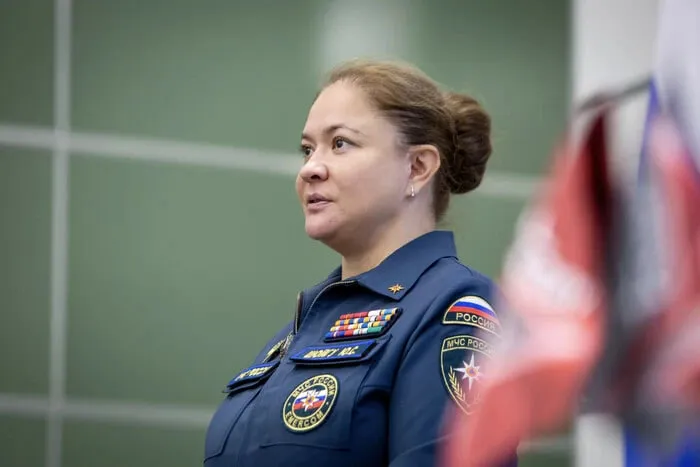
A 2026 Russian textbook on the basics of life safety warns students about alleged total surveillance by Apple and Google, as well as the dangers of using smartphones and cryptocurrencies. The textbook was edited by Yulia Shoigu, the eldest daughter of former Russian Defense Minister Sergei Shoigu.
The textbook’s authors, in particular, claim that smartphones can continue to track a person’s location even after they are turned off. Cryptocurrency, meanwhile, is referred to as “pseudo-money.”
What smartphones and tech companies actually know about users
Journalists analyzed the textbook and found a number of controversial and false claims about tech companies, how smartphones work, and cryptocurrency.
In particular, the textbook claims that Google, Apple, and their business partners track “all of users’ personal data (personal and banking information),” as well as contacts and location information.
However, the fact that individual apps can access certain information does not mean that Apple and Google automatically receive all of users’ personal and banking data. For example, when using Apple Pay, the actual bank card number is not stored by Apple and is not transmitted to the company for payment processing.
Separately, the authors of the guide claimed that tech companies allegedly receive “all personal data” from users, including SMS messages.
In reality, standard SMS messages are a service provided by mobile carriers, not by Apple or Google. On Android, app access to SMS is classified as a high-risk permission and is restricted by Google Play policies. An app cannot obtain such access without specific permission.
Microphone, Camera, and Geolocation: Where the Authors Exaggerate
Another claim concerns the use of a smartphone’s microphone and camera. The textbook states that the device’s “microphone operates in passive mode,” and the built-in camera “often” records.
However, app access to the microphone and camera requires user permission and is controlled by the operating system. When these components are in use, iPhones and Android devices display special indicators. The mere ability to access the microphone or camera does not mean that they are constantly recording the user.
The authors of the guide also claim that even a powered-off smartphone “constantly tracks” its location via cell towers and Wi-Fi hotspots with an accuracy of up to 50 meters.
Some modern iPhones and Android devices can indeed be located for a certain period of time after being turned off using special device-tracking networks. However, this does not mean that every turned-off smartphone continues normal geolocation and constantly transmits its coordinates.
“Pseudo-money” and digital traces: what’s wrong with the textbook’s explanations
The textbook also sets out to explain the principles of how cryptocurrencies work to students. The authors refer to them as “digital pseudo-money” and claim that their value depends solely on rumors and manipulation in the information space.
“It is incorrect to call cryptocurrency money—unlike money, it is not backed by any assets, and its value does not depend on the state,” the textbook states.
At the same time, the price of cryptocurrencies is influenced by supply and demand, liquidity, the state of financial markets, and news. Decisions by government agencies and changes in regulatory rules can also affect prices, trading volumes, and the liquidity of cryptocurrencies.
The wording regarding bank accounts, contacts, and location tracking with an accuracy of up to 50 meters appears almost verbatim in the book *Digital Hygiene* by Igor Ashmanov and Natalia Kaspersky. The book also claims that Google and Apple allegedly know account numbers and balances and have access to all of users’ photos.
At the same time, digital traces do indeed exist. Smartphones, apps, websites, search engines, and mobile carriers can collect information about a user’s location, activity history, contacts, device specifications, and other details. However, the ability to collect certain information does not mean that Apple and Google automatically know absolutely everything about every user.
This is being reported by Russian propaganda media.
In Russia, the sentence of Shoigu’s former deputy was reduced from 19 to 10 years.
As a reminder, Russia’s First Deputy Defense Minister Leonid Gornin, who is responsible for the military’s financial support, owns luxury real estate in Moscow and the Moscow region with a total value of approximately $6.4 million.
An assassination attempt was made in Russia on the director of a company that assembles UAVs.


