
Estonia has already secured 80% of its border with Russia
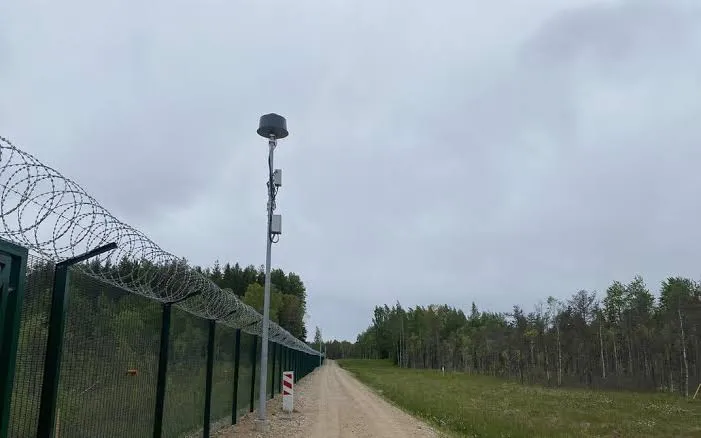
Estonia has completed construction of two more sections of its land border with Russia in the southeastern part of the country. With this, the border infrastructure is now approximately 80% complete. By the end of the year, authorities plan to bring this figure to nearly 90%, while simultaneously strengthening border defenses against drones.
Estonian Minister of the Interior Igor Taro announced the completion of the work. According to him, the new sections were built between the Koidula border crossing and the town of Saatsi in the southeastern part of the country. The total length of the two new sections is 26 kilometers. The approach to security varies across the different sections.
A border fence has been installed along 14 kilometers. Along the remaining stretch, 30-meter-high observation towers have been erected to help border guards monitor the situation and detect potential violations in a timely manner. Once this work is completed, approximately 80% of Estonia’s land border with Russia will be equipped with border infrastructure.
How Much Did the Work Cost?
The construction of the two new sections cost approximately 12 million euros. Part of the costs was funded by the European Union. For Estonia, strengthening its eastern border is one of its key security projects. The country shares a land border with Russia, so after Russia launched a full-scale war against Ukraine, the issue of protecting that border became even more critical.
At the same time, the new fences and towers are only part of the overall system. Estonia is gradually developing a comprehensive infrastructure designed to help monitor the border, respond more quickly to violations, and monitor the situation from the air.
Plans to expand further by the end of the year
Estonian authorities do not plan to stop at the sections that are already complete. According to Igor Taro, two more sections of the border are scheduled to be completed by the end of 2026. Their total length will be about 20 kilometers. If the work is completed as planned, the border infrastructure will cover approximately 90% of Estonia’s land border with Russia.
After that, about 14 kilometers will remain, for which the government must decide separately on further development. In other words, there are no plans to fully complete the border security system in a single phase. Authorities must assess exactly what engineering solutions are needed for the remaining sections and then make the appropriate decisions.
Estonia is also preparing for threats from the air
Separately, Estonia is strengthening its defenses against drones. This has become a priority for the country due to the widespread use of drones in modern warfare and the growing risks to border areas. The first stationary drone detection and monitoring systems were installed this summer at three border sections. They are designed to help border guards spot drones and respond more quickly to their appearance.
By the end of the year, the plan is to equip the entire land border with Russia with such systems. In this way, Estonia aims to monitor not only what is happening directly along the border but also potential threats in its airspace.
Why Estonia Is Strengthening Its Eastern Border
Estonia is a member of NATO and the European Union and shares a land border with Russia that is approximately 338 kilometers long. Since the start of Russia’s full-scale war against Ukraine, the Baltic states have been paying significantly more attention to protecting their eastern borders. This goes beyond just physical barriers. A modern security system includes observation towers, technical surveillance equipment, drone detection systems, and other engineering solutions.
In fact, Estonia is gradually transitioning to a multi-layered border security system. Its goal is not only to physically separate the country’s territory from Russia but also to provide border guards with greater capabilities for surveillance and rapid response. Once the planned work is completed, most of the Estonian-Russian land border will be equipped with modern infrastructure. At the same time, the country’s authorities continue to work to protect the border not only from potential ground-based incursions but also from new threats, particularly drones. ERR reports on this.
Estonia has completed construction of the new “Kipu” radar station on the island of Hiiumaa, which is equipped with a state-of-the-art French Ground Master 400 Alpha radar system. The new complex is capable of detecting aerial targets at a distance of up to 515 km and an altitude of up to 30 km, significantly strengthening the country’s air surveillance system.




