
An Estonian Humvee destined for the Ukrainian Armed Forces was not allowed to pass through Poland
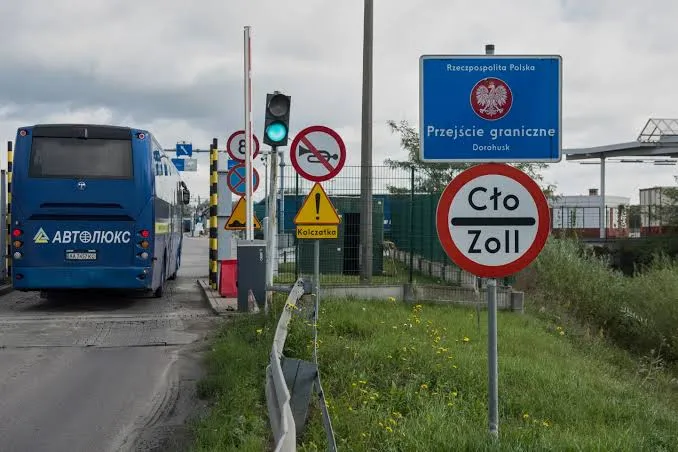
A Humvee SUV that Estonian volunteers were transporting to Ukrainian troops in the Kharkiv area was unable to pass through Poland. According to SAB UA volunteer Jan Laar, the vehicle was stopped due to permit requirements, even though the volunteers had an Estonian license and a U.S. document certifying the vehicle’s demilitarization. Other vehicles in their convoy crossed the border.
A Humvee SUV, which Estonian volunteers were preparing to hand over to the Ukrainian military, got stuck at the Polish border. The vehicle was being transported to Ukraine for troops on the Kharkiv front. This was reported by Jan Laar, a volunteer with the Estonian organization SAB UA, according to Postimees. He said the Humvee was traveling as part of a convoy with other vehicles. However, Polish border guards did not allow this particular vehicle to pass, while the rest of the convoy was able to continue on its way.
The problem arose due to the vehicle’s documentation and the rules governing its transit through Poland. Laar claims that after the rules changed, the Polish side began requiring a separate permit specifically from Polish authorities. At the same time, he said, the volunteers already had an export license from the Estonian Ministry of Foreign Affairs. They also had a document from the U.S. side confirming that the Humvee had been demilitarized. “According to the Poles, starting this year, a license must be obtained from them in such cases. Moreover, as we were told, only a Polish citizen can submit the application,” Laar explained.
Official Polish regulations do indeed require separate permits for transactions involving strategic goods. In particular, the Polish Ministry of Development and Technology notes that applications for such permits may be submitted by individuals or legal entities if they reside in Poland or have a place of work or registration there. At the same time, specific requirements depend on the category to which the goods belong and the exact type of transaction being conducted.
Therefore, the claim that only a Polish citizen can submit an application currently remains a position expressed by a volunteer. Official Polish documents refer to applicants who reside in Poland or have a legal entity registered there, rather than simply to citizenship.
According to Laar, volunteers are trying to resolve the issue with the help of the Ukrainian side. “The Ukrainian Embassy in Poland, particularly the Ukrainian military attaché, is assisting us in this matter. But the Poles themselves have said that it will take four months to process this license. We’ll see how long it actually takes,” he noted.
As a result, the vehicle that was supposed to be sent to the Ukrainian military remains in Poland for now.
Laar also said that the border crossing procedure itself did not involve any conflict with Polish border guards. On the contrary, he said, the attitude toward volunteers helping Ukraine was positive. “Yes, the bureaucracy there is strict. But, let’s say, if you just have a civilian SUV with a few items inside, and everything is declared, there are no problems. But as soon as things get a little more complicated, problems arise,” the volunteer said.
Due to the delay, Laaru had to stay at the border. He spent the first night right in the Humvee. It turned out to be not very comfortable: the vehicle had a canvas roof that leaked when it rained. On the following nights, Polish border guards allowed the volunteer to spend the night in the warm facilities at the border crossing.
The Humvee itself is set to be delivered to the Ukrainian military once the volunteers have completed the necessary formalities. The organization SAB UA has been delivering vehicles and other equipment to the Ukrainian military since 2022. The organization’s website states that it works directly with units of the Armed Forces of Ukraine and is involved in the procurement, repair, and delivery of vehicles to Ukraine.
SAB UA has already delivered various vehicles to Ukrainian units on multiple occasions. The organization has also reported on the delivery of equipment being used on the front lines, particularly in the Kharkiv sector.
The Humvee mentioned by Laar is also of military origin. Recently, Estonian volunteers delivered another such off-road vehicle to Estonia—one purchased at an auction in Canada—after which it was prepared for use by a Ukrainian unit. According to the Estonian public broadcaster ERR, it took about a year and a half to obtain the necessary permits and transport this vehicle.
This latest incident shows that even with the necessary transport documents and confirmation of demilitarization, crossing the border may depend on additional requirements. For volunteer organizations, this means additional time and the risk of delays in delivering aid that has already been allocated to the Ukrainian military. For now, the Humvee intended for the Ukrainian Armed Forces remains in Poland, while volunteers, together with the Ukrainian side, are trying to resolve the issue of obtaining the necessary permit. The exact timeline for processing the permit is currently unknown. This was reported by Postimees.




