
European cities have begun preparing for a new tsunami threat
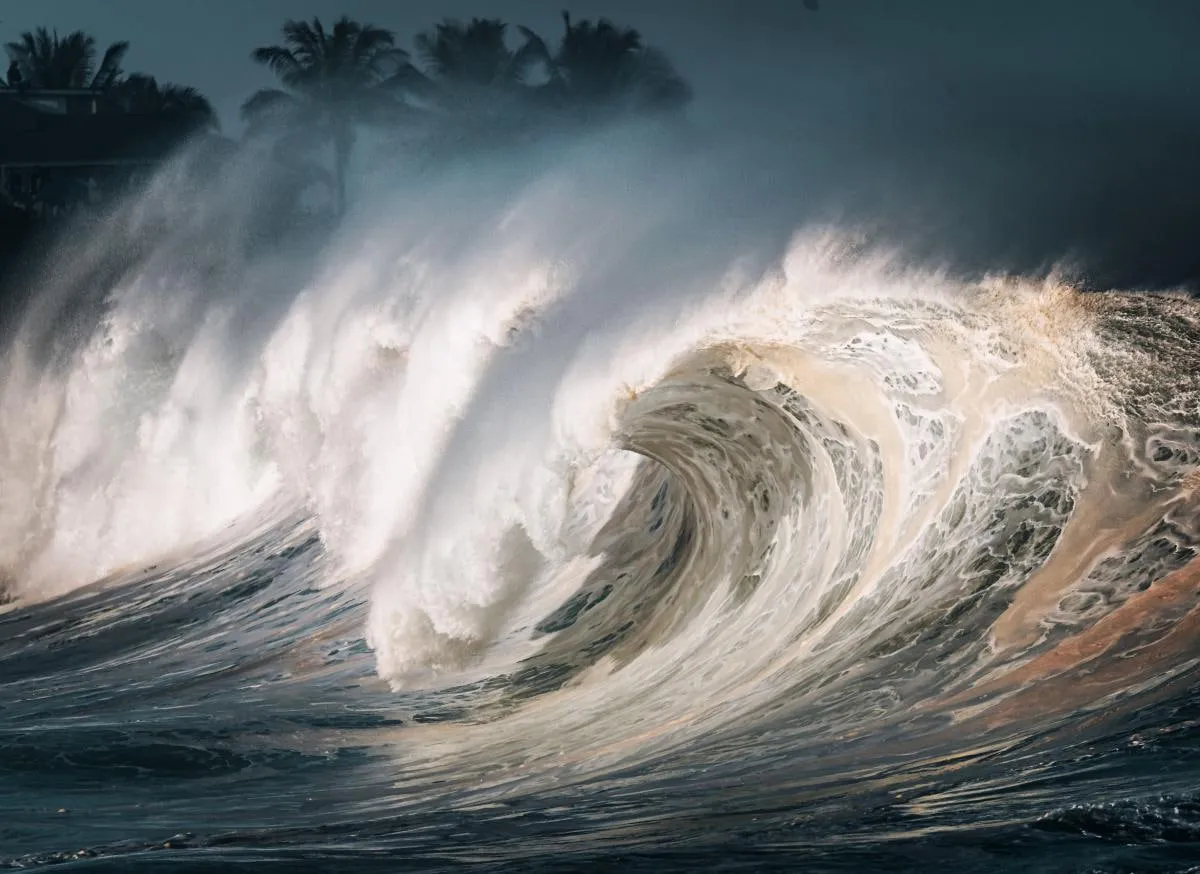
European countries are stepping up their preparations for potential tsunamis, as the Mediterranean Sea is considered the region with the second-highest number of documented tsunamis in the world, after the Pacific Ocean. Scientists warn that waves caused by earthquakes or underwater landslides can pose a real danger to densely populated coastal areas.
One example of these preparations is the French Riviera, where approximately 800 special signs have been installed along the Côte d’Azur coastline. These signs mark evacuation routes and indicate the direction in which people should move away from the sea in the event of a tsunami threat.
Local authorities are also strengthening the public warning system, updating evacuation plans, and conducting awareness campaigns for residents and tourists. Experts emphasize that although major tsunamis occur less frequently in Europe than in the Pacific region, the risk to Mediterranean cities remains very real, so preparing for such emergencies is becoming increasingly important.
This comes in response to a UNESCO warning stating that the probability of a major tsunami in the Mediterranean Sea is nearly 100% over the next 30 years.
Six coastal communities in the Nice metropolitan area—Nice itself, Cannes-sur-Mer, Saint-Laurent-du-Var, Villefranche-sur-Mer, Boulogne-sur-Mer, and Èze—have officially been granted “Tsunami Ready” status as of June. Cannes, the Greek island of Samos, and the Italian town of Minturno had already received this certification.
The main concern is the Ligurian Fault, an active zone on the seafloor approximately 20 kilometers from the coast, where the African and Eurasian tectonic plates meet. According to available data, stress is constantly building up at this location, and sooner or later it will be released in a new powerful earthquake.
"This is not alarmism, but a statistical reality. In some scenarios, the waves will reach the shore in just ten minutes," the publication quotes geographer Frédéric Leone of Paul-Valéry University in Montpellier, who has been working with a specialized UNESCO group since 2005.
According to him, the widespread belief that tsunamis are primarily an Asian problem is mistaken. After the Pacific Ocean, the Mediterranean has the highest number of documented tsunamis in the world.
It is known that the region has already experienced similar disasters. In 1887, an earthquake in the Ligurian Sea caused a wave up to two meters high near Antibes and Cannes. In 1979, an underwater landslide in the port of Nice generated a wave several meters high that killed nine people. And the 2003 earthquake in Boumerdès, Algeria—which claimed the lives of about 2,300 people—triggered a three-meter-high wave that even reached the Balearic Islands.
Seismologist Alexander Rudloff compares the mechanism of a tsunami to a glass of water on a table: a jolt from below creates waves that travel toward the edges. He notes that in the worst-case scenario, an earthquake could be so powerful that the wave would reach virtually all the shores of the Mediterranean Sea.
The exact height of the future wave is not yet known—calculations indicate at least one meter. However, according to Leone, it is not only the height but also the speed of the water that is crucial: even a 50-centimeter wave is capable of knocking a person off their feet, sweeping away beach furniture, and moving cars.
The researcher admits that the topic of tsunamis is personal to him: after the 2004 Indian Ocean disaster, which claimed the lives of more than 165,000 people, he worked in the affected region of Indonesia. According to him, the tragedy was so devastating in part because people simply did not know what a tsunami was.
A rule applies along the entire French Mediterranean coast: as soon as authorities issue a tsunami warning—or if the water near the shore suddenly recedes—people should move at least 200 meters away from the water or climb to a height of more than five meters. Near river mouths, the recommended distance is 500 meters.
This is reported by Der Spiegel.
Video: A state of emergency has been declared in Japan following a 7.1-magnitude earthquake.
As a reminder, an earthquake with a magnitude of 2.8 was recorded near Lviv.
The death toll from the earthquakes in Venezuela has exceeded 5,000.


