
Canada’s Foreign Minister Anand says global order is rupturing — Anadolu Agency
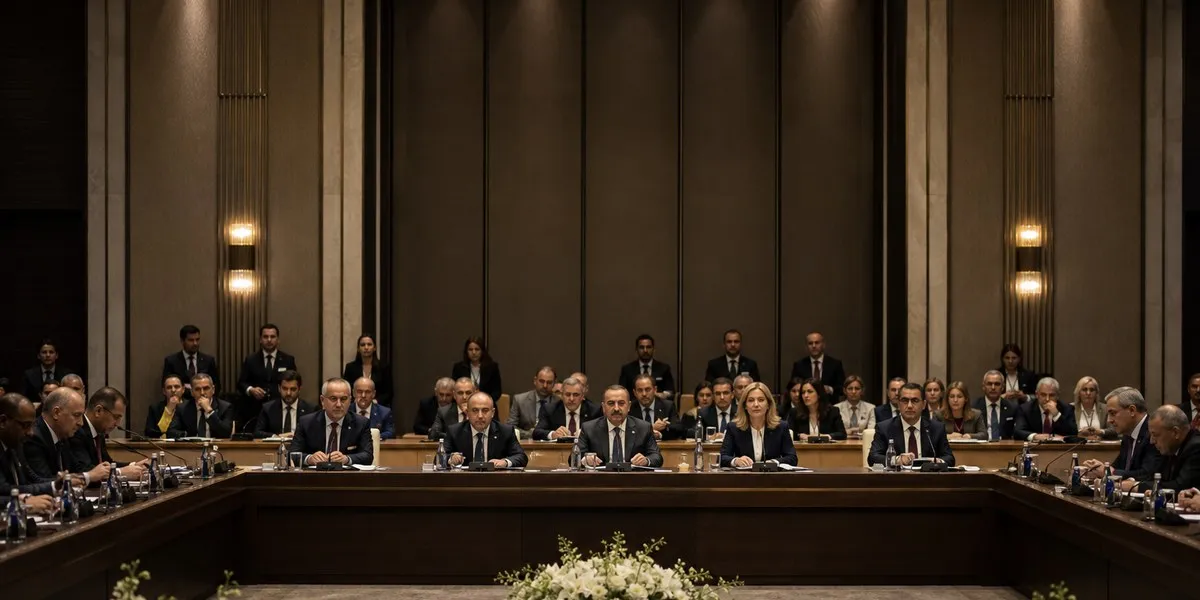
In Turkey, Canadian Foreign Minister Anita Anand, speaking at the 81st United Nations General Assembly, said that the international order is experiencing not a transition but a rupture. According to her, major powers are moving away from economic cooperation and increasingly questioning national sovereignty.
As Anadolu Agency reports, Anand said that economic integration is being dismantled and that state sovereignty, one of the cornerstone principles of the UN Charter, is often ignored. In response, Ottawa will seek to strengthen its strategic autonomy, reduce dependence on a single partner, and expand ties with both long-standing and new partners.
Coalitions and strategic autonomy
Canada also plans to build issue-specific coalitions involving small, medium-sized, and large states to address shared challenges. At the same time, the country will continue strengthening the broader multilateral system, the minister said.
Anand called Ottawa’s approach values-based realism and announced plans to cooperate with other middle powers to influence the shaping of the emerging international order. She noted that Canada considers long-term partnerships a path to prosperity and security.
More current news is available on the UA.News Telegram channel Telegram.
Canada’s regional priorities
Canada’s foreign minister reaffirmed support for Ukraine and NATO, the intention to strengthen relations with Europe, and to develop cooperation with Arctic partners. She also stated that Canada would maintain its presence in the Indo-Pacific region and deepen economic ties with India and China.
Ottawa will seek new opportunities in the Gulf countries and Latin America, as well as expand trade ties with Africa. Anand welcomed preparations for elections in Haiti, while acknowledging that security challenges there persist. The minister condemned Iran’s regional actions and stated that Tehran must not obtain nuclear weapons.
Regarding Israel and Palestine, Anand reaffirmed Canada’s support for a negotiated two-state solution and the right of both sides to self-determination. She also called Israeli settlements in the occupied West Bank illegal under international law and an obstacle to peace, mentioning Canada’s restrictions on trade in goods from these settlements.




