
Arabian Sea humpback whales are genetically distinct from others — The National
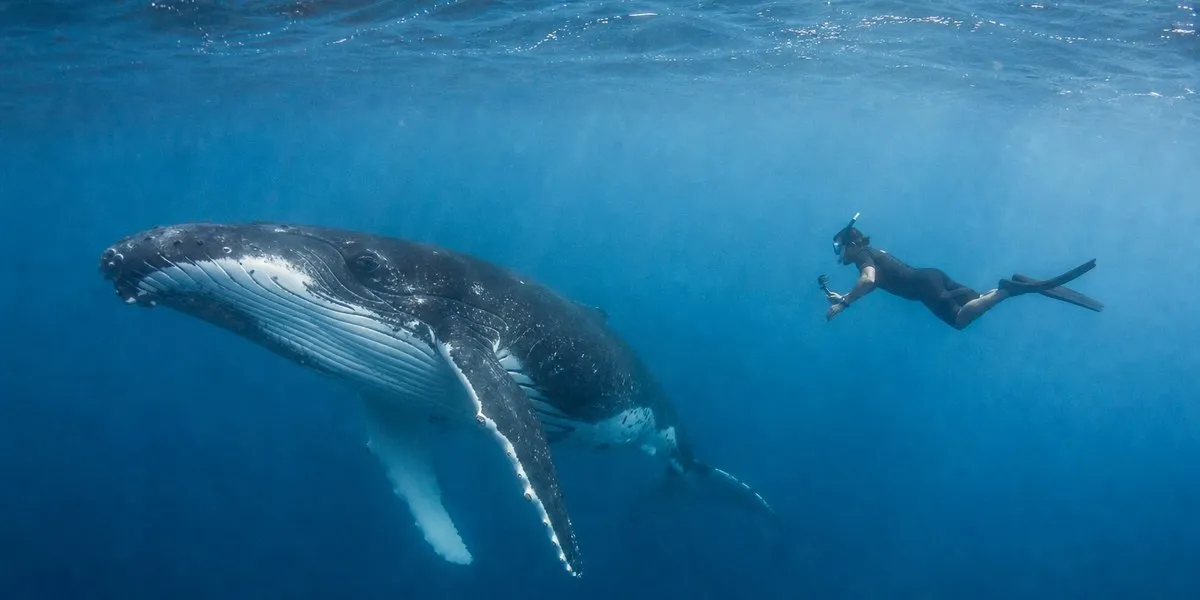
The population of Arabian Sea humpback whales off the coast of Oman has a separate evolutionary lineage and is genetically significantly different from other populations of this species. This was shown by a study conducted by the U.S.-based Wildlife Conservation Society and the Environment Society of Oman, The National reports.
Genetic isolation
Scientists analyzed the mitochondrial DNA of 2,285 humpback whales from different parts of the world’s oceans. The results, published in the journal Frontiers in Marine Science, showed significant genetic differences between Arabian Sea whales and the three recognized subspecies of humpback whale — from the North Atlantic, the North Pacific, and the Southern Hemisphere.
The study indicates limited genetic exchange between the Arabian population and other whales. It also had the lowest level of genetic diversity among the ocean regions studied. Scientists estimate that the evolutionary divergence of the different groups occurred approximately 43,000 to 113,000 years ago.
The study’s authors believe the findings support the possibility of formally recognizing Arabian Sea whales as a fourth subspecies of humpback whale. The next step should be consideration of the matter by the Committee on Taxonomy of the Society for Marine Mammalogy.
More current news is available on the UA.News Telegram channel Telegram.
Threats to a small population
Previously, the uniqueness of these whales was linked to their songs and way of life. Unlike other humpback whales, which undertake long seasonal migrations, Arabian whales breed and feed in the same areas, remaining in tropical and subtropical waters throughout the year.
At the same time, isolation makes the population more vulnerable. Researchers noted that it is small and that there have been no signs of its growth over the past two decades. The threats cited include entanglement in fishing nets, collisions with vessels, underwater noise, pollution, and disease. Changes in monsoons and ocean upwelling caused by climate factors may also affect the availability of sardines and other prey for the whales.
Researchers also established a close relationship between Arabian whales and whales whose remains were described near Basra in Iraq in 1883 as Megaptera indica. To do so, they analyzed DNA from bones kept at the Natural History Museum in Paris.




