
Japan has localized the production of Patriot missiles
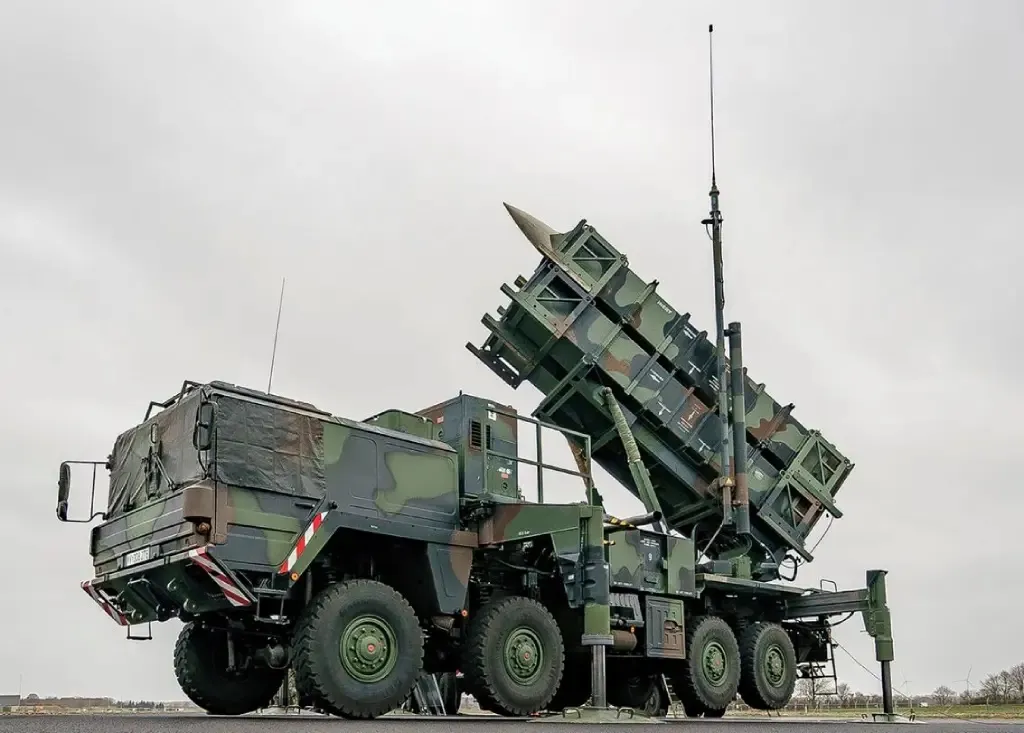
The threat of ballistic missiles from North Korea has been one of the factors accelerating the development of defense cooperation between Japan and the United States. As a result, Tokyo was able to establish localized production of anti-aircraft missiles for Patriot systems, which is expected to strengthen the country’s own air defense capabilities.
It took Japan a total of five years from the initial concept of localizing missile production for Patriot air defense systems to its practical implementation.
In particular, Japan is currently the only country in the world with localized production of Patriot anti-aircraft missiles; all others—Germany and Poland—are only on their way to achieving this.
In December 1984, a decision was made in Tokyo to replace the outdated Nike air defense systems with the then-state-of-the-art Patriot systems, which Japan began receiving in 1989. Patriot systems have been on active duty in Japan since 1993. The delivery of 24 combat batteries, each with five launchers and one radar, continued until 1996.
In 2003, in light of missile threats from North Korea, the Japanese Ministry of Defense decided to partially transition to the Patriot PAC-3 version by upgrading two of the five launchers in each system. One of the conditions was the localization of missile production in Japan. Agreements to this effect were later formalized between Lockheed Martin and Mitsubishi Heavy Industries in 2006.
In addition, technology transfer and specialist training took place over a two-year period. As early as September 17, 2008, a missile assembled at the Japanese Taketoyo facility was test-fired at a range in the United States.
“Formally, two years passed from the time the scenario was developed to the achievement of political will; another year was needed to conclude the agreement between the companies, and two more for implementation. A total of five years,” the publication notes.
It is noted that Japan acquired these missiles fairly quickly due to the missile threat from North Korea. Another key factor was the 1998 incident when a North Korean Taepodong-1 missile flew over Japanese territory, which accelerated cooperation between Tokyo and Washington in the field of missile defense. Within a year, a corresponding agreement was signed.
Japan ordered the American Aegis system for its Kongō-class destroyers (costing about $1.5–2 billion each) and joined the development of the Standard Missile-3 (SM-3). Japanese engineers worked on the engine, fairing, and guidance system components. In 2006, this resulted in the creation of the SM-3 Block IIA with the participation of Mitsubishi Heavy Industries.
As the publication notes, the localization of Patriot PAC-3 missiles in Japan took place in parallel with broader cooperation in the defense sector, particularly in the SM-3 program and the F-2 fighter jet project.
At the same time, Japan still does not fully manufacture the PAC-3 MSE missile, producing only some of the components and performing final assembly. Specifically, in the production of about 30 missiles per year, Mitsubishi relies on the supply of active homing heads from Boeing.
This is reported in an article by Defense Express.
Earlier, Japan called for the transfer of missiles for Patriot systems to Ukraine.
As a reminder, Japan wants access to the most powerful AI to protect against hackers.
Japan is replacing people with robots on a massive scale due to the demographic crisis.


