
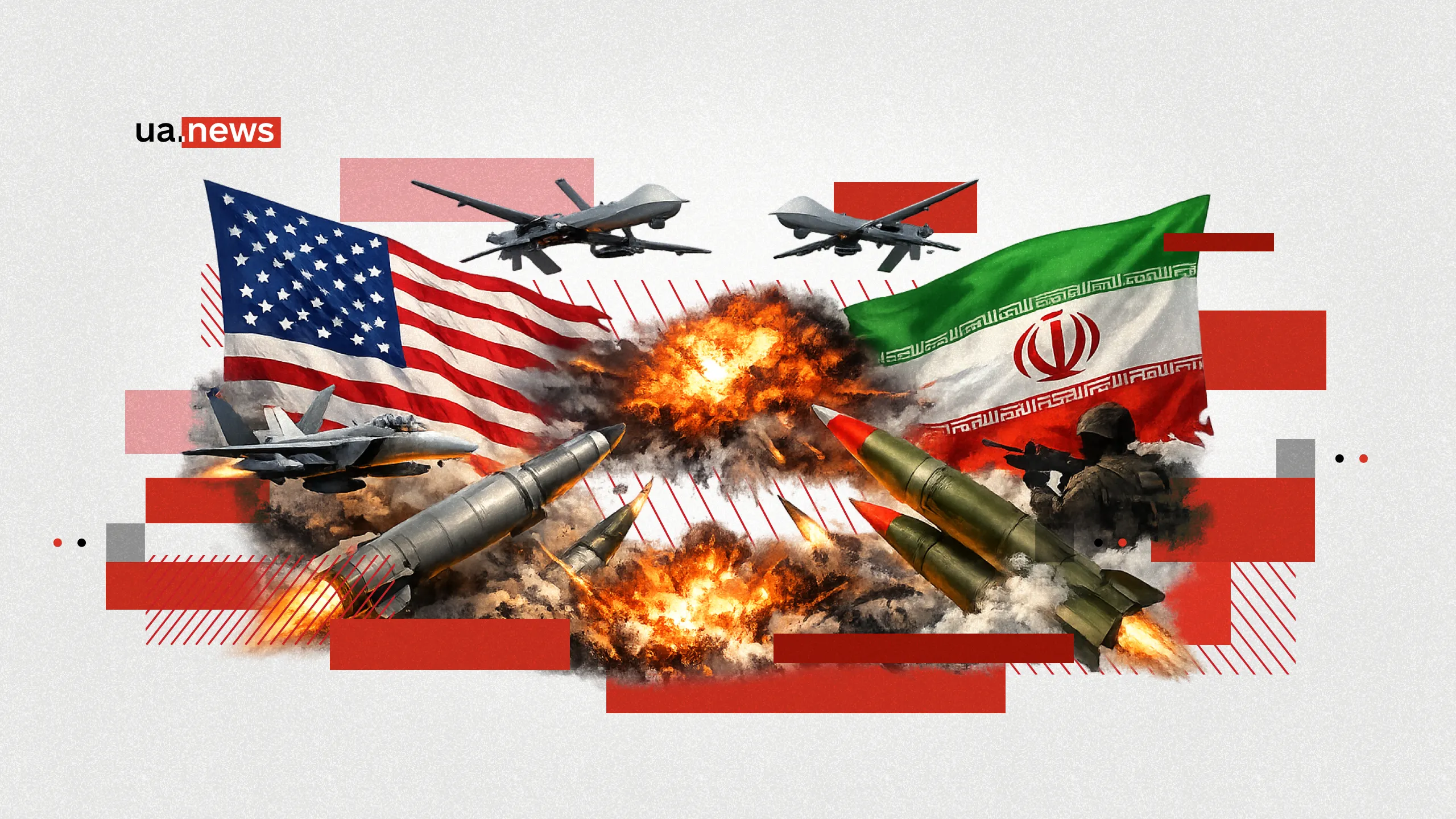
The date is May 28, 2026. Exactly three months ago, on February 28, a war began in the Middle East: the United States and Israel jointly attacked the Islamic Republic of Iran (IRI). The operation, which was traditionally planned as a “small, victorious war,” has dragged on for three months, and there is no end in sight.
Contradictory signals are once again coming from the Persian Gulf: after weeks of relative calm, the U.S. military launched new airstrikes on the country. According to media reports, the targets of the attack were a drone control center and launch pads near the port city of Bandar Abbas, not far from the Strait of Hormuz. Tehran did not delay in responding: the Islamic Revolutionary Guard Corps (IRGC) announced that it had struck an American airbase, which, according to their information, was the source of the attack, and also reported the interception of enemy drones.
The war, which was supposed to be a quick “surgical strike” for the Trump and Netanyahu administrations, has been going on for three months now, and its specific outcome is just as unclear today as it was on February 28. How did it all begin, what can be said three months later, what is happening now, and where is it all headed? UA.News political analyst Mykyta Trachuk, together with experts, examined the issue.
Anatomy of a Failure: How a “Lightning Operation” Turned into a War of Attrition
To understand the current situation, we must recall what led to this conflict. The operation, dubbed “Epic Fury,” began on the night of February 28, 2026, when the U.S. and Israel launched massive strikes against Iran. Washington and its ally deliberately chose a “decapitation” tactic: within the first few hours of the attack, they dropped thousands of bombs and missiles, eliminating dozens of the country’s top leaders. As a result of these attacks, key figures of the Iranian establishment were killed, including Supreme Leader (Rahbar) Ayatollah Ali Khamenei, Secretary of the National Defense Council Ali Shamkhani, Commander-in-Chief of the IRGC Mohammad Pakpour, and others.
It looked spectacular. Euphoria reigned in Washington and Tel Aviv. It seemed that the “head of the snake” had been severed, and all that remained was to wait for the regime to capitulate.
But the regime did not collapse and held firm. Moreover: it regenerated rapidly. The radical wing of the IRGC quickly seized power, and on March 8, the Assembly of Experts elected the son of the late Ayatollah—Mojtaba Khamenei—as the new Supreme Leader. Iran did not merely survive—it consolidated around the idea of resistance against the “greater and lesser Shaitan,” that is, America and Israel.
And then Tehran struck its most painful blow. Realizing that it would lose in a conventional military confrontation, Iran employed an asymmetric strategy. Within a few days, the Strait of Hormuz—a vital logistics route through which 20% of the world’s oil passes—was blocked. This triggered a sharp spike in energy prices and a global economic crisis. It turned out that Iran was indeed a “tough nut to crack,” and there would be no quick victory.
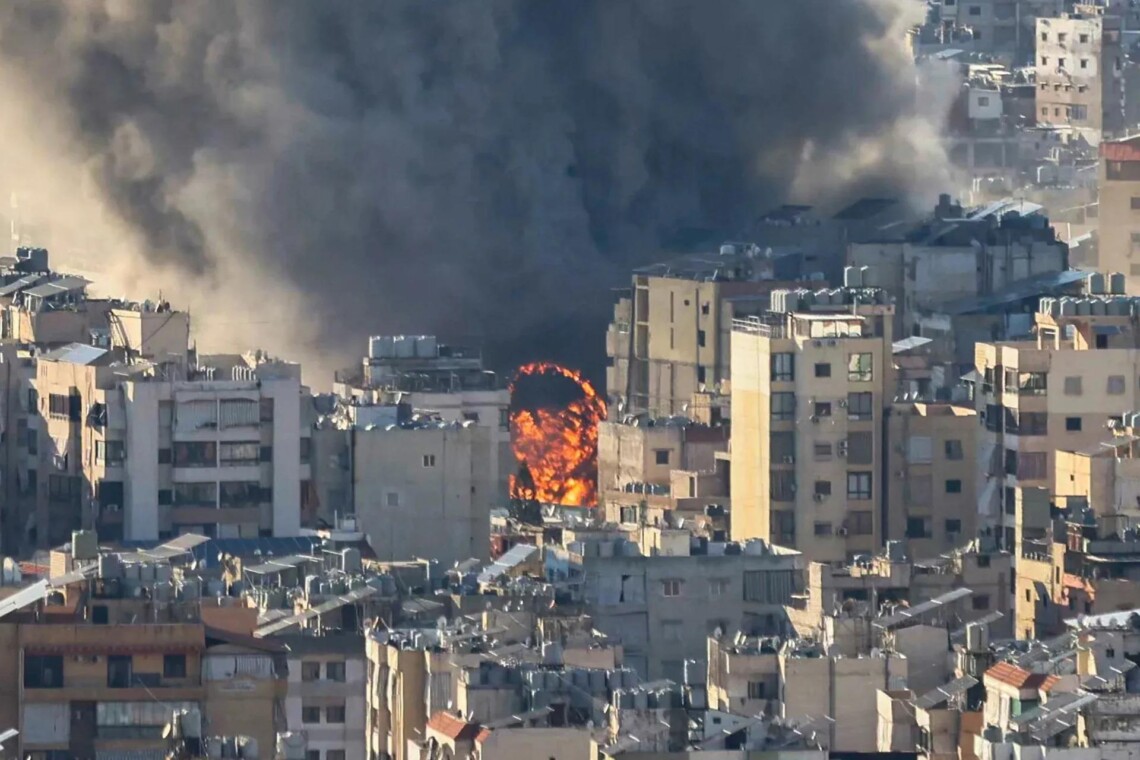
A Shaky Ceasefire and “Divine Retribution”: The Situation After Three Months of War
In April, after nearly six weeks of grueling war and with Pakistan’s mediation, a ceasefire took effect, which was later extended indefinitely. However, this was more a lull for exhausted fighters than a conscious step toward peace. The terms remained fragile: Iran partially reopened the Strait of Hormuz to limited traffic, and the U.S. suspended airstrikes on the Iranian mainland.
It was during this period that strange shifts began in the information space. President Trump would one moment announce “the greatest peace treaty in history, which is practically ready,” and then, literally the next day, reject Iran’s terms as “absolutely unacceptable” and promise to unleash new strikes and “divine retribution” on Tehran.
This contradictory rhetoric is a direct reflection of a diplomatic and military impasse. The U.S.’s initial goal—regime change or complete capitulation—proved unattainable. Iran, which has weathered the storm and even become more radicalized, is ready to negotiate only from a position of strength. It demands not only the complete lifting of sanctions and the unfreezing of assets, but also de facto recognition of its regional hegemony, including control over shipping in the Persian Gulf. For Trump, signing such a document would be political suicide, but continuing a war that shows no signs of victory also looks like a road to nowhere.
That is precisely why we are witnessing new outbreaks of violence, similar to today’s. The strikes on May 28 are yet another attempt at “negotiating with weapons.” Through precision strikes against IRGC forces, the U.S. is trying to demonstrate that it still controls the situation and to weaken Iran’s military infrastructure. Iran, for its part, is demonstrating that it has enough missiles and drones to deliver painful retaliatory strikes against American bases in the region.
The situation is a stalemate: the U.S. can neither win nor withdraw from the conflict without losing face. Iran, meanwhile, can neither secure acceptance of its terms nor sustain a protracted war of attrition.

Future Scenarios
When analyzing the key question—“Who will ultimately prevail?”—one must move beyond a simplistic understanding of war as a duel between two adversaries. Moreover, if the criterion for victory is the achievement of stated goals, the picture for the U.S. is not just bad: it is bleak.
Washington planned to topple the regime—the regime held firm. Moreover, it became even more radical. Trump and Netanyahu, unwittingly, carried out an “internal coup” in Iran, eliminating moderate pragmatists and clearing the way for the uncompromising “hawks” of the IRGC. The U.S. wanted to destroy the Islamic Republic of Iran’s nuclear program—instead, Tehran not only preserved it but most likely accelerated work in this area, turning it into a key bargaining chip in negotiations. Washington sought to ensure free navigation in the Strait of Hormuz (which was already free before the war)—instead, it ended up with a mine-clearing problem, an impassable security barrier, and a new Iranian entity that charges fees for ships passing through the strait.
From a purely military standpoint, Iran appears to have lost on the battlefield: its air defense system has been largely destroyed, its navy severely damaged, and its infrastructure heavily devastated. But strategically, it has held its ground and proven itself to be a major power capable of triggering a global energy crisis in a single stroke. The blockade of the Strait of Hormuz was not merely a military operation, but a message on a global scale: any attempt to destroy the Islamic Republic will lead to the collapse of Western prosperity.
What are the most likely scenarios for future developments? Globally, there are only three.
The first is a “freeze” of the conflict. The parties do not sign a full-fledged peace agreement but completely cease active hostilities. This scenario benefits Iran, as it legalizes its post-war status quo, and is not fatal for the U.S. if it can stabilize the oil market through alternative routes.
The second is “peace enforcement” by China, which becomes the main beneficiary of the situation by advancing its interests in the region. But so far, there are no signs that China is pressuring Iran and other parties with such demands.
The third and most dangerous scenario is a slide into full-scale regional war if the strikes continue, and even more so if the U.S. (and, optionally, Israel) decides to launch a ground operation. Then even the Vietnam War would seem like “child’s play” to America.
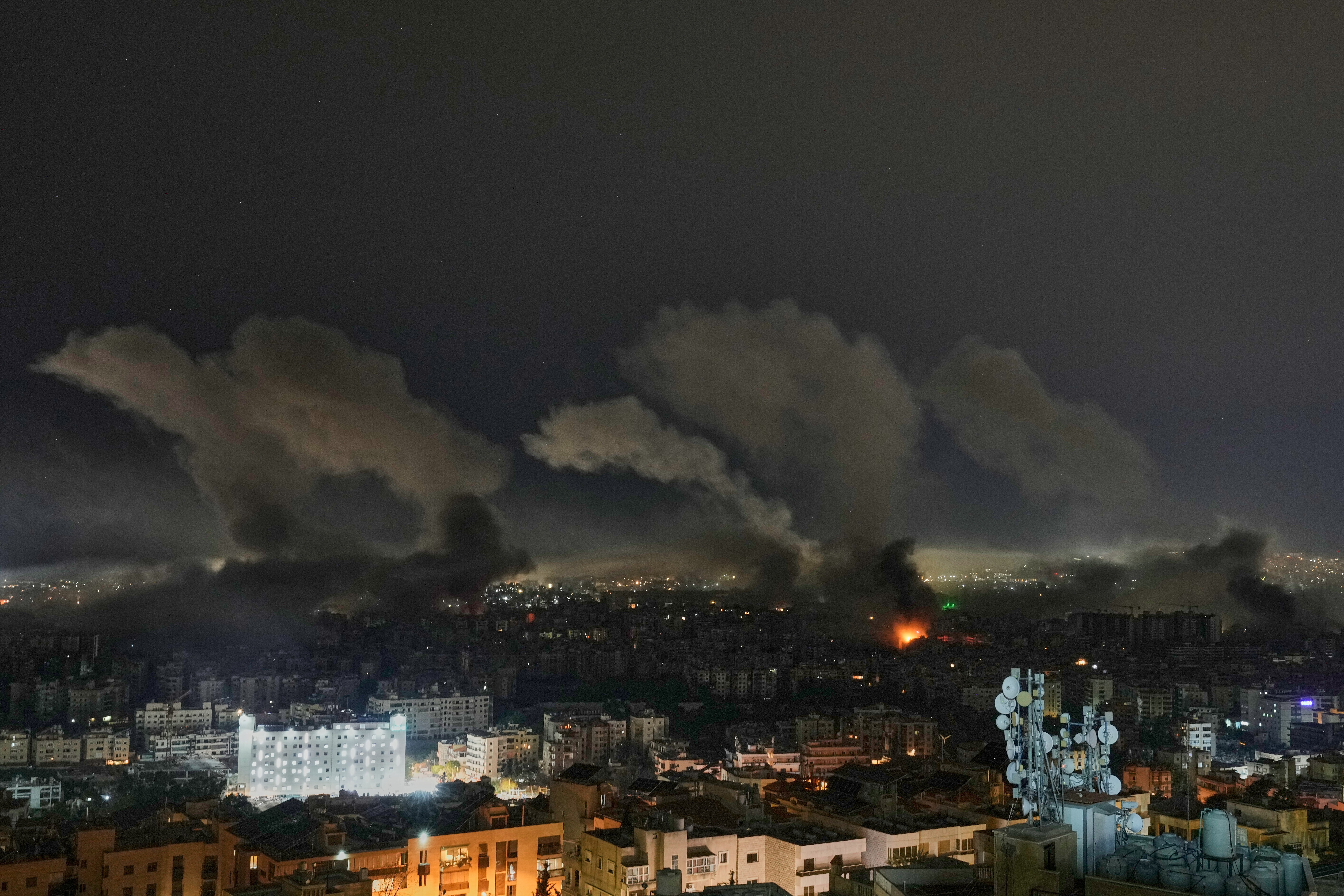
Expert Opinions
Military expert Oleg Zhdanov is certain: politically, Iran has won the war with the United States. But militarily, the Ayatollah regime is losing.
“Iran is suffering massive losses in equipment, weapons, and personnel. But politically, it is indeed winning, because if you look at the overall outcome of the military campaign—it is winning. When objectives aren’t met, the war is lost. And for Trump, the political situation isn’t going very well. He cannot resume full-scale combat operations against Iran. Therefore, I think there may be a repeat of some targeted strikes, as there were recently—strikes on sites where missile launchers or UAV positions could be deployed. This is a demonstrative strike intended to intimidate Iran. But Iran is no longer intimidated by this.
In my view, there won’t be a full-scale ground war. It’s unlikely; everyone is against it. Congress is against it, the Gulf states are against it—look, the Emirates have only just started to revive tourism, and now everyone’s going to scatter again? The Saudis are against it too, even though they’ve found a way to pump oil through the other side of their country. So everyone is against this war—except Netanyahu. He’s the only one who’s all for it. I think that in the end, there will simply be a ceasefire. The positions of the U.S. and Iran are diametrically opposed. The terms proposed by Tehran are unacceptable to the United States, and vice versa. So all the disagreement and uncertainty surrounding this conflict will lead to a stalemate, but not to a peace treaty. However, changes in Congress this November could alter the situation and the overall political course of the U.S.,” noted Oleg Zhdanov.
Political analyst and director of the Penta Center for Applied Political Studies, Volodymyr Fesenko, believes that from a formal standpoint, no one has won the war in Iran. It is, rather, a military stalemate and a ceasefire.
“Iran has suffered significant destruction, but the U.S. has not achieved its goals. Iran’s victory is, if anything, situational: yes, it has held out. But this is all very relative. Major problems for the Iranian regime will begin after the war ends—huge economic problems—and the war only exacerbates them. Yes, the regime survived, the regime held out, but the point is that the war created problems for both sides, and more problems for the Americans. The fact that the Americans did not win this war is an absolute fact. But final conclusions can only be drawn after a peace agreement, if there is one at all. There is a possibility that this kind of situational ceasefire will continue, but it will constantly be threatened by a resumption of hostilities. If Iran provokes and the war resumes—the U.S. and Israel will have no other choice but to wage a war to destroy the Iranian regime and the state as a whole. This risk is enormous for Iran, and therefore they must seek some kind of compromise agreement. So it is too early to draw final conclusions. I can say for certain that as a result of this war, both sides have lost. The Americans have lost more. But overall, everyone has lost,” Volodymyr Fesenko is convinced.

In summary, as of May 28, 2026, it can be stated: the war between the U.S. and Iran has no winner in the classical sense yet, but it clearly has a loser and a survivor. The U.S. has undoubtedly suffered a strategic defeat, demonstrating that even the world’s most powerful army is incapable of breaking the will of a regime united by radical ideology and the perception of war as a sacred defense against the forces of “Shaitan.” Iran, despite everything, has retained its agency, become more radicalized, and found new levers of influence over the entire world.
Today’s strikes are yet another manifestation of strategic uncertainty. Trump, trapped by his own promises to quickly defeat the Ayatollahs’ regime, cannot find a way out of the situation. Iran, on the other hand, looks to the future with complete confidence, using the lull to regroup.
The paradox lies in the fact that a peace treaty is unlikely to be signed as long as the U.S. is led by an administration for which acknowledging reality means admitting its own powerlessness—especially on the eve of important congressional elections. Thus, the world is entering a prolonged era of conflict and tension in the Persian Gulf, and the lessons of this conflict will likely deter anyone from the temptation to resolve the Iran issue by force for a long time to come. Unfortunately, radical theological autocracy is currently prevailing over the full might of the West, embodied by the United States.


