
China launches project for a network of 30 small satellites
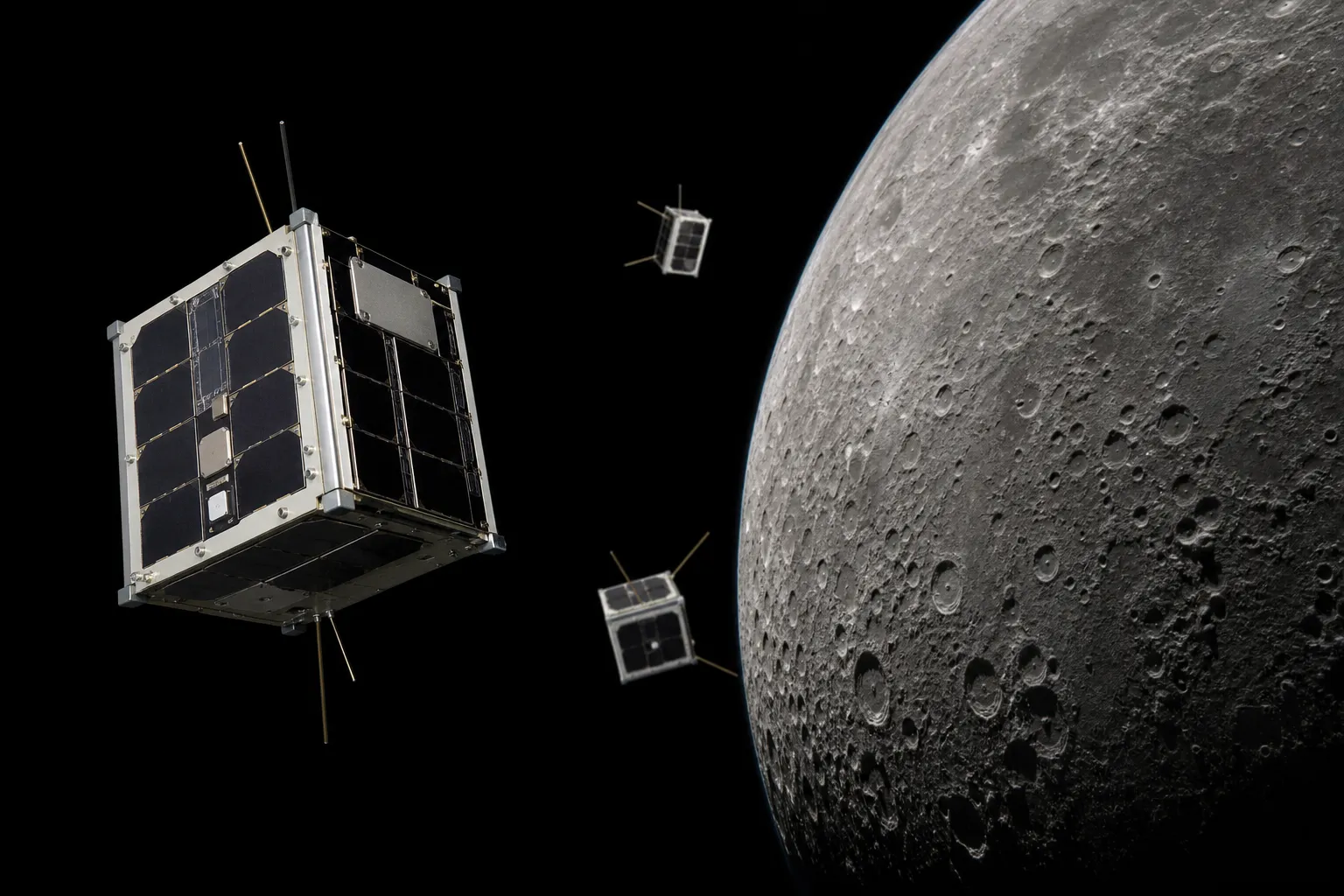
China has launched an international project to create a three-dimensional network of satellites in the space between Earth and the Moon. Over approximately four years, it plans to place 30 backpack-sized CubeSats into highly elliptical orbits around Earth, the South China Morning Post reports.
Monitoring solar activity
The project will be led by the Deep Space Exploration Laboratory. It said the satellite constellation is intended to fill a global gap in systematic observations of the space between Earth and the Moon. Egypt, Indonesia, Senegal, Serbia and Thailand have joined the initiative.
According to the laboratory, this space extends from low Earth orbit to approximately 2 million km from Earth. Simultaneous observations from dozens of different points are expected to make it possible to track high-energy particles and magnetic disturbances from the Sun and study the development of space weather.
More current news is available on the UA.News Telegram channel Telegram.
Gamma-ray bursts and lunar resources
The satellites will also search for gamma-ray bursts — extremely powerful flashes associated with violent events in the distant Universe. Detecting one burst with several spacecraft from different positions could more accurately determine its source in the sky.
A separate group of CubeSats is planned to be sent into lunar orbit to search for lunar resources, but details of this part of the program were not disclosed. Participating countries will jointly design missions, independently cover costs and exchange scientific data. China will provide free instruments for detecting high-energy particles, measuring magnetic fields and recording gamma-ray bursts.
The first stage of work has already begun, and the overall designs of spacecraft, instruments and ground control systems are planned to be completed soon. According to Anhui Daily, the laboratory also announced the establishment of joint research centers with Thailand's National Astronomical Research Institute and the Astronomical Observatory of Belgrade in Serbia.




